




Survey: 1 mil M'sians suffer from chronic pain
One million Malaysians are in various states of chronic pain - back and neck, arthritis, cancer pain, or migraine - which lead to depression, insomnia, fear, or in a constant state of irritability, says a survey.
The recently completed National Health and Morbidity Survey III, conducted by the Public Health Institute under the Ministry of Health, showed that out of the one million aged 18 and above - or seven percent of the population - are chronic pain sufferers.
One million Malaysians are in various states of chronic pain - back and neck pain, arthritis, cancer, or migraine - which lead to depression, insomnia, fear, or in a constant state of irritability, says a survey.
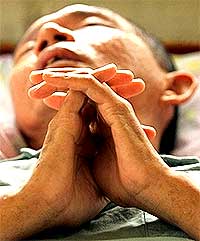 The recently completed National Health and Morbidity Survey III, conducted by the Public Health Institute under the Ministry of Health, showed that out of the one million aged 18 and above - or seven percent of the population - are chronic pain sufferers.
About 82 percent of these sufferers said pain interferes with their daily lives.
Chronic pain is generally defined as persistent pain which lasts three months or more, or pain that persists after the injury has healed.
Those in chronic pain state would feel suffering, insomnia, anxiety, depression, frustration, suicidal risks and thoughts, fatigue and immobility, etc, said Dr Roland Chia, executive chairman of Rafflesia Medical Centre in Kota Kinabalu.
This can result in being home- or wheelchair-bound, loss of job, family and community status, he added.
Prolonged pain leads to lung collapse
"Studies have shown that there is under-treatment for both acute pain and chronic pain. About 40 to 50 percent of patients in routine practice fail to achieve adequate pain relief," said Chia after the establishment of Malaysia's second private pain management clinic (PMC) in Kota Kinabalu last weekend.
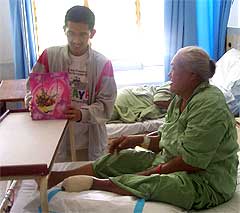 The purpose of PMC, he said, is to educate patients that pain was not to be held in themselves but should be controlled and relieved effectively and the sooner the better.
He added that 50 percent of patients had to change physicians to achieve pain relief because the physician was unwilling to treat pain aggressively, did not take patients' complaints seriously, or had inadequate knowledge about pain treatment.
"At certain times, it was the failure of the patients themselves to ask for pain relief. They bore the pain in the hope that it would eventually heal by itself."
"The longer patients bear the pain, the higher the risk of complications. This includes higher blood pressure, lung collapse, pneumonia, deep vein thrombosis and chronic pain state."
Common states of pain noted include back and neck pain, headache, migraine, arthritis, sciatica, post-shingles pain, neuralgias, diabetic nerve pain, muscle bone joint pain, knee and shoulder pain, heel and ankle pain, abdominal pain, ischemic pain, chest pain (rib fracture), facial pain, nerve pain (neuropathic pain) and cancer pain, the last being one of the worst forms.
Malaysia's second private pain clinic
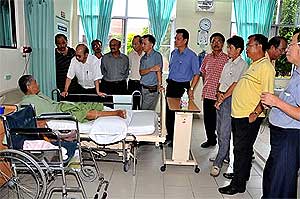 The set-up of PMC in Kota Kinabalu would be Malaysia's second such private pain clinic. The first was at Sunway Medical Centre in Selangor. Five other such clinics are at government hospitals in Selayang, Ipoh, Kota Baru, Johor Baru and Malacca.
PMC is headed by resident orthopaedic surgeon Dr Choong Leong Tong who acknowledges that pain is the body's way of alerting that something is wrong. Even so, it is important to prevent pain before it gets a kick start and turn into a state or syndrome of chronic disease.
Because many clinicians presumed they "knew all about pain", the relief and management of pain was often erratic, inconsistent and inadequate.
"The most important thing is to accept the pain problem and get rid of negative and unhelpful emotions like anger and frustration before moving on to a new future," said PMC's visiting Pain Medicine Specialist Dr Murray Taverner from Frankston Hospital in Australia.
The concept of self-management with assistance in dealing with pain consists of a positive attitude in helping patients, followed by medication and if necessary, intervention to help the patient to get the best outcome.
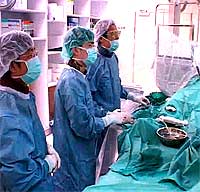 Active self-management techniques, according to Taverner, include relaxation, distraction, problem-solving, task simplification and easier, and new ways to do things.
"We can teach the patients how to set priorities, establish goals and how to change the focus away from the pain to what he can do about managing life with the pain. It's a total turnaround," he added.
"The simple fact is being fit and active, and continue to be active will keep most people out of a wheelchair. Exercise is really very important - some forms of tai chi, yoga, or meditation helps. It is important to gradually increase the amount of exercise," said Dr Taverner.
"Many people become very unfit because they are so afraid of injury that they do less and less activity until they do nothing."
Dr Taverner said that reasonable exercise does not cause injury and "in fact most injury occurs from under activity".


