




H1N1 cases just the tip of the iceberg, warns virologist
The number of reported H1N1 cases could be higher than what is estimated, claimed a virologist from the United Kingdom who urged the Malaysian government to adopt his country's surveillance system.
The number of reported H1N1 cases could be higher than what is estimated, claimed a virologist from the United Kingdom who urged the Malaysian government to adopt his country's surveillance system.
 Dr John McCauley from the National Institute for Medical Research UK said though it takes time to set up the system, the government should adopt the UK's "influenza sentinel surveillance programme" to monitor the situation.
"Reported cases of infection are bound to increase but what I am unsure of is whether current figures given are accurate. There can be yet more undetected cases.
"There might be some kind of systematic underestimation of the number of cases. If it is always mild, you can always underestimate the cases you have got," said McCauley ( above) .
He explained that under those circumstances some people might not get vaccinated on time. For the vaccination to be effective it has to be administered as soon as the symptoms appear.
Fire brigade approach
He spoke to reporters after delivering a keynote address entitled Pandemic H1N1 - Background and Update at the Kuala Lumpur Convention Centre yesterday.
He said as those below the age of 24, are more susceptible to greater impact from the illness. However, he said, there may a slight degree of immunity for those born before 1957.
He also said that the drugs should only be used in serious cases, this especially so for those not in good health and, pregnant women.
"At the pandemic stage, what you really want the drugs for is to control serious complications arising from the infection," he said.
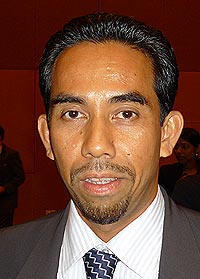 Meanwhile, Institute of Bioscience deputy director Prof Dr Abdul Rahman Omar who was also present urged the government to adopt a proper disease control approach.
"We should not practise the 'fire brigade' approach but have active surveillance in more places," he said.
Currently, 51 patients confirmed with the virus, are being warded, with 29 others admitted to intensive care units.
Of the 29, 16 are in the high-risk group with 12 suffering from chronic diseases.


Are you sure you want to delete this comment?
This action cannot be undone.