




The impact of church attacks on Malaysia
The following are some questions and answers on what lies ahead for Malaysians in the wake of the church attacks.
The following are some questions and answers on what lies ahead for Malaysians in the wake of the church attacks.
What are the issues of contention?
The issue stems from The Herald's successful legal bid last week to overturn a government ban against the Catholic weekly's use of the word ‘Allah’ to describe God in its Malay language edition.
 Their argument is that use of the word ‘Allah’ has been common among non-English speaking Christians in Sabah and Sarawak for decades.
The government since has obtained a stay of execution on the judgment this week amid growing Malay-Muslim anger. The case is also before the Court of Appeal and the verdict there can still be challenged at the Federal Court, the country’s highest court.
It is illegal for non-Muslims to proselytise Muslims but freedom of worship for the mainly Buddhist, Christian and Hindu religious minorities,who make up 40 percent of the country's
population, is guaranteed under the constitution.
Is there a risk of ethnic clashes?
The risk is small but analysts do not discount tensions coming to a boil between the majority Malays who are Muslim and ethnic Chinese and Indian minorities who practice a range of
faiths such as Christianity, Buddhism and Hinduism.
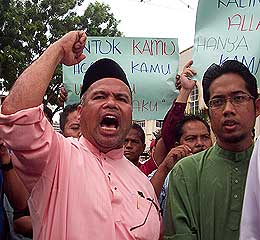 It mostly depends on whether Prime Minister Najib Razak's government comes down hard on the arsonists who attacked the churches.
Usually at any sign of trouble, the government uses the Internal Security Act that allows detention without trial.
The government says the attacks have been carried out by disaffected or criminal youths and that they are not coordinated. What may hold back ethnic clashes is the memory of the bloody 1969 riots that divided the country.
Protests on Friday at mosques against the non-Muslim use of the word Allah have been peaceful although the language on banners and speeches suggests growing anger.
Are religious tensions in Malaysia an investment risk?
After the arson attempts against the churches, possibly.Religious disputes are a risk mostly in their potential to increase ethnic tensions, making it important for investors to see how the government handles the issue.
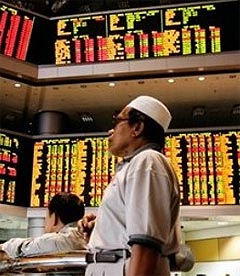 Investors have been avoiding Malaysia due to the lacklustre government of Najib's predecessor and Najib is working hard to implement economic reforms to win back investment.
Malaysia was one of the worst-performing stock markets in Asia in 2009, ranked fourth from the bottom. Malaysia's benchmark share index rose 45 percent in 2009.
During a meeting with investors in New York last year, Najib was asked about the government's stand over the caning sentence meted out to a Muslim woman for drinking beer under rarely-enforced Islamic criminal laws.
An escalation of religious tensions in Malaysia could weaken Najib's ability to push through economic reforms.
What is the government's stance?
The Barisan Nasional coalition, which ruled Malaysia for 52 years, suffered its worst-ever setbacks in national and state elections in 2008 after being abandoned by non-Malays in part due to unease over an increasing Islamisation.
 Religious tensions will jeopardise Najib's ability to win back ethnic Chinese and Indian voters in the next general election, which must be held by 2013.
The opposition and some political commentators say that Najib failed to show leadership on the church issue.
He could lose votes in the states of Sabah and Sarawak, which have larger Christian populations. Sarawak has 31 MPs and Sabah 25, home to just two opposition MPs. The government has
137 seats in a 222-member parliament.
And the opposition?
The three-party opposition Pakatan Rakyat led by former deputy premier Anwar Ibrahim is regarded as having played the religious row much more skilfully than the government.
While stressing its Muslim credentials, PAS has appealed for tolerance as has Anwar. PAS has also managed to keep its Islamic credentials intact.
- Reuters


Are you sure you want to delete this comment?
This action cannot be undone.