




Paranoia-struck house officers turn chicken
Fear of being victimised by superiors is one major reason for house officers not daring to lodge complaints on stressful working conditions.
Fear of being victimised by superiors is one major reason for house officers not daring to lodge complaints on stressful working conditions.
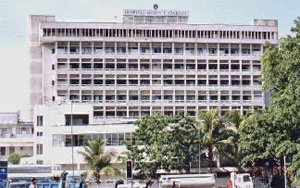 Speaking on condition of anonymity, a second-year house officer based in the Queen Elizabeth Hospital in Sabah, said their complaints are not because they are spoilt by a comfortable lifestyle.
"The reason why people complain, trash and retaliate is because you are expected to be at your best and (superiors) can't expect 100 percent quality work from us after making us work for such long hours," she said.
Health director-general Ismail Merican had told Malaysiakini that the government has not received any formal complaint about trainees having to slave away for more than 36 straight hours when they are on call.
It has also been reported that a house officer can be scheduled for call-duty up to 15 days a month, especially those assigned to rural hospitals.
"It is not that we are a lazy bunch. As house officers we are the lowest ranked medical officers and if you complain, you have to be worried about what will happen to you," said the 26-year-old doctor, who graduated about a year ago from a local university.
Malaysia Medical Association (MMA) president Dr David Quek also conceded the complaints are not made "due to the hierarchical system in the public service".
The system discourages dissent
"
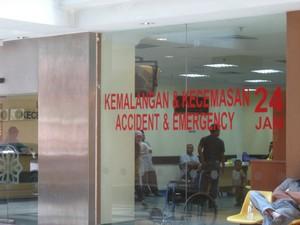 Would any government servant dare to raise the issue? It is different elsewhere because they don't fear about not getting promotions and have more room to discuss problems with their superiors," he told
Malaysiakini
.
Would any government servant dare to raise the issue? It is different elsewhere because they don't fear about not getting promotions and have more room to discuss problems with their superiors," he told
Malaysiakini
.
Quek added that most trainees would rather remain anonymous as the current system does not encourage dissent and frustration also adds up out of fear of being sent to the interior where they are forgotten.
He, however, noted that self-funded medical students from well-off families and government scholars have different expectations on the idea of becoming doctors.
"Of course, we would prefer the house officers not to be overworked as we want quality. They must be less prone to errors.
"But the fact remains, there is no hard evidence that the house officers are overworked.
There may be cases where some have been worked for 36 hours at a stretch but I would say that this is rare," said Quek.
He suggested that the MMA convey their grievance and protect the complainant's identity but nothing can happen until the complaints come directly from the house officers rather than their parents.
"There is poor hospital management in the public sector. Private hospitals seem to not have this issue, and the house officers there work hard too.
"But they are happy to work hard because they get paid for it, until some have to be forced to take a break.
"Let's be honest, the Ministry of Health is a very large bureaucracy. The director-general may be the most efficient CEO but this may not be the case downstream. The Peter's Principle is alive (one is promoted to the level of one's incompetency) and well in the public health service," he said.
Soak up experience, advice
Interestingly, the house officer's sentiments are not shared by a former house officer who was based in the Kuantan Hospital during his training and graduated recently.
According to him, it was that intense and stressful groundwork that improved and contributed to his capabilities as a good doctor.
He believes that housemen should not complain too much about having to undergo the drill as they are now only required to do three to four call duties in a month due to the greater influx of house officers into hospitals.
Similarly, Quek highlighted that some hospitals receive almost 300 to 400 house officers annually from 35 institutions.
"This year we are expecting to have 30,000 graduate doctors, and 25,000 registered doctors.
"That's about 5000-odd new house officers and 3000-odd newly registered doctors. We have gotten complaints that in some government hospitals, 3 house officers are sharing 1 patient," he said.
"It was the case four years ago when I was still a houseman. But now this situation is not applicable... before there were three house officers (houseman) to one ward with approximately 60 patients (to take care)
"In retrospect all those lengthy hours, served its purpose... 36 hours, six to seven times a month were all worth it," the recent graduate shared.
He explained that it is no easy task to endure the training no matter how painful, but one has to bear in mind that it is part and parcel of becoming a competent doctor.
"I too complained a lot when I was asked to work long hours on my first day and during my entire period as a houseman. But it is good training although the drawback is that mistakes can happen when we are too tried.
"If you can't work three to four on-calls a month, you better quit your job (as a doctor). The issue now is that we are having attitude problems... now some wards have 20-odd house officers and they are all incompetent," he said, adding that it high-time for trainees to sit for admission exams to do their housemanship.
Rubbing salt on wounds
Attitude problems or not, MIC Youth's national secretary A Premnath said that his has received numerous feedback on the issue.
"Doctors in the government service are generally overworked, underpaid and under appreciated," he said.
The director-general's approach of claiming that there is no problem, simply because there are no formal complaints, is regrettable, said Premnath.
"The DG going on to say that house officers are in fact underworked, is extremely uncalled for, rubbing salt on their wounds," he added.
"What is wrong with giving the doctors who serve tirelessly to save lives a better deal? Let us see how we can improve their working conditions, instead of sweeping the problem under the hospital bed," said Premnath.


Are you sure you want to delete this comment?
This action cannot be undone.