




US keeping an eye on Malacca Straits
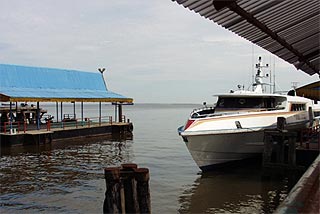
comment The Straits of Malacca whose sovereignty is shared by Malaysia, Indonesia and Singapore, has become a focus of international media attention again recently.
comment The Straits of Malacca whose sovereignty is shared by Malaysia, Indonesia and Singapore, has become a focus of international media attention again recently.
On 5 March, Singapore's authorities raised the possibility of a major terror attack on oil tankers in the Straits of Malacca, leading to a heightened operational alert on the parts of the maritime security agencies of Singapore, Malaysia and Indonesia in the waters.
 On 10 March, US Assistant State Secretary for East Asian and Pacific Affairs Kurt M Campbell told a 10-minute press conference in Kuala Lumpur, inter alia, that the United States is satisfied with the cooperation of littoral states of the Straits of Malacca in ensuring safety of navigation.
Professor Lee Poh Peng, a senior research fellow of UM's Institute of China Studies and long-time observer of American foreign policy, shares his understanding of the power dynamic of international relations of the Straits of Malacca.
Q: US Assistant State Secretary for East Asian and Pacific Affairs Kurt M Campbell said recently in Kuala Lumpur that America is satisfied with the cooperation of littoral states of the Straits of Malacca in ensuring safety of navigation. Does this mean that the US has changed its earlier position, as publicly expressed by former Defense Secretary Donald Rumsfeld in Singapore in 2004, of wanting the US naval forces to patrol the waters ?
A: Apparently so. The two littoral states of Malaysia and Indonesia have always been very concerned about the violation of their sovereignty over the Straits of Malacca.
Both have not, for example, signed on to the Proliferation Security Initiative (PSI) which would allow American-led forces to interdict shipping in the high seas to search for weapons of mass destruction.
 Only Singapore and Brunei have signed on among the Southeast Asian countries. Having US naval forces to patrol the Straits to combat terrorism or to prevent proliferation of the weapons of mass destruction will be one such violation.
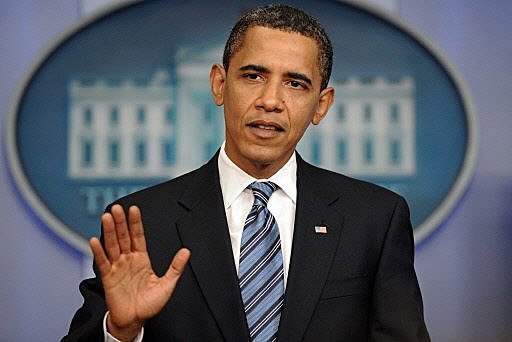
The Obama administration probably realises this and is attempting to achieve American purpose in the Straits that will not be interpreted by Malaysia and Indonesia as a violation of their sovereignty.
Q: Campbell also reportedly said that the US "wants to continue to provide as much assistance as possible" to maintain the safety of navigation in the Straits of Malacca. What types of assistance the US has been providing for this purpose so far ? What forms of American assistance is forthcoming or being proposed for the future ?
A: What the US is likely to do is to provide aid and logistical support to the littoral states and allowing them to do their own patrolling.
Q: Why are the Straits of Malacca vital or critical to America's strategic interests ?
A: There are two reasons why the US is interested in the Straits. First, it is important to the American fight against terrorism. Al-Qaeda has allies in Southeast Asia. The example of maritime terrorism elsewhere could inspire Al Qaeda or its allies to seize ships transiting the Straits for purposes of terrorism.
(A recent alert by the Singapore government that terrorists might seize an oil tanker going through the Straits suggests this possibility.)
 Second, the Straits of Malacca is a global economic chokepoint. (It is between the Indian Ocean and the South China Sea). An estimated 40 percent of world trade goes through it.
The US, being a global superpower, naturally has an interest in such an important chokepoint. More specifically, two of the most important Asian powers, China and Japan are very much dependent on safe passage through the Straits for their energy imports- an estimated 80 percent of Chinese energy imports from the Middle East and Africa and also around that for Japanese imports.
Given the underlying American strategic rivalry with China, it will be a great advantage to the Americans to be able to control a waterway of such enormous importance to China.
Q: Singapore has always been seen as a proponent of stronger American direct involvement in the safety of navigation of the Straits of Malacca while Malaysia and Indonesia have always been more reserved or discreet. Why? How has the difference affected the US' strategic interests on the Straits of Malacca?
A: Singapore is deeply interested in the American commitment to Southeast Asia as it sees the US as the most important power that can maintain stability in the area, something vital to the interest of Singapore. A stronger American involvement in the Straits will further strengthen the US commitment to the area.
Malaysia and Indonesia have been wary of big power involvement in the area, preferring the ideal of a neutral Southeast Asia. Indonesia, in particular, being the biggest country in Southeast Asia, is even more sensitive to possible big power domination, whether that power be the US or China.
Q: Are there attempts on the part of the US to calibrate the different positions of Malaysia and Indonesia on one hand and Singapore on the other so that America's own strategic interests on the Straits of Malacca are better served?
If yes, what are the attempts? What are the successes and failures of the attempts?
A: I am not sure about US calibration. This recent statement of Dr. Kurt Campbell that the US is satisfied with efforts of the littoral states will suggest a reconciliation of both positions.


Report this comment
Are you sure you want to delete this comment?
This action cannot be undone.