




A would-be 'Iowa' for Pakatan
It was a huge disappointment that Pakatan Rakyat lost the Hulu Selangor parliamentary seat after giving one of its best generals to the contest, and in a state that the coalition governs.
comment It was a huge disappointment that Pakatan Rakyat lost the Hulu Selangor parliamentary seat after giving one of its best generals to the contest, and in a state that the coalition governs.
 Earlier in the race, I had thought that Hulu Selangor would be to Pakatan what the Iowa caucuses were to Barack Obama (
left
).
Earlier in the race, I had thought that Hulu Selangor would be to Pakatan what the Iowa caucuses were to Barack Obama (
left
).
He had a decisive win in the Democratic Party's Iowa primary race against juggernaut Hillary Clinton. That was the first battle the little-known Obama, then a junior senator, had to fight way back in early 2008 to secure a nomination to join the 2008 US presidential race.
Hulu Selangor did not turn out to be an Iowa for Pakatan, but did BN really win, when P Kamalanathan obtained a 1,725-vote majority against Pakatan's Zaid Ibrahim?
To answer this, we have to consider what Deputy Prime Minister Muhyiddin Yassin said - and he was right in this respect.
BN's Key Performance Indicator should have been roughly a 6,000-vote majority, based on the fact that the coalition holds all three state seats in Hulu Selangor with a majority of about 6,000 votes.
 Previous MIC candidate G Palanivel (
right
) used to win with a majority of over 9,000 votes. Anything less than 6,000 would be an indication that BN has not really ‘won back' the seat.
Previous MIC candidate G Palanivel (
right
) used to win with a majority of over 9,000 votes. Anything less than 6,000 would be an indication that BN has not really ‘won back' the seat.
Without the hindsight of return sheets data, a news analysis showed that both Pakatan and BN managed to increase their votes compared to 2008. The voting patterns most likely remained at status quo, with slightly better reception of Pakatan by the Orang Asli community and in the Chinese-dominated areas of Kuala Kubu Baru, which was already its stronghold.
There was a swing of Malay votes back to BN but that should not translate to saying the Malays are supporting it like before. Before polling ended, PKR has conceded defeat in Felda areas, with BN holding an estimated 70 percent of the 17,000 votes there.
Indian votes, mostly concentrated in estate areas, also improved for BN, a pattern not dissimilar to Teluk Kemang in Negri Sembilan. Relatively isolated rural communities are more at home with BN due to familiarity of the establishment and the people are still largely holding on to the developmental promise of ruling party.
Postal votes
BN also received a significant 80 percent of the postal votes, equivalent to more than 35 percent of the 1,725 majority votes.
It is not too much to say then that, given the high number of spoilt votes (731) against majority votes (1,725), both Pakatan and BN were almost equal in strength in the polling stations, taking out the postal votes which BN traditionally wins by landslide.
BN's win, put in perspective, still largely depended on loyalty among rural folks, desire to keep the status quo and obedience of the civil service. Increasingly these factors are beginning to disintegrate especially among more Internet-exposed Malaysians, regardless of age and race.
This means, BN will face an unprecedented high risk of being rejected by a new wave of voters who have little or no prior familiarity with the coalition, are more exposed to alternative news and opinions, and are better educated politically to demand a serious reform of the political system.
Pakatan's new politics are better received among this new breed of voters. More Malaysians are becoming aware of the need to create a two-party system to break the hegemony of a single powerful ruling coalition.
Pakatan must refocus
Even if Hulu Selangor was not ‘Iowa', it could be be ‘New Hampshire' and ‘Nevada' for Pakatan.
 Obama lost these two primaries to Clinton (
left
). It was as if an emergency brake had been applied to his newfound acceleration in Iowa.
Obama lost these two primaries to Clinton (
left
). It was as if an emergency brake had been applied to his newfound acceleration in Iowa.
The momentum for Obama was building, but his campaign was suddenly faced with the reality that ‘change is not easy'. Many defeated candidates would have given up, but Obama took the defeat as a time to refocus, especially on his direction.
Pakatan should do so as well.
One crucial point is to work on solidarity among its partners. The coalition must realise by now that the fate of each is inextricably tied to that of the other.
So, refocus, yes; go back to the storyboard, yes; move forward, yes; but together.
Pakatan cooperation has thus far been by default rather than by design. It must be more intentional in moving as a team not only during elections, but at all times, especially in running their state governments. Only by consistent unity can Pakatan challenge the BN's powerful top-down machinery.
That said, Pakatan should persist with its harapan baru politics as a viable alternative for the people. True, it is easy to be dragged into playing the opponent's game. It is tempting for Pakatan to succumb to race-and-money politics when the opponent is betting on this to win. But more Malaysians are ready than ever before to reject the old game.
What we need is for Pakatan to continue offering us fresh hope that it can radically transform Malaysia and move it out of the deeply-entrenched culture of corruption, cronyism and racism.
 And when it is refocused, the Sibu by-election next month will be a ‘South Carolina' for Pakatan.
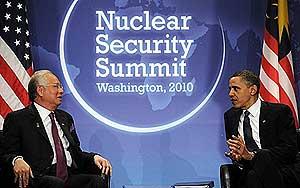
In Hulu Selangor, Najib used his recent meeting with Obama as a measure of success and recognition of his government.
He should have known Obama was a candidate for Change, a new way to do politics. He should have known Obama built a campaign not just on public relation slogans but on people and genuine actions.
He should have seen Obama's persistence to realise the mandate for Change through various reforms. The prime minister should have realised Malaysians are jaded with the politics of ‘business as usual'.
Putrajaya is ripe for a fresh politics of hope.
Now, do we have candidates of Change? I believe we have, but they need to refocus.
STEVEN SIM was formerly special assistant to the Penang state exco for youth and sports and women, family and community development. He is currently taking time off to pursue his post- graduate degree.


