




Subsidy cuts likely to be staggered over 5 years
Malaysia's government is unlikely to start unwinding its costly subsidy regime this year ahead of key state polls and risks losing further credibility with investors if a decision is deferred.
Malaysia's government is unlikely to start unwinding its costly subsidy regime this year ahead of key state polls and risks losing further credibility with investors if a decision is deferred.
A cabinet meeting on Wednesday is to discuss subsidies, which have more than doubled from 2006 and chew up 15.3 percent of federal government spending, according to official data.
Officials have told Reuters any cuts are likely to be phased in over five years.
With the BN government that has ruled Malaysia for 52 years still reeling from record election losses in 2008 and a string of by-election defeats, there is a risk it will flinch on cuts, perhaps until it has a new electoral mandate.
Prime Minister Najib Razak has pledged to reform subsidies and restructure the Malaysian economy, although he has announced few firm details.
"Any increase will become a major political issue so I expect a very gradual hike spread out over a few years," said political analyst Shaharuddin Badaruddin. "Even if Najib chooses to begin fuel price hikes this year before the Sarawak (state) elections, it will be very minimal."
 Malaysia posted its biggest budget deficit in more than 20 years at 7 percent of gross domestic product in 2009 as a result of the global economic slowdown as well as subsidy spending on petrol and food which has more than doubled since 2006.
Based on a gradual reduction in subsidies that could see petrol prices hiked by an initial 15 cents a litre hike for the RM1.80 a litre RON95 blend, followed by semi-annual price rises of RM0.10 a litre, Bank Islam economist, Azrul Azwar Ahmad Tajuddin said inflation would peak at 3.8 percent in 2011.
"If all the subsidy cuts are made however, I don't rule out the possibility of inflation growth for 2011 hitting not far from 5 percent," he said.
Government’s 'fixed deposit' on Borneo
The prospect of those kind of price hikes would be hard for voters to swallow, especially in Sarawak state which provides 29 of the government's 137 MPs.
Sarawak and Sabah states on Borneo island provided a bulwark against the 2008 political tsunami that saw the opposition win over a third of parliament seats and rule five of Malaysia's 13 states, an unprecedented showing.
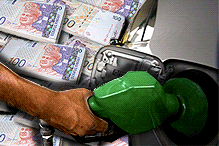 "If Najib can hold off any sharp increases in the prices of goods and services, then it would be to his advantage to hold off major subsidy cuts until after the next general election," said Ibrahim Suffian, director at pollster the Merdeka Center.
But Ibrahim added that a long-drawn out reduction in the pace of subsidy reform poses its own risks due to the possibility of discontent festering toward the ruling coalition in the event of a sudden surge in global oil prices or inflation.
Barclays Capital forecasts that U.S. crude oil will average USD85 a barrel this year, USD97 in 2011, USD106 in 2012 and USD137 in the long term.
In June 2008, annual inflation accelerated to a record 8.5 percent after the government implemented its biggest one-time petrol price hike of 40 percent as oil prices surged beyond
USD140 per barrel.
Not as brave as Indonesia
Fuel takes up the biggest chunk of Malaysia's subsidy spending at 47.8 percent of the RM20.9 billion for this year and is the most politically sensitive.
Najib's predecessor Abdullah Ahmad Badawi, who led the government to a record win at the 2004 general election, raised fuel prices four times with RON-97 gasoline prices (then the benchmark) rising 90 percent from May 2005 to June 2008.
Despite mitigating measures such as cuts in vehicle road taxes, Abdullah's approval ratings dipped, leading to the historic poll losses in 2008.
Even though Abdullah cut prices a total of seven times, the damage was already done and he was forced from office in April last year to be replaced by Najib, who has consistently sounded a reformist economic agenda.
While Malaysia dithered, in 2005, Indonesian president Susilo Bambang Yudhoyono hiked petrol prices by 125 percent in one go to stem the country's huge subsidy bill and although it retains some element of susbidies plans to curb them.
Despite a backlash in the world's fourth largest country, Yudhoyono was re-elected in 2009, turning Indonesia into a magnet for foreign direct and portfolio investors.
"It was well-socialised and there was an effective and equitable transfer to the poorer segments of society," said JPMorgan economist Sin Beng Ong. "If Indonesia can do it, I don't see why Malaysia can't."
Najib has already delayed a planned fuel hike in May due to fears of upsetting voters, especially poorer majority Malays who form a critical votebank.
With three years left to the expiry of the government's five-year term, the key factor in Najib's fuel subsidy reduction strategy could be his election timetable.
Analysts say Najib could call for polls as early as next year to ride on a recovering economy that grew by 10.1 percent in the first quarter of this year.
"If Najib really wants to show fiscal responsibility, then it would be best to bite the bullet once rather than hold it off only to find out that its too late in the electoral cycle," said Merdeka's Ibrahim.
- Reuters


Report this comment
Are you sure you want to delete this comment?
This action cannot be undone.