




Freed Suu Kyi as influential as ever in Burma
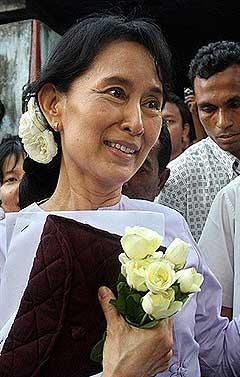
After the release of the high-profile dissident Aung San Suu Kyi in Myanmar/Burma, Malaysiakini also interviewed - via email - Associate Professor Jatswan Singh Sidhu for his expert assessments on the latest situation and development in that unfortunate and troublesome ASEAN country.
After the release of the high-profile dissident Aung San Suu Kyi in Myanmar/Burma, Malaysiakini also interviewed - via email - Associate Professor Jatswan Singh Sidhu for his expert assessments on the latest situation and development in that unfortunate and troublesome ASEAN country.
Associate Professor Jatswan Singh, a specialist in Myanmar/Burma affairs, lectures on international relations and strategic studies, at the University of Malaya. Below is the full text of the interview.
 Malaysiakini:
Aung San Suu Kyi has now been freed. Do you think her release would reduce the political pressure on the regime in Burma from inside and outside the country? Was her release designed and timed by the regime in Burma to reduce the political and diplomatic pressure it faces?
Malaysiakini:
Aung San Suu Kyi has now been freed. Do you think her release would reduce the political pressure on the regime in Burma from inside and outside the country? Was her release designed and timed by the regime in Burma to reduce the political and diplomatic pressure it faces?
Jatswan Singh: Firstly, it is important to point out that the release of Suu Kyi was in fact very well-planned by the country's military regime in the sense that she was only freed a week after the conclusion of the Nov 7 sham elections. It is obvious that her release was carefully designed and timed by the Burma regime to appease international criticism.
Therefore, her release is definitely aimed at reducing pressure, both from within and without, on the country's ruling regime. Nonetheless, looking at the reaction from some quarters of the international community at the moment, it is clear that while many have welcomed her release, there are also some who are skeptical as well.
Taking stock of the recent statements from many like-minded western states, it is obvious that these states prefer to watch developments in Burma with cautious optimism. Canada, for example, decided to extend sanctions against Burma despite the release of Suu Kyi.
This clearly shows the many Western states are not really convinced, at least at the moment, that the release of Suu Kyi will eventually usher some form of political reform in the country.
In your opinion, would the release of Suu Kyi give political legitimacy to the junta and its 'elected government'?
Although it is obvious that the Burma junta released Suu Kyi with the aim of legitimising their recent orchestrated win in the sham elections, I certainly believe that the international community is not going to buy into it. In fact, many like-minded states have called for a meaningful dialogue between the military, democratic forces and ethnic groups in the country.
 Until and unless the military regime shows concrete steps in the said direction, pressure on the regime will surely continue, both from within and without.
The fact that many like-minded Western states have reiterated that sanctions would remain until some significant steps are taken towards democratisation in the country clearly shows that many these states are not going to lend support or legitimacy to the ruling regime.
Suu Kyi's National League for Democracy (NLD) had been deregistered before the 'general elections' on Nov 7. Do you think she would return to active politics on another platform?
It is noteworthy to mention Suu Kyi is the country's icon for democracy and perhaps the only person in the country that has the charisma to unite the diverse ethnic groups and even pockets of the military. As such and despite the deregistration of the NLD, Suu Kyi remains relevant and more importantly will continue to play a role until some form of political change takes place in the country.
In fact, immediately after her release she has begun to outline her next steps in trying to bring about political reform in the country. Even when the NLD was deregistered, Suu Kyi and many stalwarts of the NLD did emphasise that the party, in spite of its non-existence, will continue to call on the Burma junta to bring about political reform.
In your assessment, would the popular jubilation on Aung San Suu Kyi's release in Myanmar/Burma heighten expectation for democratisation and, wittingly or unwittingly, turned into mass protests again?
As a matter of fact, her release has already heightened expectation for democratisation not just from within but even outside.
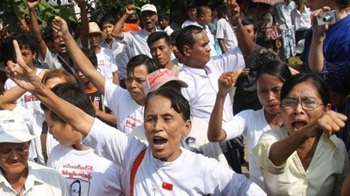 Looking at the crowd turnout at her residence in University Avenue on Nov 13, it is clear that her release has given some hope that perhaps it would eventually lead to some political reform in the direction of democratisation in the country.
But then again, it would depend on the next move made by the country's ruling regime. Nevertheless, long back at recent history, especially since 1988, it is clear that Burma's ruling junta is bent on maintaining the status quo of the political system by ensuring that they remain in charge.
Nevertheless, how far her release as well as future developments in the country could actually manifest into mass protests/uprising remains to be seen but possible.
Burma still faces the problem of ethnic tensions which sometimes turn into armed clashes between soldiers of the central regime and armed groups on border areas. Would the situation worsen in the post-'elections' Burma, leading to political instability?
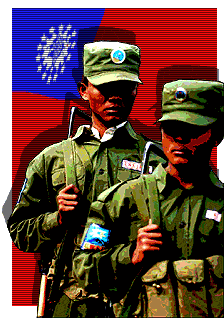
In fact, barely a few days after the Nov 7 elections, fighting had already broken out between some ethnic groups and the country's military especially in Karen state. It must be remembered that although the country's military regime have signed ceasefire agreements with some ethnic insurgents groups, the situation is however, extremely fragile and uncertain.
The promises made by the military junta to improve the situation in these states have not been delivered. In particular, is the fact the human rights violations by the Burma army in these regions, still continue. For a meaningful and lasting solution to the problems in these ethnic areas, the Burma junta must engage these groups.


Report this comment
Are you sure you want to delete this comment?
This action cannot be undone.