




US 'back' to South-East Asia - one year on
On July 22, 2009, US State Secretary Clinton signed Asean's Treaty of Amity & Cooperation (TAC) in Thailand signalling the intention of the US to be "back to South-East Asia". Now, the US has joined - together with Russia - the East Asian Summit (EAS).
What are the results of the policy and strategy of the Obama administration on South-East Asia one year on? Malaysiakini interviewed Professor Dr Lee Poh Ping, a long-standing scholarly observer of America's foreign policy in Asia who is now a Senior Research Fellow of the Institute of China Studies (ICS) at the University of Malaya.
On July 22, 2009, US State Secretary Clinton signed Asean's Treaty of Amity & Cooperation (TAC) in Thailand signaling the intention of the US to be "back to South-East Asia". Now, the US has joined - together with Russia - the East Asian Summit (EAS).
What are the results of the policy and strategy of the Obama administration on South-East Asia one year on? Malaysiakini interviewed Professor Dr Lee Poh Ping, a long-standing scholarly observer of America's foreign policy in Asia who is now a Senior Research Fellow of the Institute of China Studies (ICS) at the University of Malaya.
Q : Besides signing Asean's Treaty of Amity & Cooperation (TAC) and having been accepted into the East Asian Summit (EAS), what are the concrete and verifiable achievements of the US in "returning" to South-East Asia? What are the unrealised objectives so far?
A. The US 'return' to South-East Asia has basically given South-East Asians a very important aid to balance China in the region. While South-East Asians do not or cannot stop a China rising they do not want their region to be totally dominated by China in the future. They themselves alone cannot resist China hence they look to other powers, like Japan and maybe India for balance.
They know, however, these two may not be strong enough to give the necessary balance. The US is the key. Thus they welcome this 'return'. Two countries, Vietnam and Singapore, have been the most enthusiastic.
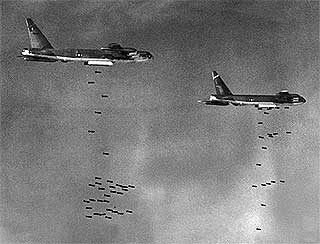 Vietnam, being a country that shares a border, and has had territorial conflicts with China, welcomes the upgrading of its relationship with the US.
Singapore, a small country that depends on its survival on countries respecting international law supports the US call for the resolution of the conflicts in the South China Sea according to international law.
On the other hand, they will not be party to any US attempt to contain China as they know full well it would be an exercise in futility. Also, there will be an economic cost given the increasingly strong Chinese economy that can benefit South-East Asia.
Q: What account for the US' achievements and unrealised objectives so far?
A. I will answer this by further elaborating on my answer to question one. South-East Asia does not want Chinese hegemony any more than they want the hegemony of the US or any other power.
Pundits may talk of a dominant China being benign or creating a tributary state. Whatever the possibility of either, South-East Asians cannot be sure of the former.Nor are they thrilled by the latter, whatever maybe the attempts by pundits to explain the difference of the ancient Chinese tributary system from Western colonialism. It is in this context we see why the US ' return' to South-East Asia is favourably received.
Yet they have not gone the whole way with the US. There are two reasons. The first is that deep down they know that they could be just pawns in the struggle of the two powers.
They know that they are the proverbial grass that get trampled upon when elephants fight or make love, or to draw from Shakespeare, are Rosencrantz and Guilderstein in Hamlet.
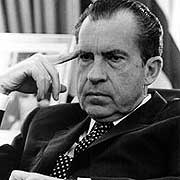 It is best to keep both at a distance and not be too allied with one side. Many South-East Asians saw what happened when Nixon (
right
) and Chou En Lai made nice in 1972. The interests of their Vietnamese allies were sacrificed.
It is best to keep both at a distance and not be too allied with one side. Many South-East Asians saw what happened when Nixon (
right
) and Chou En Lai made nice in 1972. The interests of their Vietnamese allies were sacrificed.
The present interests of South-East Asia , if too closely allied with either power, can once again be given short shrift if the US and China for whatever reason decide to be cozy again with one another.
The second reason for caution with the US is that unlike in the Cold War the US will not be able to tempt them with economic goodies like aid and favourable market access as the US is now in a weakened economic condition. If the US could not contain China then with a strong economy, it is unlikely to be able to do so with a hobbled economy.
Q: There is an observation that, given the vastly different generational sentiments and institutional experiences of policymakers and foreign policy thinkers in the United States, it is still not very clear whether the US wants to "return" to the pre-2001 or pre-1991 or pre-1975 South-East Asia. What is your own take?
A. You are right to point to three important turning points in US foreign policy. I will prefer, however, to make the simple distinction between a US trying to maintain a global hegemony when its economy was strong from when it is weak as now. A lot of the foreign policy elite, especially the conservatives and the neo-conservatives, are still keen on maintaining US global hegemony.
Those aware of the latter go for a 'formal' multilateral approach while those not aware continue with a unilateral approach. I say 'formal' because those who talk of a multilateral approach are at heart unilateralist.
But never mind, they at least make a show of multilateralism. I think Obama is aware of the weakened US economy though he is constrained by forces in the US that want to tell the world the US cares first for its own interests.
Q: President Obama has visited Indonesia and Secretary of State Clinton has also come to Malaysia with the objective of bridging the perception gap between America and Muslim world. What is your assessment of the efforts?
A: I think many Muslims believe Obama means well. He is, at least, better than Bush. But they are not sure he can deliver. The most obvious example is his stand on the Israeli-Palestinian conflict, an issue of enormous importance to many Muslims worldwide.
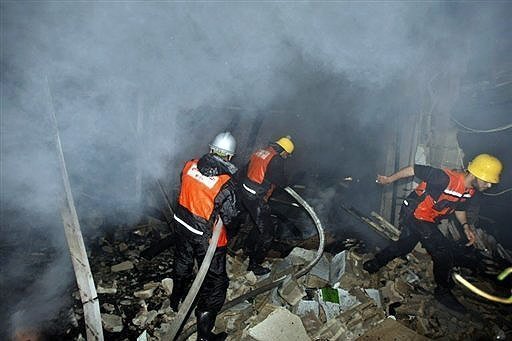 Having taken a tough stand on Israeli settlements, Obama had to back down under pressure from Israeli supporters in the US. Nevertheless, I think they will wish him well in his attempt to bridge America and the Muslim world.
Q: In your observations, how has China responded to the American policy and strategy of "returning" to South-East Asia? What are successes and failures of China's responses so far? What account for the successes and failures?
A: I think the Chinese see the American 'return ' to South-East Asia together with Obama's Indian trip, and recent meetings and military exercises involving also officials and military men from South Korea and Japan as directed against them.
They are obviously worried that the US might form an alliance of democracies surrounding them, something akin to the Cold War's free world alliance.
They must be wondering what may have gone wrong with their 'peaceful development' policy that so many of these countries are apparently enthusiastic about the America's 'return'.
Yet from reading Chinese writings, one senses a quiet confidence that if China sticks to its present defensive policy and emphasis on economic relations, they will win out in the long run.
On a geopolitical level, there is ideological mistrust between Vietnam and the US together with a history of conflict.
Economically the US cannot offer more than the Chinese. So with the rest of South-East Asia which they believe will not turn against China if China displays no aggressive intentions, despite Western scare mongering, and offers economic goodies the US cannot do so.


Report this comment
Are you sure you want to delete this comment?
This action cannot be undone.