




That 'special position' in perspective
I refer to the article 'Malay rulers make known their stand'. This is most timely, particularly in the context of the view reportedly expressed by the Sultan of Perak that it would be most unfortunate if "real history is erased and the facts altered".
Nowhere is the importance of this need more significant than on the question of the special position of the Malays and, therefore, it is surprising that hardly any attention has been given to the origins and continuation of this historical ‘position' in the ensuing debate.
I refer to the article ' Malay rulers make known their stand '.This is most timely, particularly in the context of the view reportedly expressed by the Sultan of Perak that it would be most unfortunate if "real history is erased and the facts altered".
Nowhere is the importance of this need more significant than on the question of the special position of the Malays and, therefore, it is surprising that hardly any attention has been given to the origins and continuation of this historical 'position' in the ensuing debate.
In the first place, consideration must be given to what is meant by a 'special position' because unless this is made clear, we will be talking in abstract terms, losing sight of the validity of real meanings.
The Oxford Dictionary defines 'position' as "a person's place or importance in relation to others where the presence of particular features are emphasised".
On this basis, it can be shown that the imposition of British colonialism defined the special position of the Malays, essentially emphasising particular features in relation to the formulation and implementation of colonial policies and practices that were fundamental to British interests.
This is not the place to enter into a detailed analysis of specific particular features identified in the Malay special position, in terms of the origins and subsequent application to serve the interests of British colonial capitalism.
Suffice it to highlight certain dimensions that focus on some of the contentious questions and issues arising there from that have continued till the present day, towards a better understanding and appreciation of the reality of the situations involved.
Political realities
It must be remembered the British did not come to Malaya exactly to catch butterflies in the midday sun!
On the contrary, their motive was to initially exploit the economic resources of the country ,especially the vast tin deposits for the coffers of the Empire. In doing so, they undermined the feudal political system in Perak, leading to the assassination of the first British Resident that resulted in the subsequent Perak war.
It was soon realised that to achieve their economic objectives the
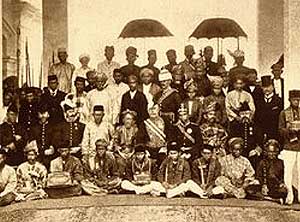 British would have to embark on a colonial 'civilising mission' as a manifest destiny under the "White Man's Burden", to ensure that the Malay chiefs opposing their rule would willingly agree to stand by and allow the former to "intervene" in the affairs of government and undertake functions for the maintenance of law and order, and the implementation of subsequent economic development that the chiefs themselves were unable or unwilling to undertake.
The special position to make this possible was created through the setting set up of the state apparatus for in-direct rule whereby specific provisions were made to bring the Malay feudal political system under the jurisdiction of the colonial government.
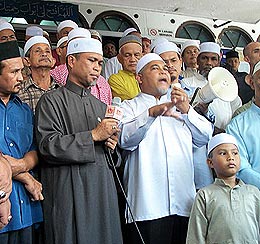 Most important to this discussion, was the institutionalisation of Islam through the creation of the Majlis Agama and the elevation of the position and status of the chiefs bestowed with Islamic religious powers, (traditionally enjoying the same status as that of the other shiefs) to that of the Sultan as "chief of chiefs".
More especially, because state funding became possible for Islamic activities, it was possible for the special position to be extended to the administrative sector to include the economic dimension as well.
For instance, the residence of the Sultan that was hitherto wooden/attap structures was now transformed to concrete istana and the Sultan, as well as all other personnel associated with Islamic activities, funded from government funds.
Historically, therefore, it is true to say that the Sultan of Perak, as well as other Malay rulers, have played a significant and pivotal role in ensuring the 'continued protection of Islamic activities (that have) flourished with state funding' because this is the legacy of the constitutional agreement of being the special position of the Malays in relation to others.
The economic position
Colonial policy initially was to identify the Malay special economic position as that associated with paddy cultivation, fishing and other agricultural activities and to keep Malays in the rural areas.
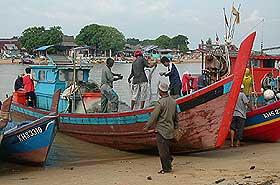 Accordingly, Malays were denied access to an education in English because this would result in exposing them to learning new skills, and their moving out of agriculture to new occupations in the urban areas; thereby weakening the base of Malay society and eroding the power of the Sultan.
But with the promulgation of the British sponsored Federation of Malaya Agreement (Foma), the Malay economic position was dramatically altered and enhanced through the assurance of more jobs, more chances for promotions in the armed forces, with better educational opportunities becoming available.
Indeed, even the last Umno delegation to London before independence in 1957 strongly made similar demands in relation to the Malay special position, with little reference to the demand for political independence that had by then begun to gain political momentum among Malay political parties.
In this connection it must be remembered that although the abrogation of the Malayan Union was achieved under the banner of Umno, it was also with the strong demand of other Malay nationalist, radical Islamic and left parties that joined the opposition to the Malayan Union.
These groups also saw the defeat of the Malayan Union as a stepping stone towards the struggle for political independence, and felt that the Foma provisions did not encompass any vision of the Malays moving towards this direction.
These parties subsequently withdrew from Umno's acceptance of the Foma. The British, therefore, proceeded to negotiate with Umno leaders, despite the fact that they and the party now no longer effectively represented the Malay rakyat as a whole.
Colonial office records will show that the British had seriously underestimated the rising forces of Malay nationalism, radical Islam and the Malay left towards the demand for political independence, and to meet this challenge attempted to leverage the special Malay economic position under the Foma to compromise the pro-independence stand of the latter political parties.
In short, the special position of the Malays was hijacked to serve British interests by undermining the stated objective of these groups to work towards political independence.
The constitution and the NEP
The special position of the Malays as enshrined in the Federal Constitution basically encompasses that as originally provided for under the FOM Agreement.
However, the interpretation of those relevant Articles by Parliament in the formulation of the NEP was widened, and some extended, to include economic provisions in other areas not originally covered under the Foma provisions.
It must be pointed out that the NEP provisions were debated in Parliament and endorsed by the constituent Chinese and Indian race-based parties that jointly made up the Alliance government and, therefore, should be accepted as valid by all Malaysians.
At that time, however, it was widely known that these political parties were dominated by their respective political elite-classes that did not necessarily see their interests being compromised under the NEP. For instance the MCA leaders were generally regarded as belonging to the "towkay" (wealthy) class among voters.
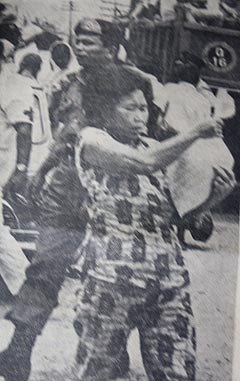 The May 13, 1969 riots were also an important factor for the acceptance of the extension of the NEP by these race-based parties, because one of the causes of the riots was believed to be that the Malay rakyat had not benefited economically, even after the provisions for their special position had been enunciated and independence declared 20 years earlier.
The serious question for the maintenance of law and order for the very survival of the nation was such, therefore, that even the strong political opposition party, Gerakan, which had won the Penang state elections, opted to join the ruling Alliance government.
On the basis of the above it seems clear that arguments making a constitutional basis for extending the special position of the Malays for Malay rights and the 30 percent equity quota and others under Article 153 will be difficult to sustain.
Therefore, as succinctly pointed out by the leader of Umno Youth ( The Edge , week of 22/11) "this fallacy of constitutional justification is important to debunk otherwise any attempt to discuss the target (30 percent) is (will be) regarded as sacrilege and a direct challenge to the Special Position". The same situation will apply to the other special position arguments of Article 153 of the Constitution.
COLLIN ABRAHAM can perhaps qualify as a product of 1Malaysia - if ever there was one. Beginning a career as the first UM graduate to work as a field assistant in the Social Welfare Department, he moved on to become the director in Malacca and to social development consultant research postings in the Johor/Pahang Regional Master Plans, in Felda, and in rural development. He later joined USM to lecture on ethnic and race relations from where he retired as associate professor. He is the author of the Finest Hour: Malaysia-MCP Peace Accord in Perspective .


Are you sure you want to delete this comment?
This action cannot be undone.