




Syed Hamid visits Hong Kong to view MRT
Land Public Transport Commission chairperson Syed Hamid Albar is on a four-day working visit to Hong Kong to learn from city's metro system operator MTR Corporation on how to manage the system.
Land Public Transport Commission chairperson Syed Hamid Albar is on a four-day working visit to Hong Kong to learn from city's metro system operator MTR Corporation on how to manage the system.
Officials from the Performance Management and Delivery Unit (Pemandu) in the Prime Minister's Department and Syarikat Prasarana Negara Berhad (SPNB) are also in the delegation.
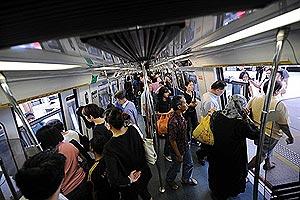 The RM36 billion MRT will become the backbone of the integrated public transport network across north-west and south-east corridor alignment and will serve a larger cause, primarily enabling the economic generator to move.
Besides helping appreciation of property value and creating about 1.2 million square feet commercial and residential development, it is also expected to create more than 130,000 jobs during its construction, and will develop RM3 to RM4 billion annually in terms of direct gross national income contribution from its construction and operations, and a further RM8 billion to RM12 billion generated from spillover effects.
The government is looking to learn from Hong Kong MTR, which is involved in a wide range of business activities like consultancy services in addition to its railway operations.
Ivan Lai, head of operations, support and west region MTR Corporation, said to date the MTR has completed development at 27 MTR stations, generating 74,165 housing units and more than 1.7 million square metres of commercial space.
It also owns and manages a number of quality retail complexes throughout Hong Kong.
He said MTR's business model has been proven successful as the cost of building new railways is borne by profits generated from the property segment.
No fare hike in 15 years
Lai said 30 percent to 50 percent MTR's revenue were generated from non-fare segments like residential and commercial projects, property leasing and management, advertising and consultancy services.
"We are sustainable. Our revenue is enough to support our rail operations without asking the government to give additional funding to us although fares that we charge are actually far behind over the years," he told reporters during a site visit to the Hong Kong station.
The station is right in the heart of the central business and retail district, and is connected to the MTR central station, making it easy for travel around Hong Kong.
MTR, he said, has not raised its fares since the last 15 years.
"When there is a station, then the whole place will transform. We not only transform the physical landscape of Hong Kong, but also the environment and the economic landscape in this country," he added.
Today, MTR operates nine main commuter lines - Kwun Tong, Tsuen Wan, Island, Tung Chung, Tseung Kwan O, Disneyland resort, East Rail, Ma On Shan and West Rail Lines and a light rail service in the Northwest New Territories.
It also operates the airport express to Hong Kong international airport and AsiaWorld-Expo as well as intercity services to Beijing, Shanghai and Guangdong Province in the mainland of China, securing more than 43 percent market share of the total 90 percent people using public transport in the country.
In addition, he said, what makes a MTR journey even more remarkable is the Octopus, an automatic fare collection system, that is among the most advanced contactless smartcard systems in the world.
It is also widely used for making payments on other public transports like buses and at retail outlets.
To date, there are more than 10 million Octopus cards in circulation in Hong Kong while the country's population was only seven million.
- Bernama


Are you sure you want to delete this comment?
This action cannot be undone.