




It's full circle for back-to-Snap Tajem
COMMENT The wheel has come full circle for Daniel Tajem and the oldest multi-racial party in Malaysia, Sarawak National Party (Snap).
Almost three decades after the former deputy chief minister of Sarawak was suspended from Snap - a move that led to a prolonged bout of dissidence in the party culminating in a schism - Tajem has urged Dayaks to return to their multi-racial political mother lode...
COMMENT The wheel has come full circle for Daniel Tajem and the oldest multi-racial party in Malaysia, Sarawak National Party (Snap).
Almost three decades after the former deputy chief minister of Sarawak was suspended from Snap - a move that led to a prolonged bout of dissidence in the party culminating in a schism - Tajem has urged Dayaks to return to their multi-racial political mother lode.
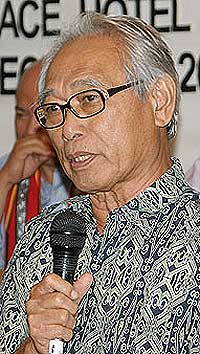 The entire episode - its genesis, development and culmination - holds lessons for oppositionists who because of spiraling discontent leave their original party to set up a splinter.
Invariably, the move leads nowhere.
And the quitters, prodigal or otherwise in their increasingly lonely exile, are eventually overcome by the homing instinct: they return whence they came.
Tajem, then a leading light in Snap, was suspended by the party for alleged support of Edwin Tangkun in the parliamentary elections of April 1982.
Tangkun, the incumbent MP for Sri Aman, was dropped by Snap who preferred Wellington Rufus Lanang for the elections. Tangkun stood as an independent and won.
Lanang’s defeat piqued a cabal in the party led by an angry James Wong, chief financier of Snap and leading candidate to replace party president Dunstan Endawie.
Endawie was being tapped by Chief Minister Taib Mahmud to become high commissioner to New Zealand, the traditional posting for Sarawakian pols whom the powerful in the state BN hierarchy want out of the way in the political chess game.
The Dayaks in the party, led by secretary-general Leo Moggie, wanted James Wong to stand aside for an Iban to lead Snap, the strongest party in Sarawak from the time of its merger with the federation of Malaya, Singapore and Sabah in 1963 until 1970.
 That year Rahman Yaakub (
photo, right
) became chief minister of Sarawak following a merger between his Melanau-Malay group and the Dayak-based group led by Temenggong Jugah to form Parti Pesaka Bumiputera Bersatu which later became PBB, the ruler of the roost ever since.
That year Rahman Yaakub (
photo, right
) became chief minister of Sarawak following a merger between his Melanau-Malay group and the Dayak-based group led by Temenggong Jugah to form Parti Pesaka Bumiputera Bersatu which later became PBB, the ruler of the roost ever since.
In the initial years of the Rahman-Taib autarchy that has held Sarawak in its grip for four decades, Snap was the biggest threat to PBB.
The Iban-dominated Moggie-Tajem faction in Snap was naïve to the machinations of the Melanau dynasty in PBB and succumbed to their schemes to pit the Dayaks against James Wong in Snap.
Wong held under ISA
Wong, by 1974, had already a bad experience with Rahman’s machinations when as parliamentary opposition leader, he was detained under the ISA for alleged collusion with Brunei over the latter’s claim to Limbang, the part of Sarawak that abuts the oil-rich kingdom.
 For 18 months Wong (
left
) languished in Kamunting, with lawyer Tajem visiting him from time to time to compile a brief for the appeal boards that meets periodically to review the cases of ISA detainees.
For 18 months Wong (
left
) languished in Kamunting, with lawyer Tajem visiting him from time to time to compile a brief for the appeal boards that meets periodically to review the cases of ISA detainees.
That solicitude would not pay dividends in 1982 for Tajem who found a chagrined Wong adamant on punishment for the former’s impudence in supporting his mentor Tangkun against Wong’s ward, Rufus Lanang.
Tajem, by this time a senior member of Taib’s state cabinet, was suspended from the party. This led to a prolonged period of dissidence that culminated in Moggie challenging James Wong for the Snap presidency after Endawie was lured with the envoy’s post to New Zealand.
Wong, who was fond of telling the Dayaks in Snap that they ought to mind the politics while he ran the party and its finances, was having no truck with Dayakism, the brand of ethno-centric politics that was creeping into Snap.
In the contest for the presidency between Wong and Moggie in 1983, Wong prevailed. This occasioned a withdrawal from the party by the Dayaks led by Moggie who teamed up with Tajem to form Parti Bansa Dayak Sarawak (PBDS) in December 1983.
Little did PBDS realise that this surge in ethnic consciousness would leave the Chinese, the second largest ethnic group after the Dayaks in the state, wary about Dayak assertiveness.
In the event, Chinese unease with Dayakism led to that community throwing its support via SUPP behind an embattled Taib Mahmud in 1987 when PBB was challenged for political primacy by a combined front in which PBDS was allied with a Rahman-backed Malay-Melanau group.
Taib triumphed narrowly and went on to emulate the Rahman model of assuring Melanau political primacy by keeping the Dayaks divided into splinter parties and the Chinese in SUPP happy with small yet juicy bits of the spoils. It’s a scheme that has worked for four decades.
Daniel Tajem’s belated recognition that the internal conflicts in Snap in the early 1980s were best kept within its folds and that ethno-centrism is a dead-end in Malaysian politics holds important lessons for the Malaysian opposition in its now spiraling variety.
TERENCE NETTO has been a journalist for close on four decades. He likes the occupation because it puts him in contact with the eminent without being under the necessity to admire them. It is the ideal profession for a temperament that finds power fascinating and its exercise abhorrent.


Are you sure you want to delete this comment?
This action cannot be undone.