




We make solar panels, but can't use them
Would you believe this? Malaysia, despite being one of the world's largest producers and exporters of the solar panels, is forbidden from distributing the panels locally.
This is what the founder-director of the Centre for Environment, Technology and Development Malaysia (Cetdem), KS Gurmit Singh, says he has found out.
Would you believe this? Malaysia, despite being one of the world's largest producers and exporters of the solar panels, is forbidden from distributing the panels locally.
This is what the founder-director of the Centre for Environment, Technology and Development Malaysia (Cetdem), KS Gurmit Singh, says he has found out.
Solar panels produced in the country "are only for export" is one of the conditions imposed on manufacturers by the Malaysian Industrial Development Authority (Mida), he said.
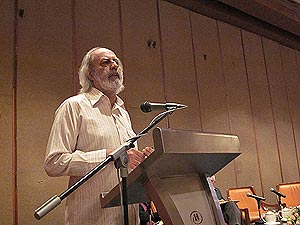 "I stumbled across this information from several parties, including official personnel," Gurmit (
left
) told a forum on ‘Nuclear nightmares in Japan and for Malaysia', hosted by the Selangor state government in Petaling Jaya last night.
"I stumbled across this information from several parties, including official personnel," Gurmit (
left
) told a forum on ‘Nuclear nightmares in Japan and for Malaysia', hosted by the Selangor state government in Petaling Jaya last night.
"I have tried getting confirmation from them (Mida) but failed," he said in reply to questions from the audience.
He said he sees no logic for such a condition to be enforced by Mida.
"It doesn't make sense at all for someone to purchase solar panels from abroad when the panels are made right here. That means, we have to pay double for the panels," he said.
Since installing solar panels in his own house seven years ago, Gurmit said, his electricity bill has been reduced by an average of 30 percent a month.
The six photovoltavic (PV) panels with the capacity to generate one kilowatt per hour during peak periods that were installed on the roof of his house cost him RM115,000, including the cost of related renovation.
"I hope that more house owners will look at energy-saving measures such as the use of solar panels, considering that cost involved is similar to what they will spend on a renovation," he added.
Malaysiakini tried contacting Mida on the solar panel ruling but has been unsuccessful.
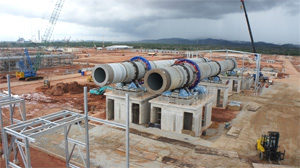 On the rare earth plant being built in Gabeng, Pahang, Gurmit questioned the experience and expertise of Malaysians in this area, and whether they would be able to handle the situation if something went wrong.
Australian miner Lynas Corp is building the plant, which is slated to begin production in September this year.
There have been objections to the project, following the problems with the Asian Rare Earth plant in Bukit Merah, Perak, where experts found radiation levels to be up to 800 times the accepted levels.
The plant, operated by Mitsubishi Chemical Industries Ltd, Beh Minerals, Lembaga Urusan dan Tabung Haji and several bumiputera businesses, started operation in 1982 and finally closed in 1992 after a prolonged campaign , including court action, by residents in the vicinity.
Gurmit also disputed claims that nuclear energy was inexpensive.
"The cost of decommissioning a nuclear plant is almost the same as the cost of building it," he added.
Another speaker, Malaysian Physicians for Social Responsibility president Dr Ronald S McCoy maintained his firm position that nuclear energy was not safe at all.
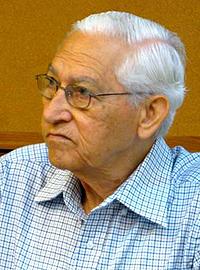 "Claims that exposure to low level radiation does not pose a risk to health are a myth created by governments and the nuclear industry," McCoy (
right
) said, adding that nuclear energy was not cheap, clean nor safe.
"Claims that exposure to low level radiation does not pose a risk to health are a myth created by governments and the nuclear industry," McCoy (
right
) said, adding that nuclear energy was not cheap, clean nor safe.
The biggest and most difficult problem continued to be nuclear waste, as there was no safe method for its disposal.
He also opposed claims made by the government that Malaysia was safe from natural disasters since the country was outside the earthquake-volcano ‘Ring of Fire' belt, since predictions made by geologists globally have been proven wrong on various occasions.
"For an example, an analysis that was made in Japan was inaccurate. It was calculated that the highest tsunami to hit Japan would be 6.7 metres and an earthquake magnitude of 7.9 at the most."
All these were proven wrong when these disasters struck Japan on March 11.
PKR's Batu MP Tian Chua also expressed doubts about Malaysia's ability to build safe nuclear power plants, considering its bad track record on safety.
 "We have a stadium that is hardly a year old collapsing (the Tuanku Mizan Zainal Abidin stadium in Gong Badak, Terengganu, in 2009) and the Parliament building that is
bocor
(leaking) everywhere all the time.
"We have a stadium that is hardly a year old collapsing (the Tuanku Mizan Zainal Abidin stadium in Gong Badak, Terengganu, in 2009) and the Parliament building that is
bocor
(leaking) everywhere all the time.
"Even Dr M (former Prime Minister Mahathir Mohammad) admitted that he had a bad experience on the nuclear matter (the proposal for a 1MW mini-reactor in Bangi in 1982).
"So, how will the current government handle this matter? I'm not sure we can trust this government to build safe nuclear reactors," Tian Chua said, adding that the nuclear debate has not been given enough public attention.
He also noted that the Pakatan Rakyat state governments of Penang and Selangor have rejected any idea of a nuclear power plant being built in their states.
The government announced in December last year that two nuclear plants would be built by 2022 to generate 1,000 megawatts of power each.


Are you sure you want to delete this comment?
This action cannot be undone.