




Bersih - the case for an opposition takeover
COMMENT Now that the Bersih 2.0 rally is over, there exists the opinion among supporters that political parties should not interfere with the running of the coalition for clean and fair elections - and that apolitical members should be allowed to chart the course of the movement.
I would like to argue that this stand would be counter-productive to Malaysia where the one-sided electoral system has benefitted only the Alliance and then the BN since Merdeka.
COMMENT Now that the Bersih 2.0 rally is over, there exists the opinion among supporters that political parties should not interfere with the running of the coalition for clean and fair elections - and that apolitical members should be allowed to chart the course of the movement.
I would like to argue that this stand would be counter-productive to Malaysia where the one-sided electoral system has benefitted only the Alliance and then the BN since Merdeka.
The reason is simple: Having suffered the most under the unjust electoral system, the opposition is most desperate for an equitable election system than anyone else in Malaysia.
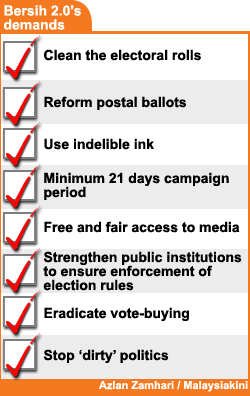 So, it is understandable that opposition parties are backing the Bersih 2.0 agenda, sometimes showing more zeal than the NGO coalition’s leadership.
Opposition leadership will enable Bersih 2.0 to mobilise more effectively and efficiently. In spite of what people say, only the opposition parties have a wide-enough network that reaches into every nook and corner of Malaysia.
I once took a helicopter ride over Perak. Deep in a wooded area, I saw a big PAS flag in a village.
For Bersih 2.0 to make an impact nationwide, its message must be carried across Malaysia, even deep into a Perak jungle.
My argument is simple. The unjust electoral system is designed to deny any party from winning except those from BN. Over the years, the system has resulted in quality individuals shying away from the opposition.
What has been left in the opposition, at all levels, are either diehard ideologues or people from the fringes of society. As a result, the qualities exhibited by opposition leaders have almost always been below par.
 The direct result of this ‘process’ is that the opposition parties work only to appeal to their support base. It means that their their agendas and programmes are of the ‘fringe’ variety, rather than mainstream in nature.
For example, the DAP adopted a ‘Malaysian Malaysia’ agenda which automatically alienated 60 percent of the population, namely the Malays.
That is why, before the 2008 general election, their presence in Parliament was limited to seats with more than 80 percent Chinese. Historically, these seats have numbered not more than 25.
In the last general election, in spite of the massive groundswell among the non-Malay electorate, the DAP garnered no more than 30 seats in Parliament. So, even on a good day, DAP cannot get more than 30 seats.
Tensions in PAS
PAS’ Islamic State Document, meanwhile, was enough to put off 40 percent of the electorate immediately. It learnt this the very hard way in 2004 when its stance helped Umno to a record-breaking feat in Parliament.
PAS lost the prized state of Terengganu and almost all its seats in the west coast, except for the eight traditional Kedah state seats and Permatang Pasir state seat in Pulau Pinang.
After the 1998 sacking of Anwar Ibrahim from his government and political posts, his supporters had nowhere to go but to PAS.
The
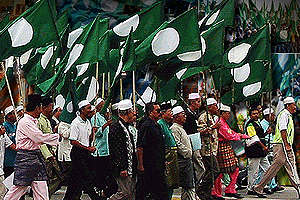 influx of moderate minded Islamists, along with hundreds of thousands of mainstream Malay Muslims into the PAS membership rolls, forced the party to start changing and leave its comfort zone.
But since 1999, there has been tension between the fringe core and the mainstream half of the party. Sometimes the fringe core has won, sometimes it hasn’t.
For instance, in 2004, the fringe core managed to seize the moment on the back of Fadzil Nor’s demise to promote the Islamic State Document.
The fringe core wanted to put their foot down and show who the boss was. But the effect on PAS was disastrous. It was handed one of its most embarrassing electoral defeats to date.
Election that changed everything
However, the results of the 2008 general election brought change to both the DAP and PAS, pushing them into the mainstream of politics.
The DAP has been actively recruiting Malays and bumiputeras, while PAS has adopted the ‘Welfare State’ policy and ‘PAS for All’ slogan.
Unfortunate for PAS, the fringe core and defectors from its mainstream then pushed the ‘Unity Government’ agenda, to get the party to work with Umno.
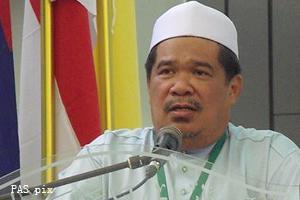 But PAS was put back on track, when Mat Sabu
(right)
was elected deputy president earlier this year. He replaced Nasaruddin Mat Isa, a turncoat from the mainstream half of the party.
But PAS was put back on track, when Mat Sabu
(right)
was elected deputy president earlier this year. He replaced Nasaruddin Mat Isa, a turncoat from the mainstream half of the party.
While these issues kept the two opposition parties occupied, the BN was preoccupied with sustaining its own interests and those of its cronies.
The interests and problems of the majority of the people were bypassed. They had no one to whom they could turn. They had no one credible enough and strong enough to fight for their interests and their rights.
 Since 2008, PAS, PKR and DAP have strengthened the Pakatan Rakyat coalition. Each party has shown it is willing to put the interests of the majority above its own ideals.
The real winners are the people. The victory in 2008 (and in1999 for PAS) has seen an increasing number of quality individuals entering and leading opposition parties. This has provided the electorate a sound and credible alternative to the BN.
However, all this might change if the electoral system is not corrected and if the opposition parties lose what they gained in 2008.
For Malaysians to gain from the political system, the quality of the opposition leadership must be maintained and improved.
As such, it is in the best interests of Malaysians to see opposition parties take the lead in Bersih 2.0, and to push its cause through.
Remember, the cleaner the election system is, the more individuals of calibre will participate in our political process.
ABDUL RAHMAN ABDUL TALIB is a social blogger with an engineering background, which helps him to be empirical in his analysis. Politics have been his passion since schooldays. Writing is a hobby that he picked up a few years ago. He can be contacted at malaysiawaves@rocketmail.com


Are you sure you want to delete this comment?
This action cannot be undone.