




KJ: Rakyat can help dispel national security bogey
The civil society needs to play a greater role in dispelling the government's ‘national security' concerns if it wants more freedom of information, said Umno Youth chief Khairy Jamaluddin.
The civil society needs to play a greater role in dispelling the government's ‘national security' concerns if it wants more freedom of information, said Umno Youth chief Khairy Jamaluddin.
Khairy conceded that there is an "institutionalised" culture of secrecy in the civil service that is "not compatible" with the more open approach preferred by the current administration under Prime Minister Najib Razak.
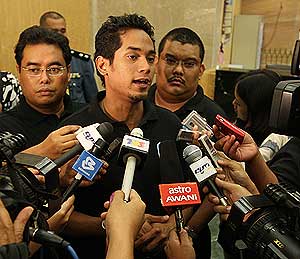 "It's the easiest thing that the government can use, all that mumbo jumbo about national security... I want to take that away from them," he said at a forum on Freedom of Information (FOI) at the Bar Council auditorium last night.
Khairy claimed that Najib is pushing for a more open administration, but stressed that key government agencies such as those under the Home Ministry are operating on "default" mindsets that perpetuate the culture of secrecy.
"Let's take the example of The Economist's literal blacking out . This was a default attitude, which was not on orders of the minister or anyone.
Khairy also criticised the controversial Media Consultative Council proposal, saying that the same mindset saw more government representatives sitting on the council than those from the media.
He particularly highlighted the absence of representatives from the online media, scoffing at the government's decision to instead include members from the pro-government Blog House Malaysia.
"I think we've got a prime minster who is open, but we are faced with an institutional mindset that is not compatible with openness," he said.
The onus is on the rakyat, says KJ
According to Khairy, who is also Rembau MP, while the government of the day is determined the voters, it also falls on the rakyat to work within the confines of the government to achieve what they want.
He said the issue of Freedom of Information Act (FOI) is not a "binary issue" that is confined to just a "yes or no" equation, stressing that there are many nuances that need to be considered before such a legislation is tabled in Parliament.
The rakyat need to show that the government can take "comfort" in the fact that they are well aware of what issues can come out in the open and what should be kept under the lid in the interest of national security.
"Just because we are liberal does not mean we are weak. We (need to show) that we understand national security," he said.
Khairy commended the Pakatan Rakyat-led Selangor government for passing the "landmark" FOI Act, but pointed out that it still has weaknesses that do not address the larger issue of national security concerns at the federal level.
He highlighted successful tender applications as one example of the Act's inadequacy, comparing the transparency of such deals between the federal and Selangor and Penang state governments.
Khairy said while the federal government - through its e-Perolehan website - and the Penang government post successful tender applicants as well as the cost of their tenders online, the Selangor government only indicates the successful bidder, without stating the tender value.
He stressed that this situation merely highlights the institutional issues that need to be resolved before the country is ready to move forward and adopt a culture of greater transparency and accountability.
Santiago: Culture of secrecy must come
Meanwhile, DAP's Klang MP Charles Santiago, who was also a panelist at the forum, stressed that there needs to be a change within the parliamentary system to push for greater transparency in government.
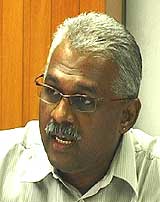 He said that the Malaysian Parliament has "no culture" in the formation of standing committees that oversee government operations, unlike what is practised in Western democracies and even neighbouring countries like Indonesia, Thailand and the Philippines.
"We don't have the culture for these things, because one party has been ruling for too long and does not want to be open," he said.
Charles said any proposal to set up any sort of standing committee will not work, simply because Parliament is "not independent".
"It is an adjunct under the Prime Minister's Department. If (Minister in the Prime Minister's Department) Nazri (Aziz) thinks it's good, then it happens. If not, it doesn't happen... We need to have an autonomous Parliament," he stressed.
Charles noted that with the prevalence of the Internet and the wider spread of information, there is a constant erosion on exclusivity in information, making current secrecy laws such as the Official Secrets Act redundant by the day.
"In some sense, it is open to all to find out. Just go do a Google search and you can find out what Malaysia has got (in its defence arsenal).
"There is enough information available. As we all know, the more secrecy there is, the more there is corruption... This culture of secrecy must end," he said.
Around 80 people attended the two-hour forum, which also had former Universiti Malaya Dean of Law Prof Abu Bakar Munir as a panelist.


Are you sure you want to delete this comment?
This action cannot be undone.