




Lynas a step closer to building Gebeng plant
Lynas today moved a step closer towards setting up its rare earth plant in Gebeng, Pahang, after it announced that its waste management plan is being finalised and will be submitted to the International Atomic Energy Agency (IAEA) next month.
Lynas today moved a step closer towards setting up its rare earth plant in Gebeng, Pahang, after it announced that its waste management plan is being finalised and will be submitted to the International Atomic Energy Agency (IAEA) next month.
 "In accordance with the IAEA review, which confirmed the Lynas Advanced Material Plant (LAMP) is safe by all international standards, Lynas will be finalising its waste management plans, including the safety case to the IAEA next month," said the Australian-based company on its
Facebook
page.
"In accordance with the IAEA review, which confirmed the Lynas Advanced Material Plant (LAMP) is safe by all international standards, Lynas will be finalising its waste management plans, including the safety case to the IAEA next month," said the Australian-based company on its
Facebook
page.
A waste management plan is one of the pre-conditions set by the Atomic Energy Licensing Board (AELB) under the Science, Technology and Innovation Ministry before it approves the pre-operations licence for the RM700 million plant.
A New York Times article published on June 30, citing internal memos allegedly issued by current and former engineers on the rare earth plant, claimed that there were serious flaws in its design including structural cracks, air pockets and leaks in many of the concrete shells for 70 containment tanks.
It also claimed that the steel piping ordered for the plant is made of standard steel which is unsuitable to manage radioactive slurry and that the storage tanks are made out of conventional concrete which is more likely to crack compared to the polymer variety.
Lynas has since denied the allegations, reiterating that the safety of the local community will be ensured.
The plant is supposed to process rare earth concentrate shipped in from the Lynas Corporation's Mount Weld site in Australia.
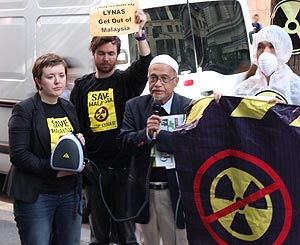 Though rare earth itself is not radioactive, it is commonly mixed with thorium, which is, thus raising concerns of radioactive exposure on local residents.
However, the IAEA report has found that the plant has complied with international radiation standards and it appears likely that the plant will proceed despite opposition from local activists against the project.


Are you sure you want to delete this comment?
This action cannot be undone.