




Asri says progressive Muslims sidelined
While the more progressive Muslims in Malaysia are making headway, they are, however, being "marginalised" by the conservatives, who hold important positions in government institutions, Muslim scholar Mohd Asri Zainul Abidin says.
While the more progressive Muslims in Malaysia are making headway, they are, however, being "marginalised" by the conservatives, who hold important positions in government institutions, says Muslim scholar Mohd Asri Zainul Abidin.
"While progressive groups have contributed a lot of significant reforms over the years, they are marginalised by the conservative groups that control the institutions of religion in government and ensure that only their school of thought is given opportunities.
"The government is probably concerned that members of the progressive movement will criticise things they see," the former Perlis mufti said in an interview with the influential Wall Street Journal yesterday.
Asri went on to criticise "certain parties" that "maintain elements of racism and extreme religious fanaticism to protect their political interests".
 However, said the renowned scholar who was recently listed as a
suspected promoter
of Wahhabism, there were not many conservative Muslim leaders the country.
However, said the renowned scholar who was recently listed as a
suspected promoter
of Wahhabism, there were not many conservative Muslim leaders the country.
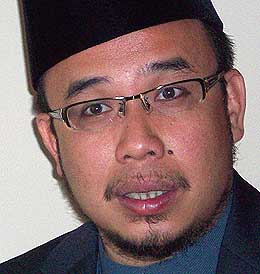
Commenting on the links with the ideology originating in the Arabian peninsula of the 19th century, Asri ( left ) said he was not a follower of Wahhabism, but accepted that there were "sound and relevant opinions" contributed by the teaching.
"If Wahhabi means inviting people to be fanatical, rigid, stern, uncompromising and the like, I oppose it.
"In my opinion some religious views in some Gulf countries are rather narrow, especially on women, non-Muslims, political issues and a few other things. However, even if we disagree with their views, that doesn't mean we can accuse them of terrorism," he said.
Linked to terrorist group
Asri was first linked to Wahhabism and the terrorist group Jemaah Islamiah (JI) early last year, along with PAS president Abdul Hadi Awang, former Perlis Mentri Besar Shahidan Kassim and Perlis mufti Juanda Jaya.
Malaysiakini reported last month that at a National Security Council (NSC) briefing, Asri, Juanda and more than 40 young Umno ulama were alleged to be on a terror links watch list.
"In Malaysia, the word ‘Wahhabi' is quite a mysterious term. Many use the term to slander others, without a clue about its meaning.
"In some places, a person is accused of being a Wahhabi for disagreeing with superstitious rituals and beliefs... when people begin to criticise these practices, they simply say, ‘you are Wahhabi'," Asri said.
He also explained his position on Islam, saying that it "is a religion that blesses everyone", regardless of race or religion.
"Any interpretation of Islam that leads to injustice, oppression, hostility to other people, ignorance, caste systems in society, racism and fanaticism that doesn't respect the rights of others - all of these must be rejected," he added.
Need for 'tajdid'
Asked on whether Malaysia was headed in the right or wrong direction in term of issues pertaining to the freedom to practise one's beliefs, Asri opined:
"The religious authorities in Malaysia should be more open-minded. Their attitude is to force others to think in only one way, and that is not the attitude of civilised people.
"They should remember what happened to the church when the followers refused to change and suppressed people who wanted to change."
Asri said there was a need for "tajdid", which means the restoration of Islam's original perspective and the innovation of certain elements to fulfil "contemporary needs".
"A lot of the contemporary issues we are encountering these days were not known in the past. To ensure the continuous survival of society, various new opinions are required.
"The opinions of preceding theologians may not be wrong, but may have expired due to changes in time and circumstance," he said.


Are you sure you want to delete this comment?
This action cannot be undone.