




Puad: Anwar once labelled Ibrahim Libya a 'traitor'
PKR de facto leader Anwar Ibrahim had once called Ibrahim Mahmud, a slain PAS leader highly revered by party followers, a traitor.
PKR de facto leader Anwar Ibrahim had once called Ibrahim Mahmud, a slain PAS leader highly revered by party followers, a traitor.
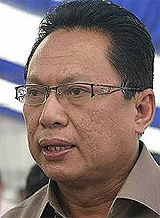 This took place when Anwar was education minister, Deputy Education Minister Mohd Puad Zarkashi said.
Ibrahim, better known as Ibrahim Libya, and 13 of his followers were killed in 1985 after the police laid siege on a madrasah in Memali, near Baling in Kedah, under controversial circumstances.
"About Memali, when I was studying in the United States, Anwar was education minister. I had chaired a forum at which he said Ibrahim Libya was a traitor.
"He said Ibrahim Libya triggered a situation that could cause chaos and political tension," Puad said in response to a question at a forum on "Should history be rewritten?" organised by Malay daily Sinar Harian yesterday.
Other participants were PKR secretary-general Saifuddin Nasution, historian Ramlah Adam and Universiti Malaya Literature and Social Science Faculty dean Mohamad Abu Bakar.
Puad's comments were seen as aimed at arousing suspicions against Anwar among PAS supporters, but Saifuddin replied later that he was unaware of this.
No point finger-pointing now
Saifuddin, who has been a close follower of Anwar since their Umno days, took the opportunity to use the Memali incident as a historical event that required re-examining.
 However, since the matter had been settled out of court and the victim's families have been compensated, what was pertinent was to ensure that such a tragedy was not repeated.
"We do not want to be trapped in the polemics of finger-pointing. Every fact has to be verified... that was a black tragedy. It is not politics to find ber finding fault," Saifuddin said.
It was reported that 3,000 police officers had laid siege on a village in Memali, after Ibrahim and 35 of his followers, accused of being a threat to national security, barricaded themselves in the madrasah to avoid arrest.
Ibrahim was also wanted under the Internal Security Act (ISA).
The official government account says the police were attacked by Ibrahim's followers who used firearms, parang, swords and bamboo spears, forcing them to open fire on the village.
Four police officers were killed in the incident, with 23 police officers and 14 civilians injured.


Are you sure you want to delete this comment?
This action cannot be undone.