




Syamsuddin calls on religions to make common cause
Indonesian religious leader Din Syamsuddin told a Penang government forum on ‘True Moderation' today that Islam required its adherents to follow the path of moderation.
Indonesian religious leader Din Syamsuddin told a Penang government forum on ‘True Moderation' today that Islam required its adherents to follow the path of moderation.
The head of Muhammadiyah, the second largest social organisation in Indonesia after the Nadhlatul Ulama, Prof Dr Syamsuddin said in his keynote address that the biggest threat to human civilisation was the absence of peace caused by a host of ills of which injustice was the main driver.
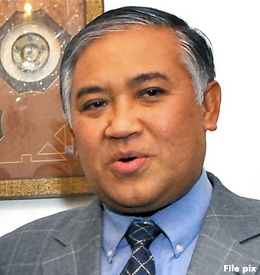 He said the "cumulative global damage" caused by "poverty, discrimination, injustice and illiteracy" compelled adherents of the major religions of the world to seek a "meeting of minds" to combat the "urgent threat to human civilisation."
Speaking extemporaneously and moving easily between Bahasa Malaysia, Bahasa Indonesia and English while throwing in words and phrases in Arabic, Syamsuddin discounted as facile the Samuel Huntington theory of a clash of civilisations that found favour after the 9/11 attacks.
He said that although in the past Islam and Christianity had contended for domination in parts of Europe and the Middle East, the view that the two religions were perpetually antagonistic was spurious.
"It was only during the time of the Crusades and in the latter period of European colonialism that they vied for domination and control," said Syamsuddin.
He said that what he called the "Islamophobia" of recent years was the fruit of the policies of the George W Bush administration after the 9/11 attacks.
Syamsuddin said the resulting antagonism gave a specious importance to Huntington's theory of a clash of civilisations though he felt that the more urgent threats to world peace were the prevalence of poverty, injustice, environmental degradation and illiteracy.
"The need for inter-religious dialogue between the world's major religions was urgent to combat these scourges," said Syamsuddin.
Quran acknowledges religious pluralism
He noted that certain quarters were allergic to the phrase "interfaith dialogue" because they think that it is an attempt to "similarise our differences" which had the unfortunate effect of "dissimilarising our similarities."
 There is no running away, said Syamsuddin, from the reality that the peoples of the world were of "one humanity, one destiny and one responsibility."
He said the Quran acknowledged the pluralism of religious beliefs in the world and counseled Muslims to adopt "wasatiyyah", a term impelling Muslims to a balanced worldview and moderate practices.
Syamsuddin said inter-religious dialogue was imperative but must be undertaken with sincerity.
"Above all, words must be matched by deeds for without matching deeds, calls for moderation are hollow. Sincerity is key to the whole project of dialogue among the religions."


