




NUJ asks media owners to abide by fair reporting
The National Union of Journalists (NUJ) will submit a memorandum urging all media owners to respect its members’ fair reporting pledge.
The National Union of Journalists (NUJ) will submit a memorandum urging all media owners to respect its members’ fair reporting pledge.
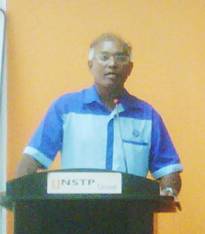 The union passed a resolution today at an extraordinary delegate conference pledging fair reporting by its members.
Union secretary-general V Anbalagan ( left ) said the memorandum will be submitted soon to the editor-in-chiefs of key media organisations, including N ew Straits Times, Utusan Malaysia, The Star and Sin Chew Daily .
This will be done through the union’s respective chapters operating in the media organisations.
“If the Utusan chapter needs help to talk to their owners, I am willing to follow up,” said Anbalagan following the union meeting in Kuala Lumpur.
Ethics means profits
The 1,500-strong union said it will persuade media owners to respect members’ desire to practice ethical journalism, especially in the upcoming general election.
Later, at a press conference, Anbalagan said media outlets must learn to provide quality reporting to remain relevant in the face of rising public expectations and competition from the new media.
"We are in the business of selling news. Under the current media scenario, ethics means profits,” he said, adding that demand is high for balanced reporting.
Asked what NUJ will do if their demand gets the cold shoulder treatment, the New Straits Times journalist ruled out the possibility of staging a protest, but said pressure will be maintained.
“This is the first time we are doing it, it’s a baby step. We might fall a few times, but we will keep trying until we stand,” he said.
The union’s second resolution, calling upon political parties to pledge reviewing all existing legislation pertaining to the media, will be submitted as a memorandum to parliamentarians when the House resumes seating on March 12.
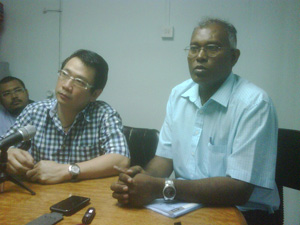 NUJ president Chin Sung Chew (
left in
photo
) said political parties should at best include the issue in their election manifesto or undertake to appoint a parliamentary select committee should they be voted into power.
NUJ president Chin Sung Chew (
left in
photo
) said political parties should at best include the issue in their election manifesto or undertake to appoint a parliamentary select committee should they be voted into power.
Earlier on at the debate session, delegates rallied behind the idea of reviewing the Printing Presses and Publications Act 1984 (PPPA), Official Secrets Act (OSA) and Sedition Act, saying the laws have impeded them from carry out their duty.
Assault of journalists slammed
On PPPA, a delegate said she felt “threatened” by such a law which empowers the Home Ministry to revoke printing licence of any media organisation.
“(The government) wants us to be fair in reporting. But the moment something goes wrong, they pull our licence. How fair is that?” a delegate said.
She also gave the thumbs down the Home Ministry’s style of asking journalists to explain themselves when their reports stirs up a controversy.
“If (a mistake is made), sue us. Don’t ask us to explain ourselves,” she said.
The delegates generally concurred that the government should review the definition of OSA and that “the National Feedlot Corporation’s (NFC) scandal and highway concessionaire agreements should not be classified as confidential”.
Another delegate suggested that section 21 of the Penal Code be amended to embrace journalists as public servants, and those obstructing them from carry out their duty be liable for punishment.
The union also condemned the assault of two Kwang Wah Yit Poh reporters during last Sunday's the Himpunan Hijau 2.0 solidarity rally , while a delegate put forward the idea of a press complaints centre.


Are you sure you want to delete this comment?
This action cannot be undone.