




Maximus reminds PSC members of gag rule
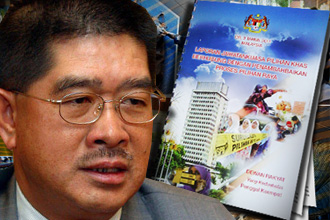
Parliamentary select committee (PSC) on electoral reforms chairperson Maximus Ongkili reminded the opposition representatives to be “cautious” in divulging information exclusive to the committee.
Parliamentary select committee (PSC) on electoral reforms chairperson Maximus Ongkili reminded the opposition representatives to be “cautious” in divulging information exclusive to the committee.
“I have cautioned the PSC members from going to the public... we haven’t decided (on it). We have done a lot screening on duplicate and single addresses of many voters... there are many possibilities,” he told reporters at the Parliament lobby today.
On Tuesday, Azmin Ali (PKR-Gombak), Anthony Loke (DAP-Rasah) and Hatta Ramli (PAS-Kuala Krai), who on the PSC, distributed copies of Malaysian Institute of Microelectronic Systems (Mimos) papers where the defects in the electoral database were exposed.
They had said that there are 79,098 voters registered in 354 addresses with at least 100 voters in each.
 “Thirty years ago when you registered there might not have been a jalan in the kampung. (That could be the reason why) some have incomplete addresses and (these) people didn’t bother to update,” said Maximus.
The Science, Technology and Innovation Minister cited Standing Orders 85, reminding the commitee members that all documents discussed are not for public consumption until the final report is released to Parliament.
With two more meetings to go before the committee’s tenure ends on April 2, Maximus also said that the final report may not be able to fulfil all of electoral reform movement Bersih’s eight demands and over 300 recommendation from the public.
He said this when asked about the coalition’s threat to take drastic measures, including another massive street rally, if polls reforms does not transpire.
Maximus said that only six of the eight demands will be included in the committee’s report which is expected to be completed nest week.
“It is impossible for us solve all problems... some things in the report will be there for younger MPs to take it up in the future,” he said, adding that some of the Bersih’s demands require new legislation to be drafted which is time-consuming.
“Things like a non-partisan media, what can I do?” he asked.
The pro-electoral reform coalition had previously orchestrated two massive rallies, in 2007 and 2011, pushing for changes in the election laws and regulations claiming of grievous abuses and fraud in the system.


Are you sure you want to delete this comment?
This action cannot be undone.