




EC mulls holding all-party campaign debates
One of the options considered by the Election Commission (EC) to ensure fair media access to all parties during the upcoming election is to organise debates featuring leaders from contesting parties.
One of the options considered by the Election Commission (EC) to ensure fair media access to all parties during the upcoming election is to organise debates featuring leaders from contesting parties.
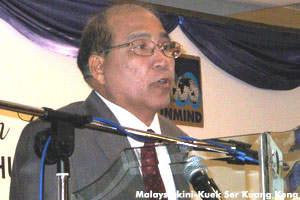 “Like other countries, for example, the EC may organise or outsource debates among leaders of parties that will contest,” said EC deputy chairperson Wan Ahmad Wan Omar (
left
) during a dialogue with the Foreign Correspondents Club in Kuala Lumpur last night.
“Like other countries, for example, the EC may organise or outsource debates among leaders of parties that will contest,” said EC deputy chairperson Wan Ahmad Wan Omar (
left
) during a dialogue with the Foreign Correspondents Club in Kuala Lumpur last night.
He was quizzed on the EC’s proposal to ensure state-owned media give fair coverage to all parties during the election campaign, which is one of the 22 recommendations raised by the parliamentary select committee (PSC) on electoral reform.
Wan Ahmad revealed that the EC has secured the commitment from senior officers of the Information, Communications and Culture Ministry and is now preparing to meet the minister, Rais Yatim.
Besides the idea of conducting debates, he declined to divulge the EC’s proposal to the ministry despite repeated requests from the media.
“The proposal cannot be announced here... It is not respectful to the government,” he explained.
Foreigners given citizenship
On the issue of the large number of foreigners given citizenship and voting rights, Wan Ahmad said he is not surprised as many foreigners had entered Malaysia in the 1970s, as plantation workers and proceeded to apply for permanent residence status and eventually citizenship.
“Under the Federal Constitution, they are eligible to apply for citizenship after being permanent resident for 12 years... so I’m not surprised, they must have got their citizenship by now,” he explained.
He stressed that granting citizenship and managing the relevant data are not the EC’s responsibilities because they fall under the purview of the National Registration Department.
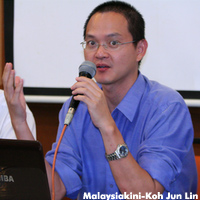 The Malaysian Electoral Roll Analysis Project (Merap) director Ong Kian Ming (
right
), who has earlier been chided by
Wan Ahmad
, was also present at the dialogue.
The Malaysian Electoral Roll Analysis Project (Merap) director Ong Kian Ming (
right
), who has earlier been chided by
Wan Ahmad
, was also present at the dialogue.
He questioned Wan Ahmad on the reason of omitting the details of voters removed from their constituencies in the supplementary rolls of the last two quarters.
Previously the supplementary rolls would state the reasons for voters being removed from their constituencies such as dead, joining the army or change of address, but these details have been missing since the fourth quarter of 2011, Ong claimed.
He also asked why the EC withholds certain information of the voters from the public such as religion, race and serial numbers of voter registration - all of which can identify the nationality of the voters before becaming Malaysian citizens, and how they were registered, whether by post office, political parties or government agencies.
However ,Wan Ahmad dodged Ong’s questions and repeatedly asked him to go to the EC office to have his doubts cleared.
“If you come to see us, we will explain one by one. We should be partners in cleaning the electoral roll,” he said.
Ong replied that he is not keen to meet the EC privately because a team of researchers, including him, had submitted recommendations to the EC in 2003 to clean the electoral roll but they were not implemented.
“I prefer to have the discussion openly so the public can understand the issues,” he added.


Are you sure you want to delete this comment?
This action cannot be undone.