




PKR leaders charged to thwart Suhakam's probe?
The government's motive in prosecuting top PKR leaders in connection with the Bersih 3.0 rally has raised questions whether the legal proceedings are to thwart independent investigations.
The government's motive in prosecuting top PKR leaders in connection with the Bersih 3.0 rally has raised questions whether the legal proceedings are to thwart independent investigations.
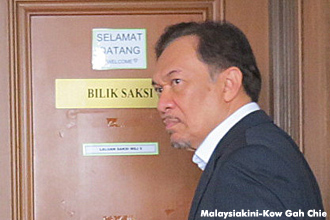 DAP stalwart Lim Kit Siang said the charges against PKR de facto leader Anwar Ibrahim, deputy president Azmin Ali and former central leadership council member Badrul Hisham Shaharin are "designed to pre-empt and avoid any independent, impartial and comprehensive inquiry into this important issue".
Lim, in a statement today, also commended the Human Rights Commission's (Suhakam) move to initiate a probe into claimed abuses during the rally instead of waiting for the independent panel set up by Putrajaya, to be led by former police chief Hanif Omar, to finalise its terms of reference.
However, Lim said the prosecution of the three could impede a thorough and comprehensive investigation by Suhakam.
The Human Rights Commission of Malaysia Act 1999, under 'Powers of Inquiry of the Commission', prevent it from investigating matters before a court.
"With the prosecution of Anwar, Azmin and Badrul, even the Suhakam probe into Bersih 3.0 violence could be prevented from inquiring and establishing whether anyone of them had given the signal for the breach of the Dataran Merdeka barricades," he pointed out.
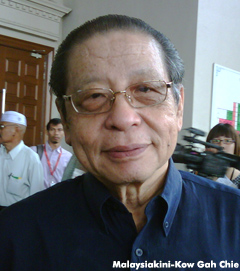 Lim asked if the sudden decision to charge the three was to pre-empt any Suhakam inquiry from conducting an independent and impartial investigation into the ‘breach' of the Dataran Merdeka barricades.
Chiding their prosecution as "an act of utter bad faith", Lim said it goes against Prime Minister Najib Abdul Razak's promise of a full and impartial inquiry into alleged violence by police personnel during the rally on April 28.
The trio were charged in a Kuala Lumpur sessions court this morning, under Section 4(2)(c) of the Peaceful Assembly Act with taking part in the Bersih 3.0 rally.
They were also said to have violated magistrate Zaki Asyraf Zubir's court order dated April 26, which prohibited the gathering at Dataran Merdeka and the area bordered by Jalan Sultan Hishammuddin, Jalan Raja and Jalan Kelab.
They allegedly committed the offence between 2.30pm and 3pm on April 28.
They face another charge under Setion 188 of the Penal Code.
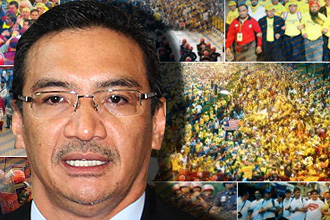 Lim also said Home Minister Hishammuddin Hussein's view that Anwar and Azmin signalled the crowd to breach the barbed wire barricades, as stated in his interview in the
Sunday Star,
could have been used a basis for the prosecution.
Lim also said Home Minister Hishammuddin Hussein's view that Anwar and Azmin signalled the crowd to breach the barbed wire barricades, as stated in his interview in the
Sunday Star,
could have been used a basis for the prosecution.
"The sudden and abrupt prosecution of Anwar, Azmin and Badrul in connection with the breach of the Dataran Merdeka barricades smacks of mala fide on the part of the Najib's premiership because it is clearly designed to pre-empt and avoid any independent, impartial and comprehensive inquiry into this important issue," the Ipoh Timor MP added.
"This is all the more deplorable when the trio have strenuously denied giving the signal to breach the barricades, as borne out by video testimony."
Eight key issues
The veteran DAP leader also appealed to the government to withdraw all prosecutions related to the Bersih 3.0 rally and not to halt Suhakam's inquiry to get to the bottom of eight key issues:
- Was there a coup d'etat attempt in Bersih 3.0 to topple the government?
- Why was there a police rampage of excessive, disproportionate and indiscriminate use of force, whether tear gas, chemically-laced water cannon or physical violence and brutality against peaceful protesters after 3pm and lasting some five hours that day?
- For those who broke through the 'barricade', why didn't the police just take action against them instead of punishing the vast peaceful majority who had gathered in peace and wanted to disperse in peace?
- Why were some police personnel without name tags and numbers?
- Why were media and press representatives targeted and attacked by the police, with cameras smashed and memory cards removed?
- Why were some LRT stations ordered to close after the tear gas/water cannon rampage started? Was it the intention of the police to disperse the people or to 'trap' them to 'teach them a lesson'?
- Is it true that the airwaves were purposely jammed so that communication was hindered causing further confusion in the midst of a stressful situation?
- Who in the police force or the Home Ministry were responsible in giving the green light for these human rights violations and disregard of principles for the use of force and firearms by police personnel?


Are you sure you want to delete this comment?
This action cannot be undone.