




Not right for gov't to start media council, says don
The media council is an initiative that is best started by the by the press fraternity itself and not by the government, a senior communications lecturer told a forum on press freedom today.
The media council is an initiative that is best started by the by the press fraternity itself and not by the government, a senior communications lecturer told a forum on press freedom today.
"When the government had on many occasions announced that it would set up, or allow reporters to set up a Press Council, or a Press Consultative Council, something is not right, I think.
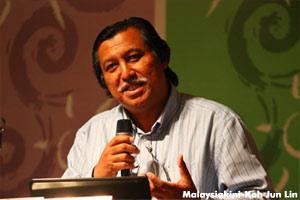
"This is because whoever announces a self-regulatory mechanism normally also controls that ‘self-regulation’," Universiti Teknologi Petronas (UTP) professor Ahmad Murad Merican said
 .
.
Once formed, he said, it could be established as a statutory body through a Private Member’s Bill and receive funding directly from the Parliament, after which the Printing Presses and Publications Act (PPPA) should be abolished.
Met after the forum, Ahmad Murad explained that establishing the media council through a Private Member’s Bill, as opposed to a Bill from the government, and placing it directly under the Parliament rather than a ministry would maintain the council’s integrity and trust as an independent body.
He also told the forum that in 2001, he had drafted a framework to set up a media council, but the idea has remained dormant since.
“The present document is still the 2001 draft proposal for a press council, and I am surprised by the fact that it was not given to you (the media) or to others concerned.
Draft needs to be developed, amended and reviewed
“The draft needs to be developed, amended and reviewed, but it should be the framework because it spells out the constitution, code of ethics and conduct and the various members of the press council... it should be given to those who want to pick it up,” he said.
The Attorney-General’s Chambers has been in talks with selected media practitioners to form a media council.
The idea of a medial council was mooted as far back as the 1970s - but always seen as another layer of control on top of existing media regulations, especially the PPPA, and has been rejected by the industry.
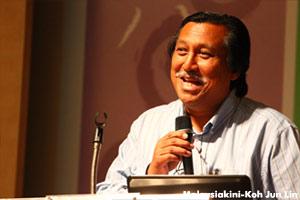 Ahmad Murad, who is with UTP’s Department of Management and Humanities, said his draft proposal calls for a 24-member council led by a retired judge.
Three quarters of its members would be media practitioners, such as reporters and editors, while the rest should be made up of distinguished members of society who have no political affiliation, and academicians.
Its role would be to register and police media organisations and handle public complaints against its members.
The proposal also included a code of ethics.
“The code of ethics cannot be legalistic, or it will become law. It should also not be too flimsy or it cannot be executed,” Ahmad Murad explained.
In addition, he said, the proposal defines a journalist as a person on a media organisation’s payroll, but today he has a different take on the matter.
Unlike professionals such as doctors or lawyers, Ahmad Murad noted, any person could become a reporter without having to take a particular academic course or sitting through qualification examinations.
'Anybody can become a reporter'
“In general, anybody can become a reporter, even without a degree in journalism... I told my students that if I were a news editor, I would not take them in as reporters because I do not believe - although I teach journalism - that only such training will make them journalists,” he said.
He said reporters in Europe were usually social science graduates majoring in subjects such as history, philosophy and psychology. The situation is different in the US, but the best reporters there are still those who came from these backgrounds, not journalism schools.
 “So whether journalism is a ‘profession’ needs to be discussed a detail. Or, is it a job... a career, a craft, a vocation or a calling?”
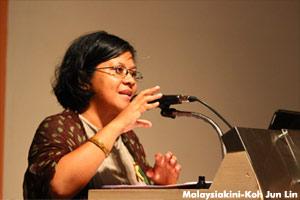
Another panellist, Centre for Independent Journalism executive director Masjaliza Hamzah ( above ), said there has been limited details about the consultation with the media by the Attorney-General’s Chambers, but it did call for journalists to define who is a journalist, which she said was problematic for the reasons Ahmad Murad had given.
She also expressed concern that if the media council were to include both print and online media, it could be used as a means to exert control over the Internet, where regulations are more relaxed.
Other panellists at the forum were media activist Fahmi Fadzil and National Union of Journalists (NUJ) president Chin Sung Chew, with former Bernama editor-in-chief Azman Ujang moderating the discussion.
The forum held in Kuala Lumpur was organised by the Malaysian Human Rights Commission (Suhakam) in conjunction with World Press Freedom Day, which is observed annually on May 3. Some 80 representatives from NGOs, students and reporters attended the forum.


Are you sure you want to delete this comment?
This action cannot be undone.