




In a democracy, it's derelict to duck a debate
COMMENT Without doubt, the unalloyed gain of the 12 th general election has been the fillip it has given to debates between political parties and their paladins.
COMMENT Without doubt, the unalloyed gain of the 12th general election has been the fillip it has given to debates between political parties and their paladins.
True, such debates rarely settle the merits or demerits of positions taken up by duelling speakers but they do allow an appraising public to obtain a better grasp of our politicians' ability to articulate their views.
In any case, in democratic discourse, the best test of the power of a political position is its ability to withstand competition in the marketplace of ideas.
In other words, a clash of political opinions in open debate offers the public the opportunity to evaluate the politicians seeking to represent them where it most matters - legislatures in which ideas morph into laws.
There has been a profusion of debates between exponents of various shades of political opinion going into the hectic final prelude to the 13th general election.
What a contrast to the status quo before 2008!
There hardly were debates between BN stalwarts and oppositionists in the pre-tsunami phase of our political history.
For a long time just about the only opportunity opposing politicians had to debate each other was provided at the ‘Great Malaysian Economic Debate', an annual staging of the economics society of the Universiti Malaya.
For nearly two decades from the early 1970s when this debate was first initiated till it fizzled out, the series was a lively affair, pitting opposition stalwarts from the DAP and PAS against the more voluble and braver exponents from among the Umno-BN coterie.
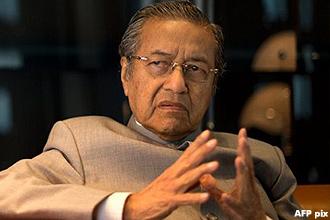 This annual encounter petered out in the early 1990s when Dr Mahathir Mohamad (
left
) derided it, in one year, as "neither great in stature nor economic in content".
This annual encounter petered out in the early 1990s when Dr Mahathir Mohamad (
left
) derided it, in one year, as "neither great in stature nor economic in content".
As with opinions emanating from Mahathir when he was prime minister, their effect on the public arena was to either forge or squelch the matter at hand.
Mahathir's derision surprising
That in itself was reason for the promotion of debate: no one in a democracy should be allowed to strangle debate with a single set of vocal chords.
Mahathir's derision about the ‘Great Malaysian Economic Debate' was surprising in that he was easily the most effective debater on a night in late 1974 at Dewan Tunku Canselor, the preferred venue of the annual debate because its size could cope with attendances of several hundreds.
As the newly-minted education minister, Mahathir in 1974 had the better of the late Dr Tan Chee Koon of Pekemas and a host of others, including the late SP Seenivasagam of the PPP.
Fortunately, Mahathir's past and recently reiterated scepticism about the usefulness of debates is not the ruling wisdom on the matter.
But it does give Prime Minister Najib Abdul Razak cover to avoid a head-to-head joust with opposition leader Anwar Ibrahim.
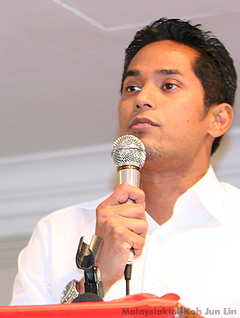 Najib has said that a debate with Anwar would not settle anything - and therefore, would waste his precious time.
However, his surrogate, Khairy Jamaluddin ( right ) of Umno Youth, has been game where his boss is lame.
Khairy has twice taken on Anwar protégé Rafizi Ramli of PKR in public debate, the first time in London, and the second before a domestic audience.
He has also had a go at Ambiga Sreenevasan of polls reform pressure group Bersih.
To be sure, the debates did not settle the issues flaring in the public arena but they did give a watching public a chance to feel out opinions when these clashed in open contest.
In democratic discourse, a willing debater tends to enjoy a higher stature in the public estimate than a weaselling one: the public likes to see whether their political leaders can stand and deliver.
More importantly, they like to see how they can or cannot take the rough with the smooth. Rhetorical grace under antagonistic pressure is a mark of one's political capability.
Because political authority in a democracy is based on the capacity for giving good and convincing reasons, it follows that the most authoritative leaders and parties are the ones that are most effective in deliberating issues and persuading the people.
In this scheme of things, the true statesman is the master rhetorician. And the latter's mettle is most effectively tested in debate.
This is why just now the spate of debates in the Malaysian political arena is an unadulterated gain for a public caught in the throes of mulling their vote in what is considered the most pivotal election in our history.
Politicians dodging the challenge to lay their views and positions on the firing line in real time are ducking the chance to weigh-in in an incomparably vivid manner on that process.
It is a dereliction of democratic responsibility.
TERENCE NETTO has been a journalist for close on four decades. He likes the occupation because it puts him in contact with the eminent without being under the necessity to admire them. It is the ideal occupation for a temperament that finds power fascinating and its exercise abhorrent.


