




WAO: Stop taking media on anti-vice raids
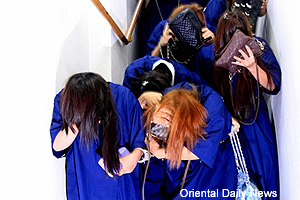
Amidst criticism of a media pursuit to photograph naked women during a recent police anti-vice raid in Selangor, calls have been aired for greater respect for news subjects as well as a stronger grip on journalistic ethics.
Amidst criticism of a media pursuit to photograph naked women during a recent police anti-vice raid in Selangor, calls have been aired for greater respect for news subjects as well as a stronger grip on journalistic ethics.
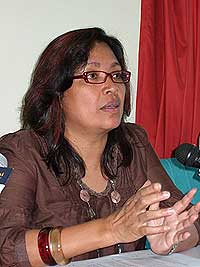 Women’s Aid Organisation executive director Ivy Josiah said the police should stop taking media personnel along on the raids, especially to massage parlours.
“Why should the media be there in the first place? The police should have never invited the media,” said the long-time campaigner for fairer portrayal of women in the media.
“Over the years, whenever there is a raid, they (media have) tended to take photographs of naked women… The customers and employers have rarely been shown and this is sexist.
“It is a common practice but it is humiliating and disrespectful to the women. The portrayal of women in the media has always been problematic.”
Photographers involved in the raid stand accused of taking pictures of the women, even following them to their changing rooms. The police apparently did not stop the photographers.
 Ivy said reporters and media photographers should be educated by their editors to stop being unethical.
“The editors should focus on the ethical issues of their subordinates. They should be educated to respect women, innocent or guilty,” she told Malaysiakini today, noting that those caught in such situations could be victims of human trafficking.
She suggested that the media industry should monitor itself by seeking help from support groups like the Centre for Independent Journalism (CIJ) and National Union of Journalists (NUJ) to step up ethical reporting.
Malaysiakini also spoke to other stakeholders on this issue.
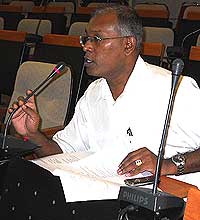
NUJ secretary-general V Anbalagan
All journalists and photographers covering events must respect the privacy of the people involved.
 They (news subjects) are innocent until proven guilty. Media are quick in blaming people and it is dangerous especially when it involves the rights of women and children.
The media is trying to paint a negative picture by posting (indecent) photos of women. The women have not been charged (with any offence). They are still being questioned by the police.
Since reporters need to write their stories, they should be careful in handling the photos and should not identify the women.
Although the NUJ has provided classes on ethics in the past, it is the job of the employer to fully educate the photographers and journalists.
The NUJ will look into updating the code of ethics. Times have changed, so the code needs to be changed too.
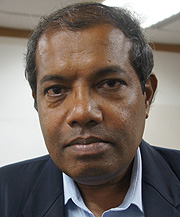
Muhammad Sha'ani Abdullah, Commissioner, Human Rights Commission of Malaysia
The media should not sensationalise their articles to sell more newspapers.
 In any news coverage, they (media) should respect the subject's dignity.
The media should not use images of these people to promote their newspapers. This is not in our culture.
The police too have no right to invite the media on raids.
Suhakam will decide whether or not a dialogue is required with news editors to discuss the journalistic code of ethics.
We have highlighted this before. It is the media's responsibility to protect the privacy of (subjects), not degrade them any further.
If one of the girls is your mother, sister, or daughter, would you take the photos and publish them?


Report this comment
Are you sure you want to delete this comment?
This action cannot be undone.