




Creative deconstruction for independent Chinese schools
COMMENT Why had the application for the Kuantan Chinese secondary school turned into such mess?
Without doubt, operating such a school is a private business. Does the government have guidelines for setting up one? Yes.
Did the applicant follow these guidelines? No. Is the community tired of hearing the "sound and fury signifying nothing"? Yes.
COMMENT Why had the application for the Kuantan Chinese secondary school turned into such mess?
Without doubt, operating such a school is a private business. Does the government have guidelines for setting up one? Yes.
Did the applicant follow these guidelines? No. Is the community tired of hearing the "sound and fury signifying nothing"? Yes.
Let's face the reality. After reading the 268-page education blueprint launched on 11/9, expansion of privately -run Chinese schools is not the priority of the government of the day.
The Problem
Every year, thousands were turned away from entering these schools. There is an urgent need either to expand the existing schools, or to add new ones.
Coming from an academic background, although space is a physical attribute of an organization, the solution need not lie in physical expansion. Space creation would brings along other logistic problems, manpower issues ... and more.
An open mind-set is needed for acceptance of new ideas, innovation and creativity.
Contractual relationship with stakeholders
In my earlier article ( Malaysiakini Sept 2, 2012), these Chinese schools were born out of implementation of the 1961 Education Act. They have the endorsement of the Malaysian government.
Whether or not the current government includes them into the main stream education system cannot undo this fact.
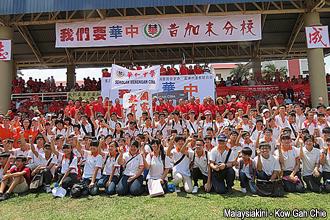 They are funded by dollar-and-cent contributions of the Malaysian public.
Thus there is no fixed proprietorship in this business. What merely exists is a multitude of stakeholders on equal footing.
The contractual relationship created is between the operators of the schools and the entire Chinese community.
Deconstruction for optimisation
Looking at the organizational structure of these schools, a possible solution is through creative deconstruction of operational premises.
Newly created classes may or may not be on the same premise as the original school campus.
A decision would have to be made as to where to conduct which classes.
Whereas the objective for such a transformation could maximize capacity of the 60 schools put together, it needs to be assured that the change would create positive value.
These operators of Chinese schools may want to take a tip or two from certain US universities where the number off-campus and overseas students is by bigger than the on-campus population. I need not explain how this was done.
Framework comparability
The Malaysian government had expressed intention to work on education framework comparability with some 800 universities in China.
Further, Dong Zong has the records of which countries where the universities had accepted the UEC graduates.
These universities can be the starting point for a pro-active step to ensure the syllabi of the courses meet both the university entry requirements as well the quality assurance systems of the respective countries.
Creative destruction
The deconstruction process would call for the breaking down of the entire course structures into base units of each disciplines.
 With no disrespect to the academicians in Dong Zong, this second step of re-organising the course structure would require fresh eyes peeled for identifying opportunities for advancement in education with global outlook.
In re-assembling the supply chain, changes can be made to suit education delivery methodologies, such as e-learning, enhancement in action learning, on-going assessments ...etc..
New courses can also be re-composed to prepared students to meet new delivery methods in universities abroad.
The logic model would enable the creation of new study structures to cater to students aiming for particular destinations for entry such as for China and Taiwan universities, UK and Singapore systems, US and non-Commonwealth systems.
Special schools to cater for excelling in SPM and STPM could also be established for those vying for entry into local public universities.
School credits system
These are special secondary schools. A parents should know where the child is going, and perhaps do some steering along the way. The Ontario schools credits system for Grade 1 to Grade 12, is an example for consideration.
Credits were accumulated and grouped to show the possible pathways.
 Parents could monitor performance and guage whether the child would have enough credits for admission to a particular stream or type of universities.
If deficiencies were revealed, remedial actions could be taken to either change course or to re-look into new potentials.
Dong Zong can introduce a similar system across all the 60 schools to provide for a greater degree of flexibility.
The good work done be Dong Zong as the nucleus should be used as the unifying force to enhance closer collaboration all the 60 schools.
New Malaysian product for the world
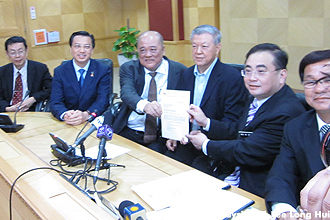 In a gist, both the board of governors of these schools and parents of students need to work together to create the breakthrough from the present stalemate. The key is collaboration, not individual publicity.
As a Malaysian product, it is imperative that the ultimate product must be in line with the aspirations of the nation which point towards quality and global competitiveness.
A last word: please keep politics and politicians out of this change exercise.
The adverse effects that politics could bring to a country's education system have been proven in the cases of London Metropolitan University and in California as well.
All bills on education should be approved by an academic committee before they stumble in and out of Parliament.
DR DAPHNE LOKE was the former Director of Graduate Business School , SEGi University.


Are you sure you want to delete this comment?
This action cannot be undone.