




Regional assembly rejects mega-dams in Sarawak
A regional meeting attended by more than 120 participants representing 11 nations in South-East Asia has made a declaration to reject the development of the 12 planned mega-dams in Sarawak, urging the state government to abide by international standards in protecting indigenous people.
A regional meeting attended by more than 120 participants representing 11 nations in South-East Asia has made a declaration to reject the development of the 12 planned mega-dams in Sarawak, urging the state government to abide by international standards in protecting indigenous people.
The South-East Asia Renewable Energy People’s Assembly (Searepa) was held in Kota Kinabalu last Sunday.
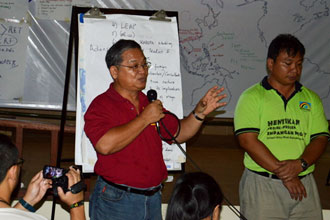 In a press statement issued yesterday, Searepa said they had discussed renewable energy problems in the nation and were concerned about the construction of the 12 planned mega-dams to power polluting industries in Sarawak.
“Across South-East Asia, we have witnessed the inefficiency, failure and destruction caused by similar mega-dam projects. We have also witnessed the potential of community-based renewable energy projects and unanimously believe that instead of continuing to develop these mega-dams, there are many energy alternatives that are more efficient, environmentally friendly and socially and culturally inclusive,” said the representatives.
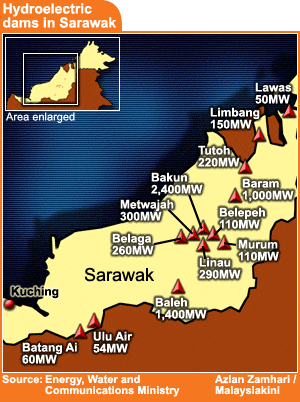 Searepa also voted to reject the on-going development of the 944MW
Murum Dam
in Sarawak that would forcibly remove Penan and Kenyah Badeng indigenous villages, displacing 1,500 people and thus affecting eight native communities around the area.
Searepa also voted to reject the on-going development of the 944MW
Murum Dam
in Sarawak that would forcibly remove Penan and Kenyah Badeng indigenous villages, displacing 1,500 people and thus affecting eight native communities around the area.
“We call upon the Malaysian state of Sarawak to subscribe to guidelines as listed under the United Nations Declaration of Indigenous Peoples of which Malaysia is a signatory,” added the representatives.
Previously, local NGOs have claimed that the 12 mega-dams of the Sarawak Corridor of Renewable Energy (Score) will submerge the ancestral homelands of more than 20,000 people and cause the relocation of their homes which in turn would deprive them of their livelihood and sustenance.


