




'Lynas plant can jumpstart M'sia as rare earth hub'
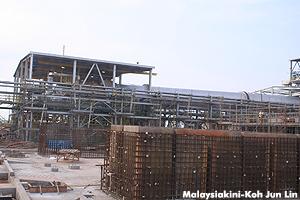
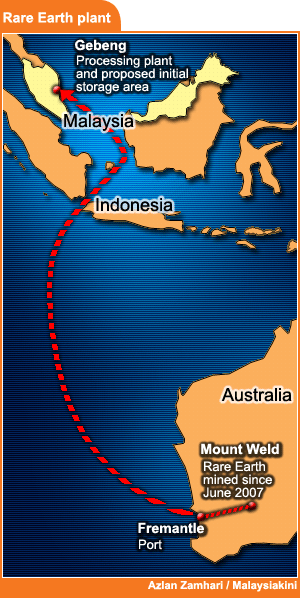
The plan by the Lynas Advanced Minerals Plant (Lamp) in Gebeng near Kuantan to start up the country’s first rare earth plant can help Malaysia move to the forefront of the rare earth industry, says a Universiti Malaysia Pahang (UMP) lecturer and an expert in rare earth.
The plan by the Lynas Advanced Minerals Plant (Lamp) in Gebeng near Kuantan to start up the country’s first rare earth plant can help Malaysia move to the forefront of the rare earth industry, says a Universiti Malaysia Pahang (UMP) lecturer and an expert in rare earth.
UMP deputy vice-chancellor (academic and international affairs) Prof Dr Badhrulhisham Abdul Aziz said Malaysia was well positioned to become a rare earth hub because the country has 0.03 percent of the world’s rare earth reserves and with Lynas providing the rare earth feedstock, can attract downstream industries to locate their factories here.
Prof Badhrulhisham is also a member of the Academy of Sciences Malaysia Rare Earth Committee and chairperson of UMP’s Rare Earth Research Work Committee.
Global demand for rare earth has been on the increase. By 2016, world demand for rare earth elements is expected to reach 160,000 tonnes, up from about 105,000 tonnes last year, according to estimates released earlier this year by Perth-based industry consultant Dudley Kingsnorth of Industrial Minerals Co of Australia (IMCOA).
 Through Lynas, Malaysia can meet up to 20 percent of the global demand.
Rare earth is used for many downstream industries ranging from colour TVs, computer screens, handphones to energy-saving bulbs, magnetic resonance imaging (MRI) machines and vehicles.
The global market for rare earth downstream products in the form of colour TVs, mobile phones, monitors and green energy products is estimated to be valued at over US$10 trillion.
Based on a report dated May 12, 2012 by the Academy of Sciences Malaysia and the National Professors’ Council, Malaysia can capitalise on the strong demand for rare earth, said Prof Badhrulhisham.
“Firstly, the country needs to undertake a national exercise to map out potential rare earth deposits and evaluate their economic potentials. This could start a national enterprise for our mining renaissance.
“Malaysia should encourage upstream mining and extraction of rare earth through partnerships between local and global companies which have access to finance, technology and markets,” he said.
He said downstream manufacturing industries for rare earth products should be given incentives to substitute imports and expand exports, especially for the manufacturing of components for the automotive sector, information and communications technology, consumer or industrial electronics and in newly-established industries like solar power, biotechnology and nanotechnology.
Malaysia also has the opportunity to build up on its human capital skills in rare earth processing and product manufacturing, he said.
World-class R&D centre
Starting with the Lynas facility in Gebeng as a test bed, a world-class research and development (R&D) centre on rare earths will be developed through collaboration between UMP, foreign universities and R&D companies.
Prof Badhrulhisham also said plans were afoot to set up a Rare Earth Vocational Training Institute in Kuantan to supply skilled workers to small and at medium enterprises that will spring up to support the rare earth green technology industry.
 To provide assurance to the public on the safety of rare earth industries, Prof Badhrulhisham recommended that Malaysia’s legal framework be enhanced so that the rare earth industry could function without compromising on the safety and health of the people and the environment.
The Atomic Energy Licensing Board (AELB) and the Independent Malaysian Regulatory Support Organisation (TSO) is a good start as both organisations can monitor the development of the rare earth industry and its safety.
The Lynas Advanced Material Plant in Gebeng has been verified by six independent bodies to be safe and did not contravene local and international safety and environment regulations.
These verifications were conducted independently by Malaysia’s AELB, United Nations International Atomic Energy Agency, an academic expert panel, an independent committee, Public Works Department experts and the parliamentary select committee.
At RM2.5 billion, Lamp is Australia’s largest investment in Malaysia and is expected to create a nucleus for the rare earth industry, just like Petronas created a hub for petrochemical activities in Kertih.
- Bernama


Are you sure you want to delete this comment?
This action cannot be undone.