




MPPP: Why fear 87 units-per-acre density in Penang?
The Penang Island Municipal Council (MPPP) has asked Penangites not to fear the new density guidelines of 87 units per acre, saying that the future is not as "scary" as envisioned by several groups.
The Penang Island Municipal Council (MPPP) has asked Penangites not to fear the new density guidelines of 87 units per acre, saying that the future is not as "scary" as envisioned by several groups.
"It is not as scary as certain quarters make it out to be. What they fear is not going to happen," MPPP Building Department director Yew Tung Seang told Malaysiakini.
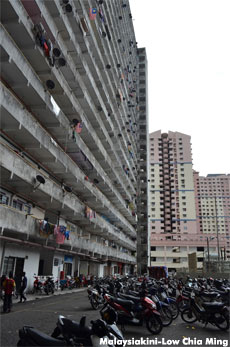 Yew said the ruling would only cover about 270 acres or less than one percent (0.37 percent) of the island, with the ultimate aim of promoting affordable housing.
Under the previous ruling, the density allowed was 30 units an acre (bumiputera developers enjoy 39 units an acre) or 8,100 units (270 acres x 30 units/acre), regardless of size of building, he added.
Under the new ruling, which came into force on June 28, 2010, the maximum build-up area allowed is only 122,000sq-ft, he Yew said.
About 23,490 units (270 acres x 87 units/acre) are expected to be built, an increase of 15,360 units (from 8,100 units) in 20 years or about 768 units per year, he said.
This comes with a cap on the cost of the units, where at least 25 percent has to be below RM400,000 (five percent of the total), RM300,000 (15 percent) and RM200,000 (five percent), he added.
"Developers may eventually build smaller units within that 122,000 sq ft but if they reach 150 units within the city area (or 100 units in residential areas), the policy requires them to build low- and medium-cost homes (totalling 30 percent)," he said.
"Either way, our objectives are met, to encourage more affordable housing or low- and medium-cost houses that come with full physical facilities".
'Say no to 87 units/acre'
Yew was addressing the various concerns raised by Penangites in recent weeks, with vocal MPPP councillor Lim Mah Hui said the people have been left out, while only selected developers and architects were consulted in formulating the guidelines.
Last week, during a forum on 'Say No to 87 units/acre', architect Jimmy Lim disputed any need for more skyscrapers that would come along with the higher density level, saying that there was already a 20 per cent surplus of housing in Penang.
"Before long, as we draw closer to a gridlock, Penang will be transformed into a giant car park, with concrete, tarmac and road widening wiping out greenery and displacing trees," warned Aliran treasurer and blogger Anil Netto.
To this, the MPPP said density guidelines for low- and medium-cost housing had on May 1, 1994, been fixed at 120 units an acre.
There were also projects with a density of 60 units/acre which was increased to 100 units/acre, especially those involving bumiputera developers and squatter areas.
Policy promotes affordable housing
Problems arose when many developers opted to build super-condominiums that eventually had an impact on affordable housing, Yew said.
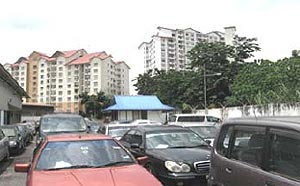 "So the state government increased the density to 87 units/acre as an alternative to encourage affordable housing and several measures were taken to ensure that this took place," he explained.
Yew said the density problem would not be as rampant, or result in massive congestion, involving the entire island, as activists fear, as project approval were subject to traffic impact assessment findings.
The ruling would also not apply to residential areas with existing low densities, in the vicinity of World Heritage sites, designated areas along Tanjung Bungah, along the Gurney Drive tourist belt, between the Air Putih and Air Itam boundaries and those already affected by rezoning (previously upgraded to 30 units/acre).
On the 14 projects already approved under the new ruling, Yew said, several were on-going while many were yet to begin.
"It will probably take about three years or more for the projects to be completed," he added.


