




'Federal gov't decides on royalty payments'
National oil and gas company Petronas has maintained that the federal government has the discretionary power in deciding royalty payments to oil-producing states.
National oil and gas company Petronas has maintained that the federal government has the discretionary power in deciding royalty payments to oil-producing states.
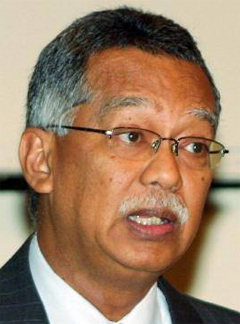 As such the company, according to its chief executive officer Shamsul Azhar Abbas (
left
), does not owe the Kelantan government any royalty.
As such the company, according to its chief executive officer Shamsul Azhar Abbas (
left
), does not owe the Kelantan government any royalty.
On claims by the state for oil royalty payments from Petronas amounting to RM800 million annually since 2005, Shamsul, according to the New Straits Times , said Petronas is merely appointed sole custodian of the country’s hydrocarbon resources, not to “distribute wealth”.
He, however, was further quoted saying the opposition’s promise of increasing oil royalty payments to 20 percent, from the current five paid to oil-contributing states, would only diminish Petronas’ profit, as there will be less wealth for distribution.
“We must focus on enlarging the pie, not scrambling for a bigger piece of a shrinking pie,” he reportedly said.
On August 30, 2010, PAS-led Kelantan government filed a suit against the oil and gas company, seeking oil royalty unpaid since 1998.
Kelantan not eligible to ask cash payments
In August this year, Prime Minister Najib Abdul Razak announced the setting up of a special committee to deal with the cash payments of petroleum revenue in the east coast of peninsular.
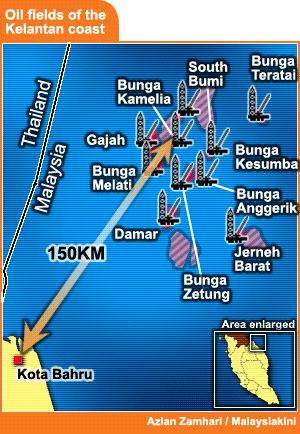 The premier had further said, however, that Kelantan was not eligible to demand cash payment from petroleum revenue as there were no petroleum production carried out within the state territorial waters.
This, he said, was based on the agreement between the Kelantan and Petronas, under Section 4 of the Petroleum Development Act 1974, that Petronas must pay the state government annually, in cash, five percent of the value of petroleum found and extracted there.
However, Kelantan PAS dismissed the committee as a mere “ election ploy ” meant to reduce pressure on Barisan Nasional from outside and within the ruling coalition.


