




Chinese community accepting Lynas, says MCA
By the time the green light was given to the Lynas Advanced Materials Plant (Lamp) to operate the rare earth plant at the industrial zone in Gebeng, Pahang, in early November, much of the community had positively accepted the project.
By the time the green light was given to the Lynas Advanced Materials Plant (Lamp) to operate the rare earth plant at the industrial zone in Gebeng, Pahang, in early November, much of the community had positively accepted the project.
Many of those who had initially objected to the project, particularly the non-Malays, appeared to have softened their stance.
Lamp had not breached any regulation, hence it was allowed to start operating on Nov 8 after the High Court in Kuantan rejected the interim injunction application by three Kuantan residents on the temporary operating licence (TOL).
According to Teruntum state assemblyperson Chang Hong Seong, only a few among the Chinese community were still confused about the project after being influenced by the opposition.
“Nevertheless, although the majority of the Chinese are no longer against the project, they still hope that the government would set up a special committee to monitor operations at the plant,” he told Bernama in Kuantan.
The community hopes that the monitoring committee would ensure that the operators adhered to the guidelines and safe procedures while the experts must really be well-versed with the disposal of the effluents from the plant.
“Effluents from the plant must be disposed far away from residential areas,” Chang stressed.
Kuantan MCA chairperson Ti Lian Ker said objections by non-governmental organisations, consisting mainly of people not from the locality, and political manipulation by the opposition parties had initially misled the Chinese community.
 “The people, particularly the Chinese here, have now accepted the decision. The opposition parties are therefore urged not to continue politicising the Lynas issue to erode the government’s image for their electoral gain,” he said.
Based on the feedback, the community is now more assured that the project would not adversely affect their well-being, rather it would generate the economy.
The community is becoming more aware that the rare earth industry is a potential development sector for the country to spur Malaysia towards high-income status by 2020.
The factory will also be a hub for rare earth downstream activities such as the manufacture of televisions, computer screens, mobile phones and energy-saving lamps, magnetic scan machines and vehicle components, he said.
MB: Local population would also benefit
Pahang Menteri Besar Adnan Yaakob, in his comments following the decision by the Kuantan High Court, said the rare earth processing company must be given a chance to invest in a major field to help boost the national economy.
He said the local population would also benefit from Lynas through employment opportunities.
Incidentally, the project had attracted numerous buyers and business partners, including one from Germany which had pledged an investment of more than RM1.5 billion to manage a plant that would require around 1,200 workers.
Apart from that, supplier companies have also built their factories near the Lamp site, among them two acid suppliers which invested RM300 million and provided jobs for 100 people.
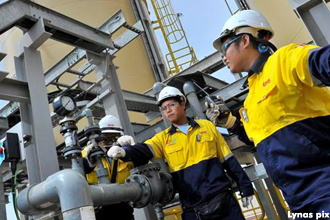 The plant in Gebeng is capable of processing 22,000 tonnes of rare earth annually or one fifth of the global demand and would generate an annual revenue of around RM4 billion for the country.
Meanwhile, consultant Dudley Kingsnorth of Industrial Minerals Co of Australia (IMCOA) expected the demand for rare earth to reach 160,000 tonnes by 2016 compared to 105,000 tonnes in 2011.
At present, producers from China are monopolising the industry but by 2016, around 60,000 tonnes of the supply would be from countries outside China, including Malaysia.
Pahang opposition chief Leong Ngah Ngah of the DAP had, at one time, commented through a Chinese language daily that the state government had succeeded in drawing foreign investment as a result of the proposed project.
With the start of the Lamp project without any more obstacles, Pahang is poised to see major economic returns which will be beneficial for all the people.
Lynas chose to operate in Malaysia because of its cheaper production costs compared to Australia while China had tightened export of the product.
Lynas, too, had obtained licences to build the factory in the two countries.
- Bernama


Are you sure you want to delete this comment?
This action cannot be undone.