




On paper, Pakatan should retain Kedah
GE13 WATCH If one were to solely look at the margin of victory in seats won by Kedah Pakatan Rakyat at the 2008 general election, the prospects of the coalition notching up another win in the state is more than assured - it has 16 rather safe seats, and will need to secure another three more to retain power.
Clearly, on paper at least, Pakatan only needs to maintain the status quo of its GE12 haul - 22 seats out of the 36 in Kedah - to pull through.
And despite reports of internal riff within Kedah Pakatan, with charges of sabotage abounding, the opposition coalition nevertheless appears stronger than its BN rival, which is also facing similar internal strife.
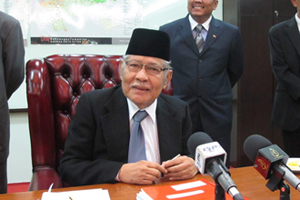 While friction between PAS state chief and Menteri Besar Azizan Abdul Razak (
left
) and his deputy, Phahrolrazi Zawawi, who is also a state cabinet member, could weaken Pakatan's hold, it is still not easy for BN to wrest back Kedah.
While friction between PAS state chief and Menteri Besar Azizan Abdul Razak (
left
) and his deputy, Phahrolrazi Zawawi, who is also a state cabinet member, could weaken Pakatan's hold, it is still not easy for BN to wrest back Kedah.
Kedah BN too is being hit by factional feuds, with some seeking to push former prime minister Dr Mahathir Mohamad's son, Mukhriz, to be the new menteri besar should BN win this northern state.
While both sides have denied these reports of internal divisions, the reality on the ground is that such reports are causing dissent among the ranks of the grassroots in the two contending coalitions.
Thirteen of the 16 ‘safe seats' for Pakatan were won with sizable majorities - Bukit Selambau (PKR - majority 12,632 votes), Lunas (PKR - 10,323), Tokai (PAS - 6,578), Kuala Ketil (PAS - 4,880), Anak Bukit (PAS - 3,806), Sidam (PKR - 3,618), Merbau Pulas (PAS - 3,576), Bukit Pinang (PAS - 3,399), Sungai Limau (PAS - 3,212), Pengkalan Kundor (PAS - 3,122), Alor Mengkudu (PAS - 2,247), Kupang (PAS - 2,094) and Bandar Baharu (PAS -1,849).
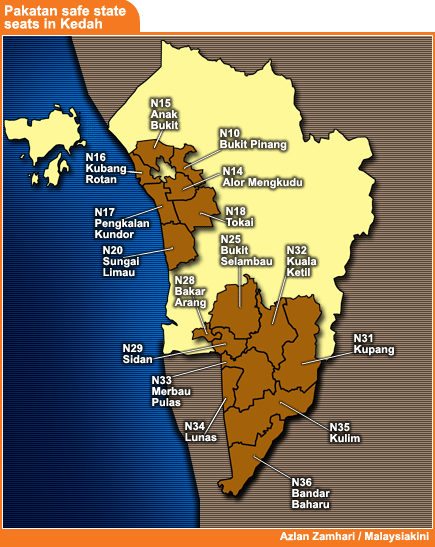 The other three seats that Pakatan won with below 1,500-vote majorities are
Kubang Rotan
(PAS - 1,387),
Bakar Arang
(PKR - 1,330) and
Kulim
(PKR -
1,244).
The other three seats that Pakatan won with below 1,500-vote majorities are
Kubang Rotan
(PAS - 1,387),
Bakar Arang
(PKR - 1,330) and
Kulim
(PKR -
1,244).
Of these, six are traditional Umno strongholds: Bukit Kayu Hitam (Umno - 6,995), Kuah (Umno - 3,324), Sungai Tiang (Umno - 3,006), Pedu (Umno-2,733), Jitra (Umno - 2,258) and Guar Cempedak (Umno - 1,759).
 The other two, won with 1,000-plus vote majorities, are
Gurun
(MCA - 1,554) and
Ayer Hangat
(Umno - 1,135).
The other two, won with 1,000-plus vote majorities, are
Gurun
(MCA - 1,554) and
Ayer Hangat
(Umno - 1,135).
This means BN needs another 11 seats to win back Malaysia's rice bowl.
The remaining 12 seats - six with BN and six with Pakatan - are marginal seats won with majorities of below 1,000 votes, some of them won with less than 500 votes.
The six marginal seats Pakatan wrested from the BN in 2008 are Kota Darulaman (DAP - majority 804 votes), Ayer Hitam (PAS - 506), Pantai Merdeka (PAS - 503), Bukit Lada (PAS - 208), Jeneri (PAS - 167), and Tanjong Dawai (PAS - 79).
Of the six seats the BN holds, Gerakan captured Derga with a tissue-thin margin of 163 votes, Belantik (Umno - 252), Bakar Bata (Umno - 358), Kota Siputeh (Umno - 495), Kuala Nerang (Umno - 805) and Bayu (Umno - 984).
Candidate selections 'problematic'
Despite this, BN is still confident of pulling a surprise in the coming election. Umno, for one, believes that the issues that it has stirred up in the state may dent support for Pakatan, especially among PAS members involved in the Azizan-Phalrolrazi squabble.
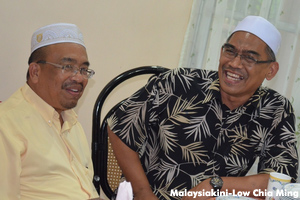 Phahrolrazi (
left in photo
), who harboured hopes of replacing the ailing Azizan as MB, and Ismail are the two state executive council members who had initially refused to take their oaths of office after being reappointed to their portfolios early last year.
Phahrolrazi (
left in photo
), who harboured hopes of replacing the ailing Azizan as MB, and Ismail are the two state executive council members who had initially refused to take their oaths of office after being reappointed to their portfolios early last year.
There is talk that the efforts are being made to replace Alor Setar PAS head Dr Ismail Salleh ( right in photo ) in his Alor Mengkudu seat with state PAS Youth chief Ahmad Yahya.
This was further magnified by trouble in the selection of candidates for several state seats in what some reports say reflect a major shake-up in the state Pakatan line-up that is the take place soon.
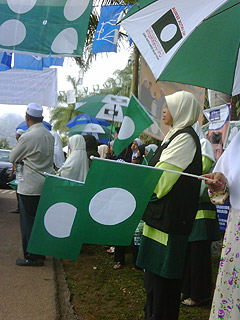 It is said that conflicts are still prevalent in the state seats of Tokai and Sungai Tiang, within the Pendang parliamentary constituency, as well as in Jeneri and Belantek, supposedly because of grassroots leaders are against the selected PAS candidates.
Political observers believe these problems, in the least, may impact the morale of the local machinery and party supporters in the PAS-contested areas, though it is not seen as a major impairment to the overall party electoral campaign in Kedah.
Umno's internal squabbles
The elephant in the room for the Kedah BN is who the "winnable candidates" are - a question that continues to plague the party and its machinery, especially among the Umno divisional leaders.
Candidate selection problems in Umno in 2008 were said to have led to the sabotage of BN candidates, a bitter lesson that saw the coalition lost its control of Kedah.
More serious is the dispute as who the menteri besar will be if BN were to retake its former stronghold. Political observers believe this issue will persist, despite Mukhriz repeatedly denying that he is eyeing the MB's post.
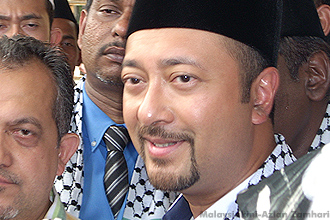 Talk of Mukhriz (
right
) as the next MB has upset state Umno chief Ahmad Bashah Md Hanipah and his supporters, especially since Ahmad Bashah is more senior than Mukhriz and has been seen as the first in the line of succession for the post.
Talk of Mukhriz (
right
) as the next MB has upset state Umno chief Ahmad Bashah Md Hanipah and his supporters, especially since Ahmad Bashah is more senior than Mukhriz and has been seen as the first in the line of succession for the post.
While pressure from the national party leadership may see Ahmad Bashah bowing to a decision to choose Mukhriz over him, his supporters may not be so easily won over.
As long as talk of Mukhriz's acceptance as MB-designate by the top Umno leadership continues to hang in the air, the BN's performance in the state, come GE13, will remain questionable, observers say.
Still, Pakatan leaders will see a serious challenge from the BN, especially since BN needs only an additional of 1,500 votes in each of the five marginal seats won by Pakatan in 2008 to give Kedah Pakatan a run for its money.
Related report
PAS' confidence in Kedah may be its undoing


Are you sure you want to delete this comment?
This action cannot be undone.