




Only one in 10 GE13 candidates is a woman
Only one in 10 candidates contesting the May 5 general election are women, which is well below the international target of putting women in at least 30 percent of all decision-making positions.
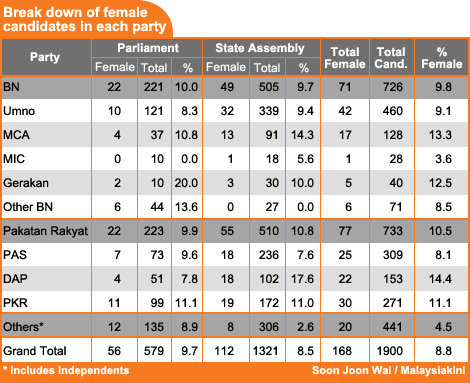
DAP leads the way by fielding 22 women candidates among its 153 candidates (14.4 percent), followed by MCA (13.3 percent), Gerakan (12.5 percent), PKR (11.1 percent), Umno (9.1 percent) and PAS (8.1 percent).
However, Umno has the largest number of women candidates, at 42 (out of 460), followed by PKR, which has fielded 30 out of its 271 candidates.
Of BN's big three - Umno, MCA and MIC - the least number of female candidates is fielded by MIC. Of its 28 candidates, only one is a woman, or 3.6 percent.
Altogether, 168 women are taking part in this election, including as independents, out of 1,900 candidates - or 8.8 percent of the total. This number is up from 120 women candidates in the 12th general election in 2008.
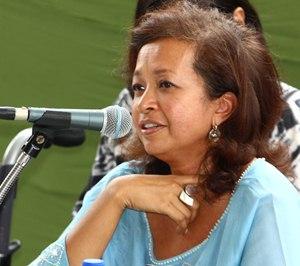 Prominent women's rights activist Marina Mahathir (
right
) told
Malaysiakini
that the low number of women election candidates was disappointing.
Marina said political parties should meet the target set under the United Nations Convention on the Elimination of All Forms of Discrimination Against Women (Cedaw), which Malaysia ratified in 1985, by ensuring that at least 30 percent of their candidates are women.
"The trouble is, at heart, none of the political parties really believe in gender equality," she said.
"What women bring to the table is valuable, as valuable as what men bring and maybe even more so, because what women most care about is their families and their communities, which are the centres of any society.
"You do right by families and you'll do right for the whole country," Marina stressed.
Indonesia has recognised this and in 2008 established a quota of 30 percent for women’s participation as candidates and in the top leadership of all political parties.
Distrust for politics
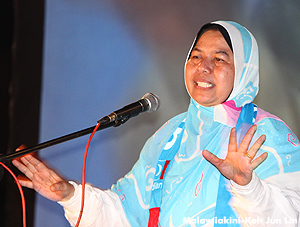 While politicians such as PKR's women's wing chief Zuraidah Kamaruddin (
right
)
lamented
that not enough women have the appetite to become candidates, Marina said part of the cause was that women had distrust for politics.
Besides the absence of any daycare facility in Parliament House and state legislative assemblies, female politicians had also to share the space with sexist male politicians.
"On top of that, politics has become a dirty, discredited area, where ill-mannered, boorish behaviour is the norm, where digging up skeletons in the closet is considered a more worthwhile activity than actually solving community problems.
"Why would any woman want to soil herself in that muck?" Marina asked.
Another activist, Tenaganita executive director Irene Fernandez, concurred, arguing that gutter politics was more damaging to women than to men.
"Therefore, it is very important that Malaysian constituents recognise the importance of women in politics and therefore reject this kind of politics more visibly.
"Only then would women be motivated to come forward in an area such as politics," Irene said.
Marina said men could not be relied on to represent women in the legislature, because most men do not know about or do not sympathise with issues that affect women.
"For example, it took six years for the Domestic Violence Act to be passed in Parliament because some male parliamentarians objected to it, in the belief that they had the right to beat their wives and therefore cannot be criminalised.
"Similarly, despite an outcry by women, the Islamic Family Law (Amendment) Act was passed in 2005, even though the amendments made were severely disadvantageous to women," Marina added.
Lawyer and activist Honey Tan mooted for a proportional representation system, which she said should replace the present "first-past-the-post" system to increase the number of female lawmakers, as seen in countries which have such a system.
Free PRU13 app - GE updates at your fingertips


Report this comment
Are you sure you want to delete this comment?
This action cannot be undone.