



Why no increase of NGO reps in Penang local councils?
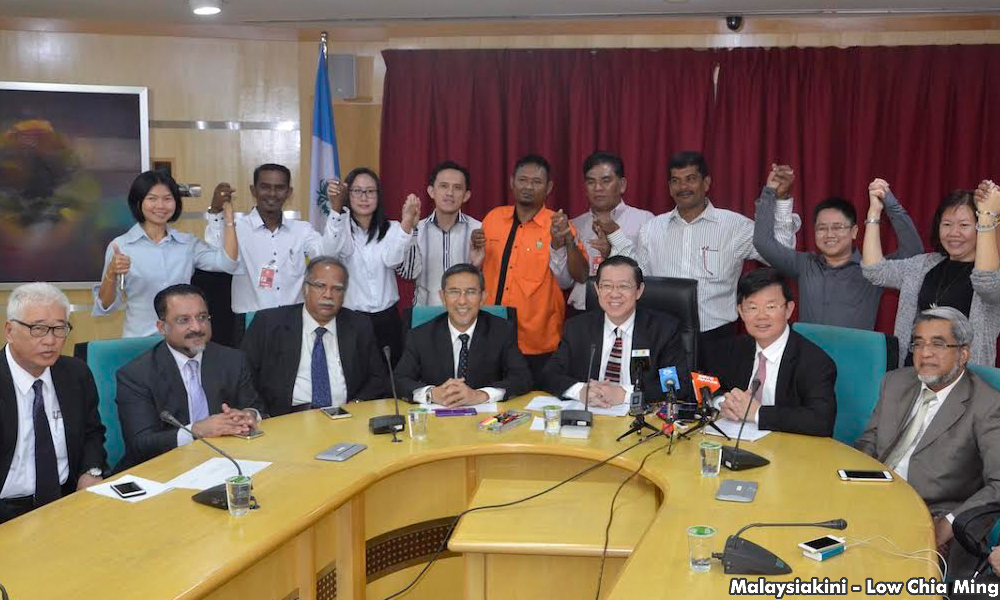
The Penang government has once again failed to increase the number of councillors under the NGO/civil society quota from the previous seven - Penang Island City Counci (four) and Seberang Perai Municipal Council (three).
Asked for the reason, state executive councillor Chow Kon Yeow, who announced the new line-up of councillors at Komtar today, said “I will let Chief Minister Lim Guan Eng answer the hard questions.”
The Penang government has once again failed to increase the number of councillors under the NGO/civil society quota from the previous seven - Penang Island City Counci (four) and Seberang Perai Municipal Council (three).
Asked for the reason, state executive councillor Chow Kon Yeow, who announced the new line-up of councillors at Komtar today, said: “I will let Chief Minister Lim Guan Eng answer the hard questions.”
Lim, who was also present at the press conference, said the state government has been pressured to increase the number of councillors under the political party quota and reduce the representatives from NGOs.
“But we have managed to retain the number of NGO representatives instead of reducing them,” Lim said.
“NGOs have only been voicing their criticisms of the state government but cannot do much to resolve problems related to infrastructure, for example, like the councillors (aligned to political parties) can,” he added.
“It’s a question of service, whether they can fulfil the needs of the ordinary people. NGO members usually stay high up in their ivory towers.”
"Most of them cannot do much except for (MPSP councillor) Tiun Ling Ta who has been working very hard to address the problems he encounters," Lim claimed.
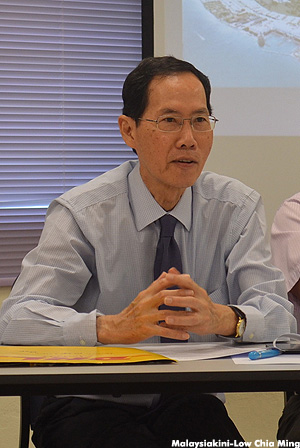 Those under the NGO quota are Lim Mah Hui (
photo
), Eric Lim Seng Keat, Gan Ay Ling and Mohamed Yusoff Mohamed Noor for MBPP and Tiun Ling Ta, Wong Chee Keet and Ahmad Tarmizi Abdullah for MPSP.
Those under the NGO quota are Lim Mah Hui (
photo
), Eric Lim Seng Keat, Gan Ay Ling and Mohamed Yusoff Mohamed Noor for MBPP and Tiun Ling Ta, Wong Chee Keet and Ahmad Tarmizi Abdullah for MPSP.
Chow named the 48 councillors, 24 for MBPP and 24 for MPSP for 2016, and also announced an RM1,000 hike in their basic allowance, from RM1,500 to RM2,500 a month, effective Jan 1.
Chow said when Pakatan Rakyat took over Penang in 2008, the new government had managed to increase the quota for NGO representatives from five to seven.
“It is still a little short of what I prefer, but at least we have maintained the number. We have to face our own political parties, which continue to ask for more representatives in the councils,” he explained.
“After all, the political parties form the government, but we have resisted the demand (to reduce the NGO quota) and have maintained it from day one.
“In the present scenario, the numbers are sufficient for the NGOs to be vocal. There is no one more vocal than Mah Hui,” Chow said.
“Besides, those who are in political parties are also involved in NGOs,” he said when asked whether the state would consider appointing representatives from “genuine” NGOs.
Mah Hui has remained a vocal critic of the state’s environmental policies, while Tiun - a Universiti Sains Malaysia lecturer - is an active advocate of rights for people with disabilities.


Are you sure you want to delete this comment?
This action cannot be undone.