




After a decade of protest, TNB bows down to residents
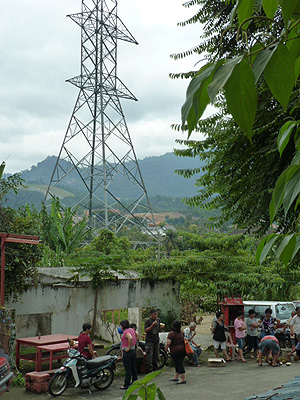
After 11 years of unrelenting struggle against a high-tension cable project, a group of Rawang residents can now finally claim victory - Tenaga Nasional Berhad (TNB) is rerouting the power lines, bypassing their densely populated village.
The rerouting will be completed by the end of this year, according to a briefing held yesterday by Rawang Anti High-Tension Cable Committee (RAHTC), along with PKR Selayang member of parliament William Leong and Rawang state assemblyperson Gan Pei Nei.
Showing a letter from the Selangor Land and Mines Office (PTGS), the protest committee said the state government had gazetted the rerouting plan in January last year.
However, the committee kept the news under wraps, fearing that an early announcement would be premature. It only handed the good news to the public after the rerouting project took place last month – one year after the plan was given the official green light.
 The state government had worked hard to resolve the issue and even brought the matter to the Selangor State Economic Planning Unit (UPEN), Gan said.
"With the initial three alternative plans, including the underground rerouting proposed by then Menteri Besar Khalid Ibrahim, we subsequently hired consultants from Australia to study the matter. In 2013, we were elected to be state government again. Eventually, in our meeting with TNB, they agreed to reroute.
"The MP and state assemblyperson, committee members and PTGS came to Rawang for a field study, and we finally put forth a viable alternative plan.
"After PTGS and the state government proposed the plan, TNB and its technicians studied it and they eventually gave their backing. It was then sent to the state exco meeting for approval, and then brought back to PTGS for the requisition of state lands.
"Now, approximately 26 percent of the rerouting project has been completed," Gan said.
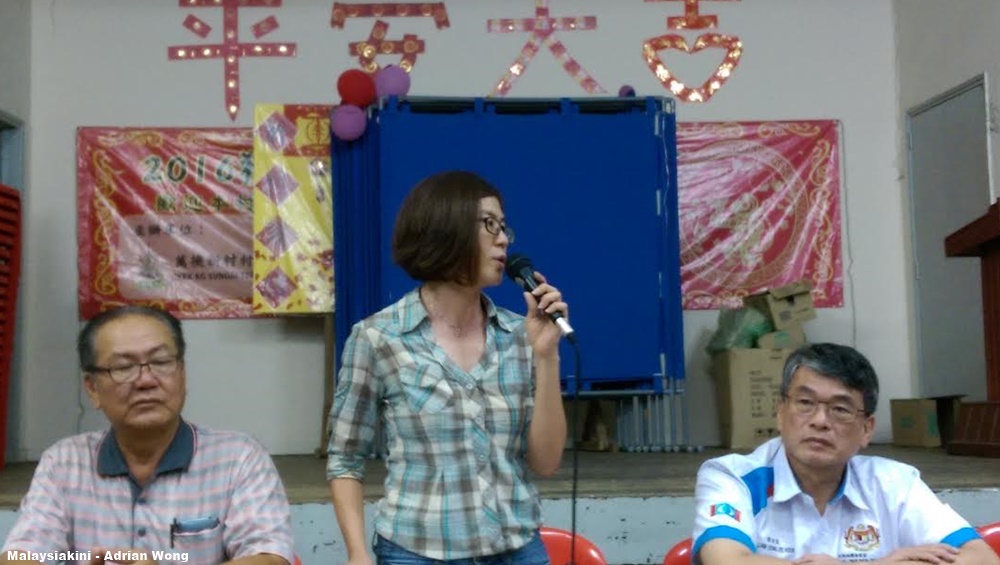 Gan (
centre in photo
) said the rerouting plan is similar to RAHTC's proposal, with the high-tension wires going through unused and government reserve lands, instead of the Chinese new village.
Gan (
centre in photo
) said the rerouting plan is similar to RAHTC's proposal, with the high-tension wires going through unused and government reserve lands, instead of the Chinese new village.
The rerouting plan, which was mooted in 2005, was opposed by then MB Mohamad Khir Toyo. However, the new Pakatan government backed the Rawang residents, said RAHTC consultant Tang Ah Chai.
Health concerns
The villagers opposed the high-tension cable project being located near their homes as they believe it could harm their health and may even endanger pregnant women, said Tang.
"They objected to the high-tension cables going through the village, which is a densely-populated area. This is not allowed in any other country.
"We had a few alternatives; one was to go underground, which is a popular practice in Singapore," he recalled.
However, TNB rejected the proposal as it would be too costly, he said, following which the residents offered a plan for the high-tension power lines to bypass the village.
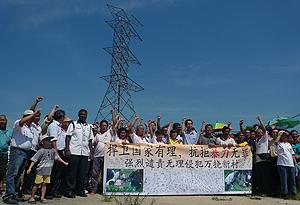 Over the years, the villagers mounted a series of rowdy protests in which a number of them were arrested by the police.
Committee chairperson Goh Ah Kow pointed out they had met Umno and MCA leaders several times over the matter, but to no avail.
"Khir asked us: 'What else do you want?' I said 'Cannot (bypass the village)'," Goh lamented.
Nevertheless, two years after the 13th general elections (GE), the rerouting plan was finally put into place by new Selangor Menteri Besar Azmin Ali.
According to reports, Selayang MCA division chief Goh Ah Ling and Selayang MCA Youth chief Chan Wun Hoong claimed the residents’ victory was the result of their party pressing hard for a resolution on the matter.
However, MCA was roundly criticised at yesterday’s briefing.
"Somebody claimed this is the result of their efforts. I’m embarrassed when he said this.
"We were informed (by MCA) that the (TNB) requisition of land was unavoidable, and that the residents could only negotiate the amount of compensation," said protest committee chief Goh.
Committee deputy chairperson Lim Seng Cheong also revealed that then MCA ministers, including Chan Kong Choi, Chua Soi Lek, and Ong Ka Ting, had promised to bring the matter to the cabinet.
"The cabinet meets behind closed doors. Did they discuss it? We don't know, but all we know was that we did not hear a word about it,” said Lim.
"Years later, these two men - Goh and Chan - appeared in the newspapers (and took credit for the villagers’ victory). I suspect they want to be candidates in the next GE.”


Are you sure you want to delete this comment?
This action cannot be undone.