



Dalat - a town of the Sarawak river people
FOCUS Sunday in Dalat is quiet. Shops are closed and the people will just spend the day chilling at home. There sits a temple at the waterfront, next to the Oya River, with people resting on benches.
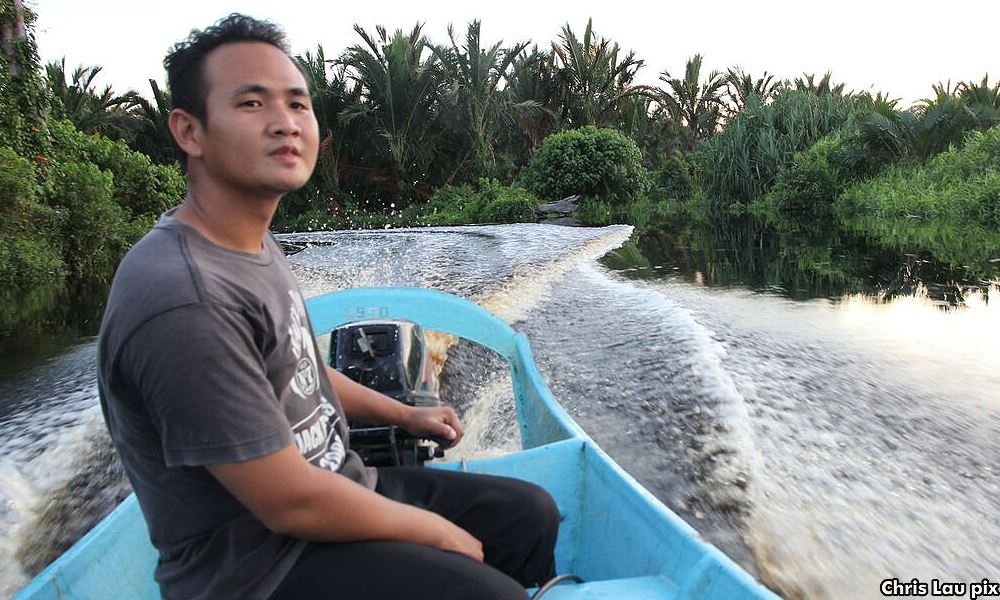
There are wooden houses built along the river, with several longboats tethered outside each house. As a city dweller, the floating toilet at the village houses caught my attention the most.
With no modern toilet bowl, each household makes a hole for excreta. Urine and faeces would be flushed into the river from the locally-designed water closets.
I took a two-hour boat ride from Sibu to Dalat. Rarely did I hear of this town back then. The only impression I had is when I read the book, ‘How Dalat Got Its Name’, written by Heidi Munan, when I was in Form One.
The book talks about bloodshed among three brothers as the village chief did not name a successor. Many people died in the war. Corpses lying in the village attracted flies. ‘Dalat’ means fly in the Melanau language, and therefore, the locals named the village Dalat, which is now a small town.
 The trip started with my encounter with Tan, a police officer from Selangor.
“It didn’t feel right to leave the town,” Tan said. “There is a Chinese idiom that says there are so many stories in a small town. That’s what I think and how I feel.”
He was transferred to Dalat five years ago, after 20 years of service in West Malaysia...
FOCUS Sunday in Dalat is quiet. Shops are closed and the people will just spend the day chilling at home. There sits a temple at the waterfront, next to the Oya River, with people resting on benches.
There are wooden houses built along the river, with several longboats tethered outside each house. As a city dweller, the floating toilet at the village houses caught my attention the most.
With no modern toilet bowl, each household makes a hole for excreta. Urine and faeces would be flushed into the river from the locally-designed water closets.
I took a two-hour boat ride from Sibu to Dalat. Rarely did I hear of this town back then. The only impression I had is when I read the book, ‘How Dalat Got Its Name’, written by Heidi Munan, when I was in Form One.
The book talks about bloodshed among three brothers as the village chief did not name a successor. Many people died in the war. Corpses lying in the village attracted flies. ‘Dalat’ means fly in the Melanau language, and therefore, the locals named the village Dalat, which is now a small town.
 The trip started with my encounter with Tan, a police officer from Selangor.
“It didn’t feel right to leave the town,” Tan said. “There is a Chinese idiom that says there are so many stories in a small town. That’s what I think and how I feel.”
He was transferred to Dalat five years ago, after 20 years of service in West Malaysia.
“Prior to my departure to Sarawak, I tried to look around and ask the people if they knew what this town looked like,” he said. “I was told it’s a very remote place, with no electricity and no water. It’s true. I’m used to power cuts and water shortages in Dalat.
“But then, I started to mix around with the locals. I visited their houses and sometimes took an overnight boat ride to visit the longhouses upstream,” Tan said.
The durian season in Dalat is a festive occasion. Boats carrying piles of the fruit can be seen plying their way up and down Oya River.
I came across Bol, one of the durian sellers. He travels up and down the Oya River, from Kampung Kut to Kampung Narub, during the season, daily, in a small boat with hundreds of durians.
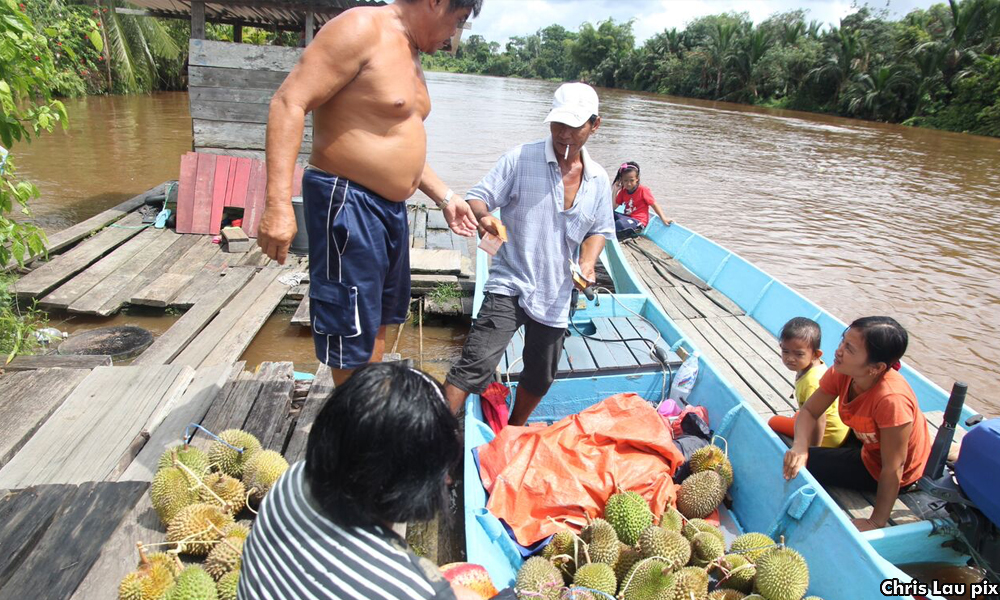 “Five hours is enough to get all the fruits sold. Sometimes I can do it in four hours,” Bol said.
Slowly, he moved along the river, mumbling “Durian, oh durian.” The engine sound muffled his voice, but, surprisingly some villagers were waving at him. They could hear him, or perhaps were waiting for his durians.
Floating market
That was how the trading was carried out before roads were built. People sold their stuff from their boats. It is a floating market, where locals could get fish, vegetables, meat and some other groceries.
Women clad in sarung carefully chose the fruit, while Bol dug around in his pocket before dragging out a cigarette and a lighter. He lit it and took a long puff before blowing a cloud of smoke to the other side of the boat.
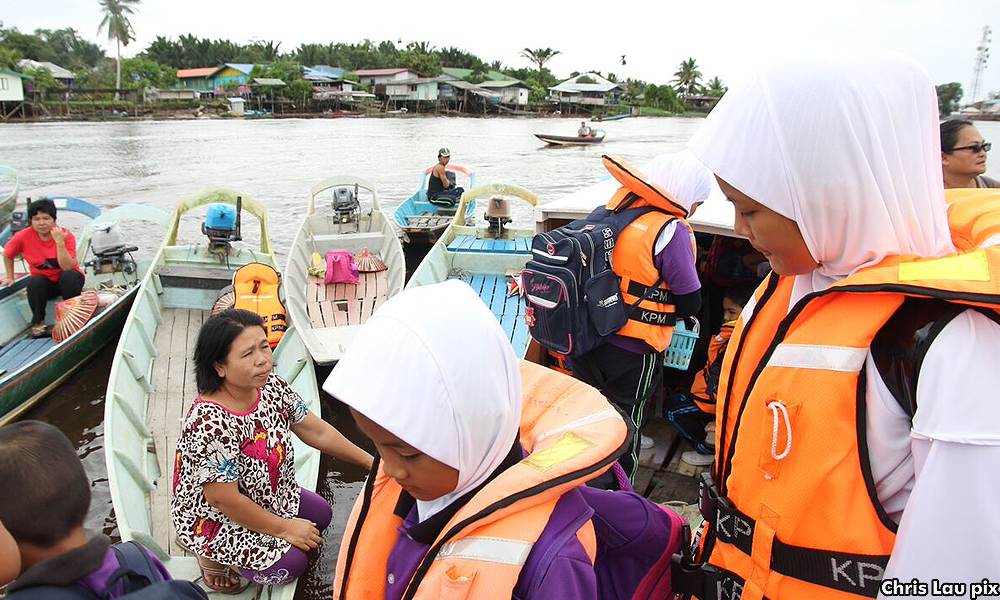
Rainy days can be a real danger when travelling in a boat. As for the fibre-made transport, a floating log of wood can cause the fibre boat to capsize.
Despite knowing the risks of travelling by river, the locals have done so for decades because many villages still cannot be reached by land transport. This was the situation at a primary school I visited there.
The school is located at Kampung Narub, at the end of Bol’s journey as he was doing his durian selling.
It takes an hour-long boat ride to arrive at SJK (C) San San from Dalat town. It is way smaller than other schools in the district.
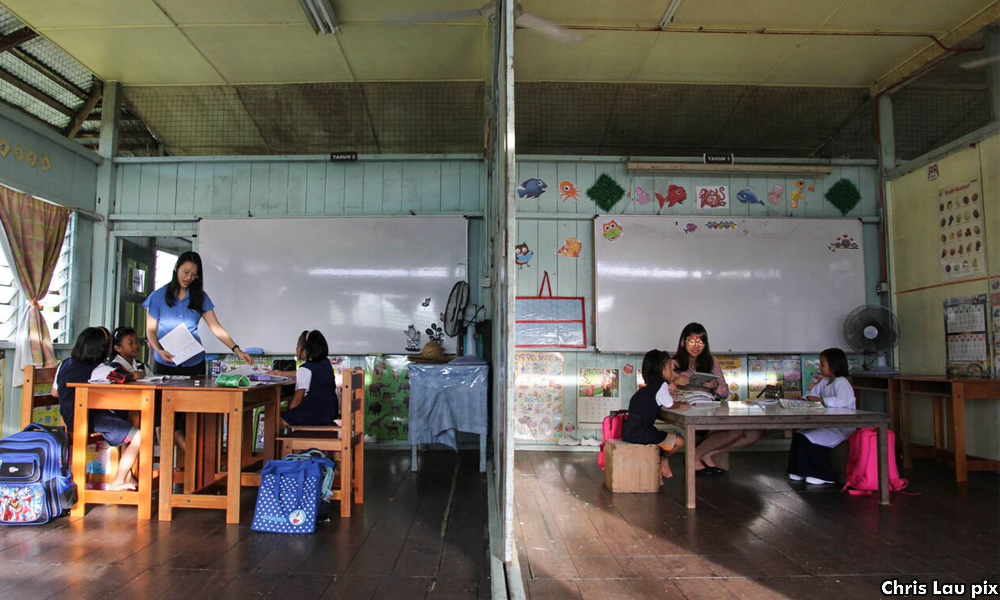
The classrooms and administration office of SJK (C) San San are built in a wooden house. It gives a similar vibe to some of the schools in the east coast of Peninsular Malaysia. With a total student number of 17, it is the school with the lowest number of students in Sarawak this year.
Each class has one to six students. Students of Year 1 to Year 3 use one classroom that is sectioned with moveable cupboards. When the classes start, students can clearly hear teachings from the next class. But still, the classroom setting is considered comfortable, unlike the teachers’ hostel, which is really small.
Ninety percent of the students are of mixed ethnicities, of Chinese and either Melanau or Iban. The cultural diversity gives them attractive indigenous looks, but they have Chinese names.
Despite the very tight schedule of a boarding school, the children would allocate some fun time by the river. They do their daily dish-washing, bathing and clothes washing in the river.
There are three bathing times for the children: 6am, 2pm and 5pm. As I woke up early in the morning, the students were already cleaning themselves by the jetty, with some school staff members looking after them. They do it before sunrise, every day. It’s fascinating.
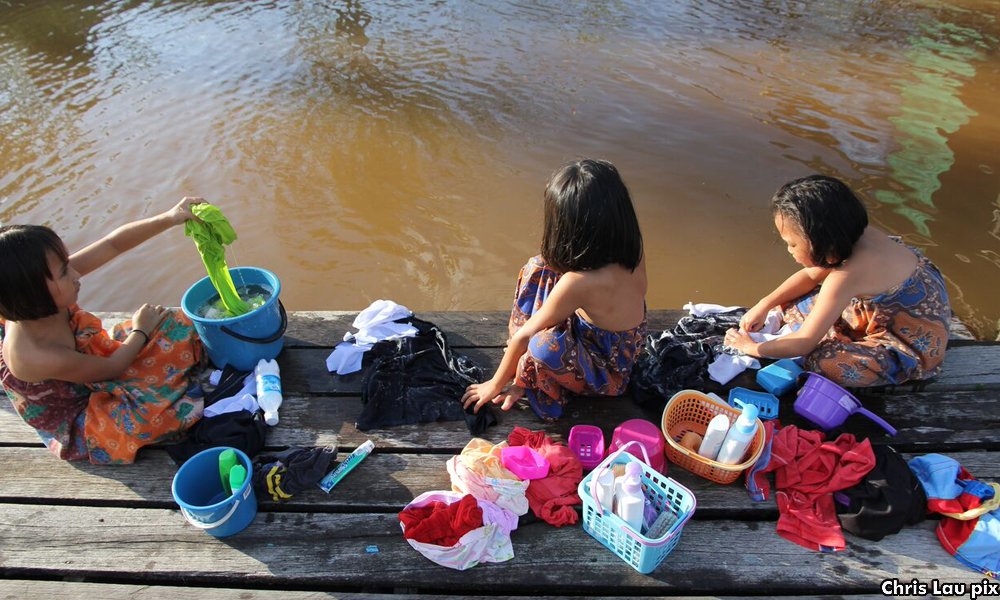 In the afternoon, the students have to clean their clothes before bathing. There are only two sources of water in the school. They have some tanks for storing rainwater and pumping in river water on a daily basis. The limited rainwater is used for cooking and drinking, whereas they use the river water for bathing and washing.
Teachers get their drinking water from town as boxes of mineral water can be seen in the hostel. Some who drank the rainwater complained of rheumatism. There are several factories located not far from the school. Rainwater is never clean like before. On the other hand, the river water has been affected by chemical wastes from the large-scale oil plam plantations.
The school staff seem to be risking their lives by travelling to the town frequently. There is only one boat that specifically serves the school. With no shed, the teachers get drenched on rainy days. Wearing only a raincoat, they hide their faces on their thighs as the rain continues to fall on their heads.
Most of the teachers are not from Dalat. The hardship had forced some of them to seek transfers out.
Shrinking number of students
This school, the smallest school in Dalat, currently has 17 students and 11 teachers. If the number of students continues to shrink, they might face a close down, or move elsewhere some years later.
 Sia Pong Soon (
photo
), the grandson of the school founder, worries about the shrinking number of students.
Sia Pong Soon (
photo
), the grandson of the school founder, worries about the shrinking number of students.
“The school might have to shut down if the numbers continue to shrink,” Sia said.
He had spent two-and-a-half years attending an aviation course in Kuala Lumpur, before returning to his hometown.
“I was a student here. It’s sad to see things get changed,” Sia explained. “I decided to come back and try to take care of my family, and at the same time, I’m trying to see if I could do anything for this school.”
The 23-year-old young man is currently working as a security guard at SJK (C) San San while trying to figure out what to do next.
The district has a population of less than 20,000 people. Like any other small district in Sarawak, the youngsters are moving to bigger towns for job opportunities.
Dalat town remains quiet. There is only one post office, one bank and a few shops selling basic essentials. The people hardly care about fashion and the roads are not well paved.
The middle class group is still able to get about on a motorbike or in a car, while the others remain as river people. The Oya River is their lifeline.
Part 1: Shooting the rapids - teaching in the heart of Borneo
Part 2: Dalat - a town of the river people
Part 3: No hardship allowance for ‘remote and rural school’ staff
CHRIS LAU is a freelance journalist.


Report this comment
Are you sure you want to delete this comment?
This action cannot be undone.