



'Bumiputera empowerment remains Umno's agenda'
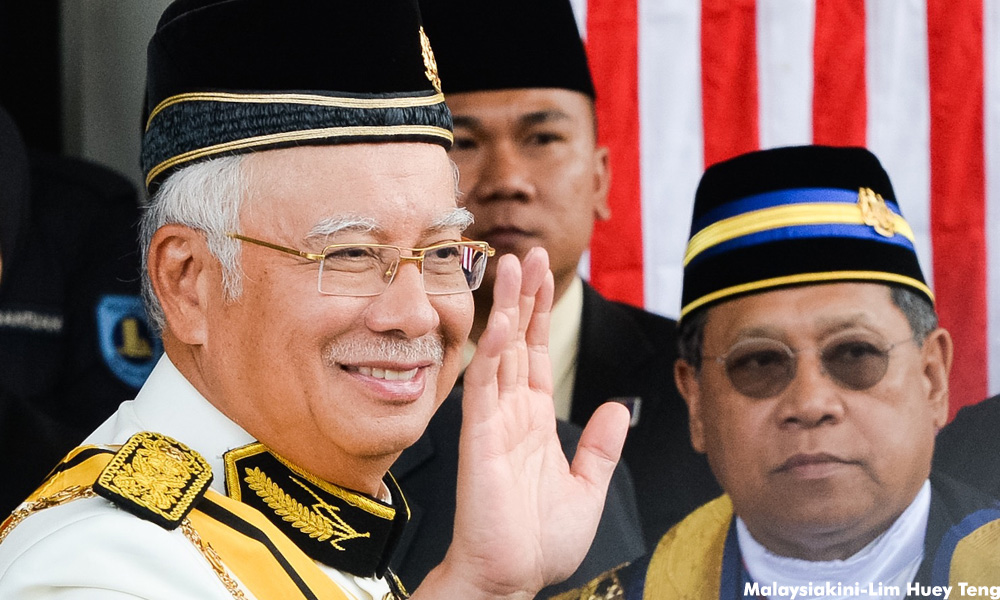
Since its establishment in 1946, the empowerment of bumiputera economy remains on Umno's agenda to ensure a better future for the community, said Najib Abdul Razak.
The prime minister said this was proven through the poverty eradication efforts undertaken by the government headed by BN and Umno since so long, as well as the introduction of policies to create a middle class comprising professionals.
In fact, he said the establishment of various institutions such Mara, UiTM and Tekun, were among the results of Umno's aspiration to empower the bumiputera economy.
"I think many have been achieved. Without Umno's struggles, it will not be possible for us to see the Malays achieving a better and comfortable position in economy.
"We have always strived to do that because, for me, the survival of political power must be backed by economic power," said Najib, who is also Umno's president, when interviewed in conjunction with Umno's 70th anniversary at his office recently.
The interview was conducted at the Prime Minister's Office by Prof Dr Azizul Halim Yahya, Dean of the Faculty of Communication and Media Studies, Universiti Teknologi Mara.
Citing the latest example, the prime minister drew attention that the government had announced the 'Carve Out & Compete' policy, in which at least 40 to 50 percent of contract values, vendors or business opportunities in any big projects would be given bumiputera companies.
Asked until when the bumiputera would continue to be assisted, Najib said the government did not fix a finishing line on the matter.
Explaining further, he said the related policies could be reviewed when the nation's wealth could be fairly distributed to all communities in the country.
"Perhaps at that time, the Malays will be very confident, and no longer need any special policies to help them. Maybe at that time, the policies we practise can be dissolved or reviewed to be more open.
"But what is most important is that we must reach the level of national wealth...because the Malays and the bumiputeras, they number more than 60 percent. But they only claim 30 percent. Not 60 percent but only 30 percent.
"Which means that the Malays are very considerate and fair in whatever they are fighting for," the prime minister said.
During the interview, the prime minister was also asked on the effect of the global economic recession including the fall of commodity prices such as oil on Malaysia to the extent the nation's image was also smeared by foreign media.
He said Malaysia was capable of tackling the challenges and, in fact, had taken prompt action by modifying the 2016 budget.
The move, he said had made the market and rating agencies confident of the country's capabilities in tackling the economic challenges arising from external factors and were beyond Malaysia's control.
"Which is why, in January, I tabled the Budget Recalibration 2016 when the price of oil fell drastically from US$110 a barrel to merely over US$30.
"What we can do is to make some modification, adaptation or adjustment to the domestic policies which take into account the external factors which have changed drastically," he added.
Read the full transcript of the interview here.
- Bernama
Related stories
As a leader, I cannot be daunted, says Najib
Dr M: No reason for Najib to rejoice over Sarawak BN win
Najib: If we love Umno, the party will survive for 70 more years


Are you sure you want to delete this comment?
This action cannot be undone.