



Rohing-who? NGOs slam Suu Kyi, say M’sians ‘mudah lupa’
It seems the world has forgotten about the plight of the Rohingya people of Myanmar.
Even Myanmar’s State Counsellor and Foreign Minister Aung San Suu Kyi recently told foreign diplomats to stop using the term ‘Rohingya’, reported UK newspaper The Telegraph on May 6.
It seems the world has forgotten about the plight of the Rohingya people of Myanmar.
Even Myanmar’s State Counsellor and Foreign Minister Aung San Suu Kyi recently told foreign diplomats to stop using the term ‘Rohingya’, reported UK newspaper The Telegraph on May 6.
And the case of the 139 skeletons found in mass graves on Malaysia’s border with Thailand on May 25 last year was eclipsed by investment fund scandals, elections and “superhero” politician antics.
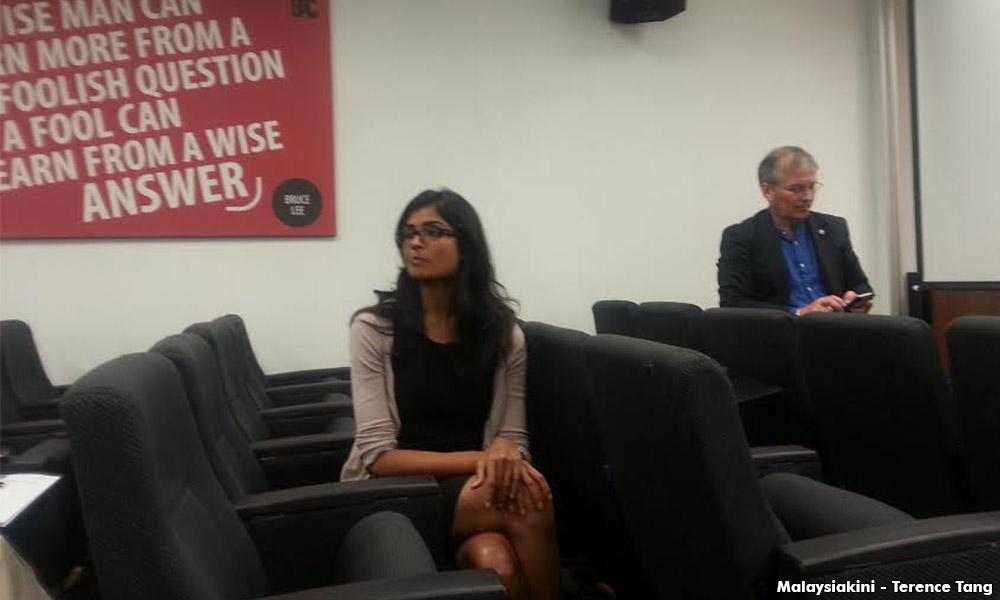
To a certain extent, they have been apparently forgotten by all but a minority group of university students NGO representatives and reporters, who attended a Rohingya forum organised by Brickfields Asia College’s Make It Right Movement at the college yesterday.
“Aung San Suu Kyi’s actions (on wanting to stop the usage of ‘Rohingya’) is highly disappointing,” Brian Gorlick, the deputy representative for United Nations High Commissioner for Refugees (UNHCR), said during his speech.
Another attendee, lawyer Deepa Nambiar, who is also human rights NGO Asylum Access Malaysia’s director, mentioned the mass graves and an estimated one thousand Rohingya who arrived on boats in Malaysian waters (with allegedly thousands more unaccounted for).
"Does anyone still remember the incident last year where authorities found mass graves up north near the Thai border?" Deepa asked the audience of around 30. Only three hands went up in acknowledgment.
“Then (in May last year), everyone watched in horror at the plight of the people stuck on board the stranded boats. Many of them were sick and needed medical attention […] the discovery of the mass graves (elevated) the media circus.
“Amid international and local pressure, Proham (Society for the Promotion of Human Rights Malaysia) secretary-general Denison Jayasooria organised a roundtable to ask the government to do something about the issue,” Deepa added.
The country has an obligation to provide search and rescue operations to aid these refugees, the activist-cum-lawyer stressed.
“Persecution against the Rohingya continues even now, in Myanmar as well as its community in Malaysia,” Deepa said.
Which is why in Malaysia, UNHCR Malaysia and NGOs such as Asylum Access Malaysia and Society for the Promotion of Human Rights Malaysia (Proham) are vital in taking care of the local Rohingya community’s welfare.
Mothers locked in cells
According to Brian, UNHCR Malaysia provides the Rohingya here with protection against oppression, resettlement aid to foreign countries, livelihood guidance, healthcare and education.
Speaking of protection against oppression, Brian spoke of heartrending scenes where Rohingya mothers were locked in cells along with their babies.
“I’ve heard of cases where Rohingya mothers were arrested at hospitals as soon as they had given birth,” the UNHCR representative said.
These initiatives to aid the local Rohingya community requires financial contributions, and Deepa mentioned that obtaining adequate funding for an NGO, especially one that strives for human rights, is a challenge.
And with the government having slashed the 2016 budget of another NGO, Human Rights Commission of Malaysia (Suhakam) from almost RM11 million in 2015 to RM5.5 million this year, obtaining adequate funding will be an immense challenge indeed.


