



Like the tides, income of Sg Besar coastal fishermen rise and fall
SG BESAR POLLS Just like the tides, the income of coastal fishermen around Sungai Besar rise and fall.
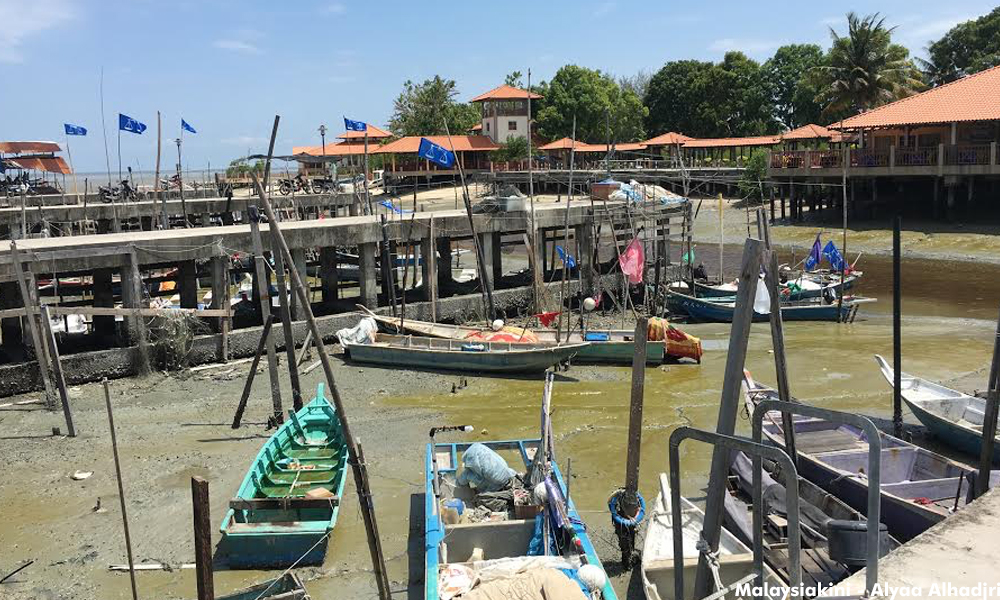
The Kampung Sungai Haji Dorani jetty is just one out of many entry and exit points for their boats.
During Malaysiakini's recent visit, a group of four fishermen were sitting under the shade at a nearby boat repair workshop.
SG BESAR POLLS Just like the tides, the income of coastal fishermen around Sungai Besar rise and fall.
The Kampung Sungai Haji Dorani jetty is just one out of many entry and exit points for their boats.
During Malaysiakini's recent visit, a group of four fishermen were sitting under the shade at a nearby boat repair workshop.
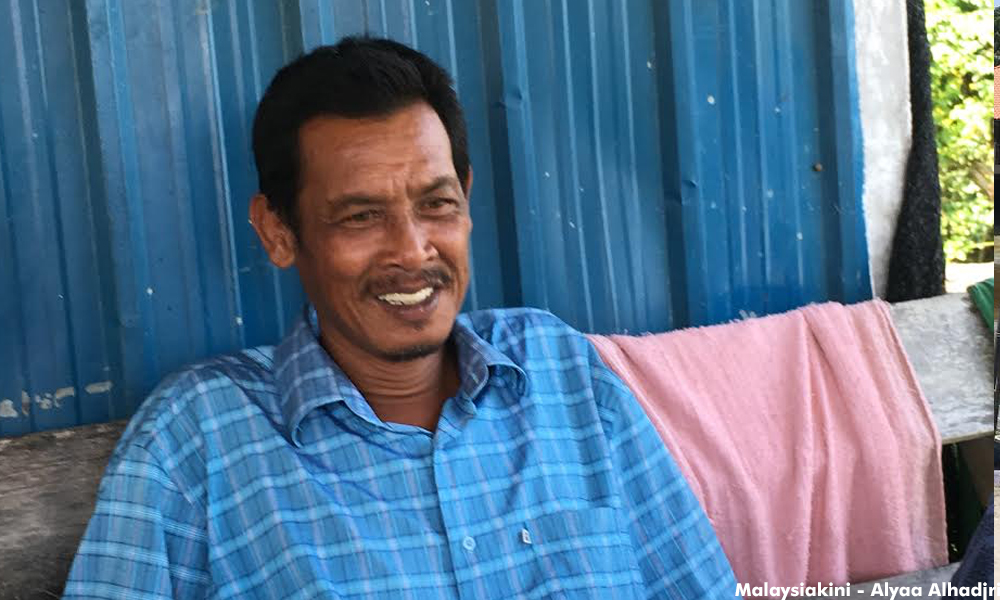
One of them, Manja Mohamad, shared their ordinary routine - though it would not be a daily affair, due to changing tides. At best, he said, the local fishermen could only go out 14 days a month.
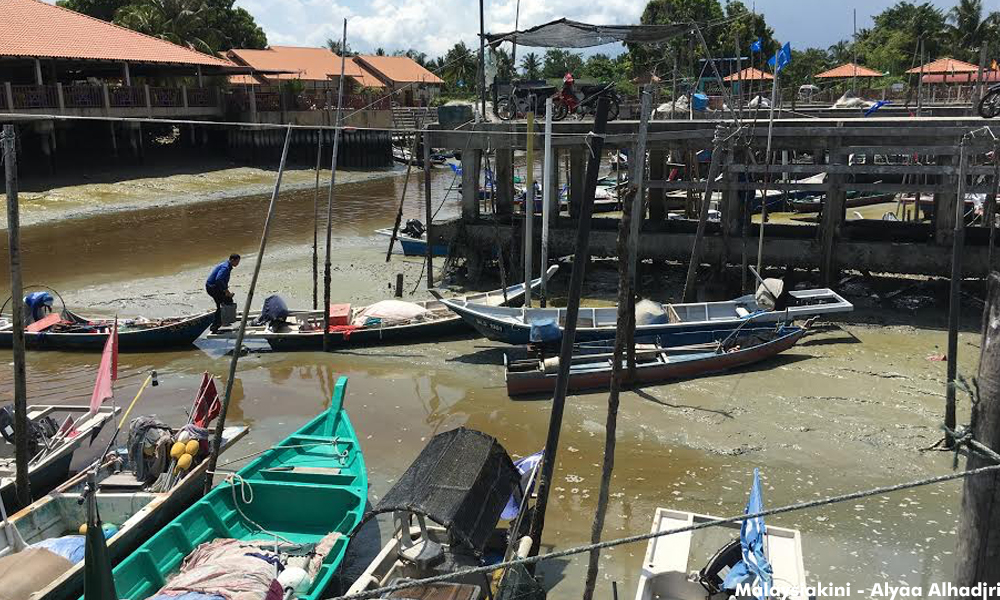
They would leave the house at around 4pm and head towards the jetty.
 In a traditional wooden outboard motor boat, a captain and his crew would take about one hour to be out at sea - up to five nautical miles (approximately 12km) from the coastline.
The process to lower about 60 pieces of nets would take around 30 minutes, after which they would wait for about two hours.
On a good night, the nets would be heavy with fish and it would take another two hours to lift the haul back into the boat and return to shore.
"If we can take home RM100 per trip, it’s considered a good trip," he said.
"There are times when we can’t even recover the cost of petrol. Sometimes the captain ends up with nothing," Manja said.
This is because for every trip, a fisherman would need to fill up 30 litres of petrol at a subsidised price of RM1.65 per litre.
"We need to mix the petrol with 2T (lubricant). One bottle is RM10 and we use half a bottle for every 30 litres.
"Maybe our food costs RM5 and we also pay the boat's crew," he explained.
Middlemen, towkays and trawlers
To net a profit of about RM100, the fishermen would need to catch about 30kg of fish - mostly snappers.
Their catch is passed on to a middleman who then supplies it to traders at the local markets.
 "He (the middleman) controls the price," said Manja.
He said the local fishermen are also largely dependent on the towkays - from whom they get supplies and assistance.
"Maybe today we will get a lot (of fish). But suddenly tomorrow, our engine is stuck or our nets are torn.
"If we want to go out, we will need to borrow from them (towkays)," Manja said.
For the coastal fishermen, the larger deep sea trawlers are their enemies, Manja's brother Ishak openly declared.
While there is supposed to be a distance between their vessels, the fishermen lamented that some trawlers kept too close to shore.
"Sometimes we would alert the maritime enforcement officers, but by the time they arrive, those boats would be out in the middle of the sea," Ishak said.
Some trawlers are foreign-owned while others are believed to be locals, also from the surrounding areas.
"Their nets can catch a lot of small fishes. Sometimes four or five tonnes. They sell these fishes to make fertiliser," he said.
During Malaysiakini's visit to the Bagan Sungai Besar trawler jetty, one boat had just unloaded over 30 plastic crates of smaller fish.
This is despite the government since November 2013 imposing a regulation that requires deep sea fishermen to change their 25mm mesh nets to those that use a larger 38mm mesh, with a maximum net width of 3m.
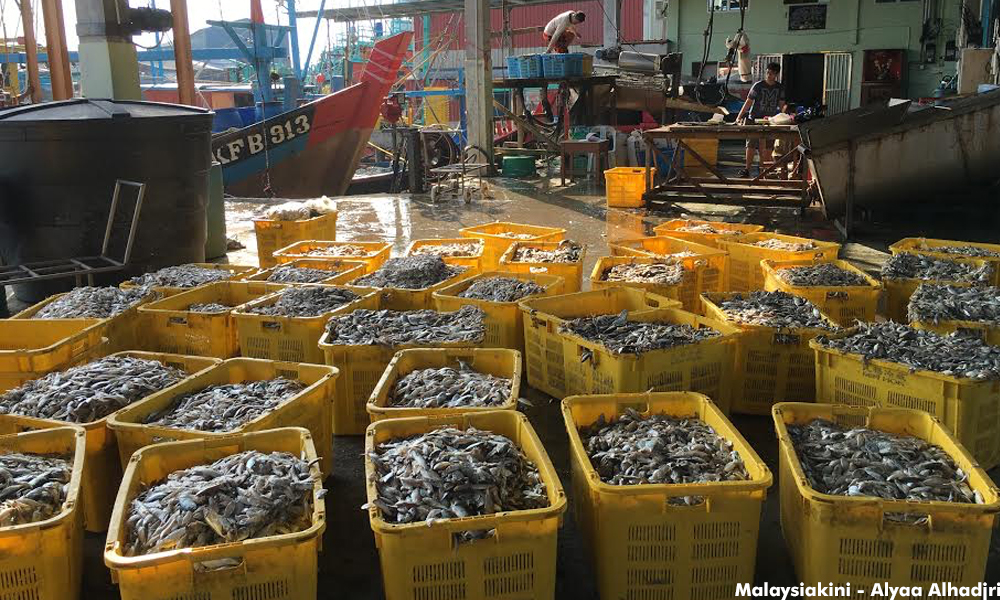 The move was introduced to prevent the nets from hauling baby fish or fry, directly affecting the country’s future marine fish supply.
While acknowledging assistance provided by the government, Ishak said that it would be best if the incentives for every kg of fish were only paid to coastal fishermen and not to the trawlers.
"Just the smaller fish, they (trawlers) bring it back in tonnes. For a few cents every kg, that is still a lot of money," he pointed out.
According to the Malaysian Fisheries Developments Board website, the incentives are paid at an average of 10 sen per kg through a system called "E-Peristiharan" (E-Declaration).
Unlike trawlers who are allowed to store their diesel supply, the coastal fishermen have to forfeit their subsidised fuel quota if they do not go out to sea that day, Ishak said.
Subsidies and allowances
Each registered fishermen are also entitled to receive a monthly living allowance, amounting up to RM300.
"Normally they would credit it into your account but now it’s nearing the by-election, they give it direct," said Ishak.
Manja claimed that there were cases of trawler operators registering their family members as crew members but the ones working on board were actually foreigners.
"Even 'soft hands' receive the allowance," he said, implying the receivers did not actually go to work.
Contesting parties have been actively engaging the fishermen community in the first week of campaigning, which kicked off June 5.
On Sunday morning, Agriculture and Agro-based Industries minister Shabery Cheek together with Communications and Multimedia minister Salleh Said Keruak, gave away walkie-talkies to fishermen around Sungai Besar.
Deputy Prime Minister Ahmad Zahid Hamidi and LKIM chief Irmohizam Ibrahim on Saturday also held a function to distribute the cost of living allowances.
Other forms of assistance include new outboard motors for their boats.
On the other hand, Pakatan Harapan leaders have also made promises to help provide them with more security of income.
News reports indicate there are approximately 2,000 coastal fishermen around Sungai Besar, mostly under the Umno-held Sungai Panjang state seat.
The Chinese fishermen and trawler operators, meanwhile, are largely from DAP-held Sekinchan.
The fishing community is small considering the 40,000-plus registered voters, but with BN having won by a tiny margin of only 399 votes, each vote counts.
And while only a small community is directly involved in fishing, the industry as well as agriculture are the backbone of semi-rural Sungai Besar.
Umno's Budiman Mohd Zohdi is up against Parti Amanah Negara's Azhar Abdul Shukur and PAS' Dr Abdul Rani Osman in the June 18 polls.
Yesterday: Sg Besar deep sea fishermen caught in waves of uncertainty


Are you sure you want to delete this comment?
This action cannot be undone.