


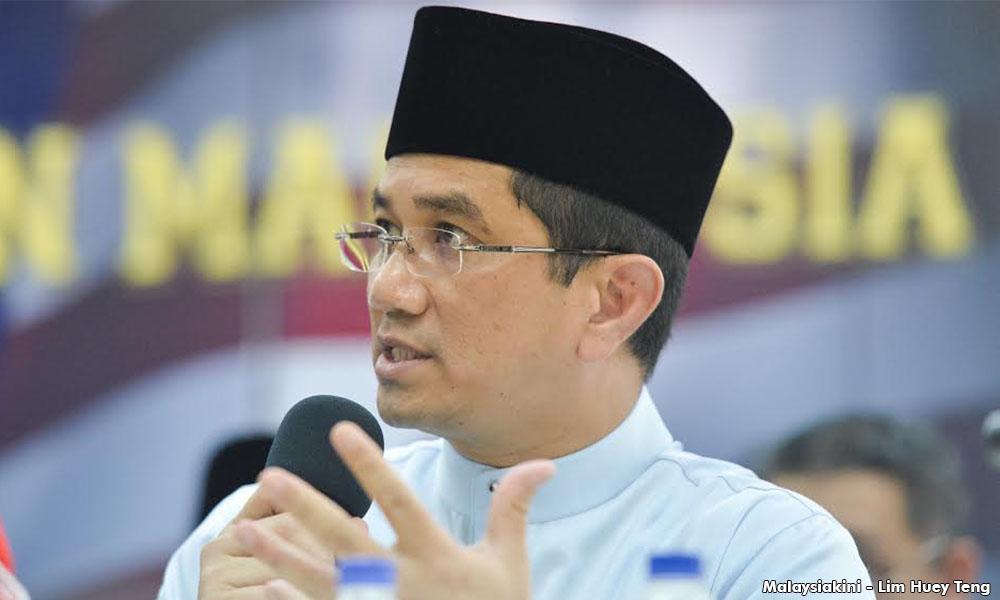

Analyst: Azmin's main challenge is to capture 30pct undecided voters
INTERVIEW Selangor Menteri Besar Mohamed Azmin Ali’s biggest challenge leading up to the 14th general election will be to capture some 30 percent of the undecided voters, largely from among the young, urban residents.
Political analyst Prof Hamdan Osman said Pakatan Harapan appears to have taken for granted its support base from among the demographic group.
Hamdan explained that while PAS and Umno each has its own core voters, Harapan parties, on the other hand, could see their voters sway according to the relevant issues at the time of elections.
“They (Harapan) should realise this,” said Hamdan, who cited a trend that he said could be seen since the Telok Intan by-election in 2014.
In particular, Hamdan said, the trend saw a swing of Chinese voters back to BN, as well as a lower turnout of Harapan supporters on polling day...
INTERVIEW Selangor Menteri Besar Mohamed Azmin Ali’s biggest challenge leading up to the 14th general election will be to capture some 30 percent of the undecided voters, largely from among the young, urban residents.
Political analyst Prof Hamdan Osman said Pakatan Harapan appears to have taken for granted its support base from among the demographic group.
Hamdan explained that while PAS and Umno each has its own core voters, Harapan parties, on the other hand, could see their voters sway according to the relevant issues at the time of elections.
“They (Harapan) should realise this,” said Hamdan, who cited a trend that he said could be seen since the Telok Intan by-election in 2014.
In particular, Hamdan said, the trend saw a swing of Chinese voters back to BN, as well as a lower turnout of Harapan supporters on polling day.
He also attributed the lower turnout as a sign of "protest" from Harapan supporters.
 In the recent Sungai Besar by-election, he said, the turnout of 74.29 percent was the lowest since the parliamentary seat was created in 2003.
“This is a sign of protest. Maybe they (the voters) do not like BN but also feel that the opposition is not a good option.
“In future, when you have a three-cornered contest, many seats now held by Harapan may change hands. This is because the protest votes would either swing back to BN or they will abstain from voting,” Hamdan said.
He also identified Subang, Shah Alam, Klang and Gombak as being some of the high-risk seats for Harapan.
“These are voters who scrutinise policies, how policies are implemented and other related factors.
“Within this group, there is a high chance for them to protest,” he said.
Harapan’s main failure
Harapan’s main failure, Hamdan said, is providing voters with an option to vote for a viable opposition that is based on the theory that they are ready to be the next government in waiting.
“The Selangor, Penang and Kelantan state governments are running on their own. There seems to be no effort to be a truly united opposition at federal level,” he said.
At the same time, Hamdan also commended Azmin’s ability to unite PKR, DAP and PAS in Selangor, despite the break-up of Pakatan Rakyat and formation of Harapan - together with PAS-splinter Parti Amanah Negara.
The relationship between PAS and Amanah in Selangor, he said, is like “frenemies” (friends and enemies) that could impact the perception of urban voters.
“Amanah is in the state government as councillors while PAS is the exco in charge. This is a dilemma.
“When it comes to a contest in the next general election, what would happen? This would impact urban voters’ perception towards Harapan,” he said.
In the Sungai Besar by-election, Harapan’s failure to negotiate with PAS had resulted in a three-cornered fight with Umno.
Umno benefits from developmental politics
Hamdan also said Malaysian politics is still stuck at the stage where votes are cast based on promises of development.
This is opposed to other neighbouring countries, such as Indonesia and the Philippines, where a higher percentage of voters would think about the impact of current issues and existing policies.
"For instance, in Sarawak, issues surrounding 1MDB did not have any impact. GST only had a minor impact.
"This is partly because we are still practising 'developmental politics' instead of 'thinking politics'," Hamdan said, adding that BN has benefited from making such promises to the people during election campaigns.
During the Sarawak campaign trail, Deputy Prime Minister Ahmad Zahid Hamidi had reportedly announced that federal funds promised to Sarawak had reached RM20 billion.
From the figure, RM16 billion is part of a multi-year project to construct the Pan-Borneo highway.
Yesterday: Invincible politicians a problem in M'sian politics, says analyst


Are you sure you want to delete this comment?
This action cannot be undone.