


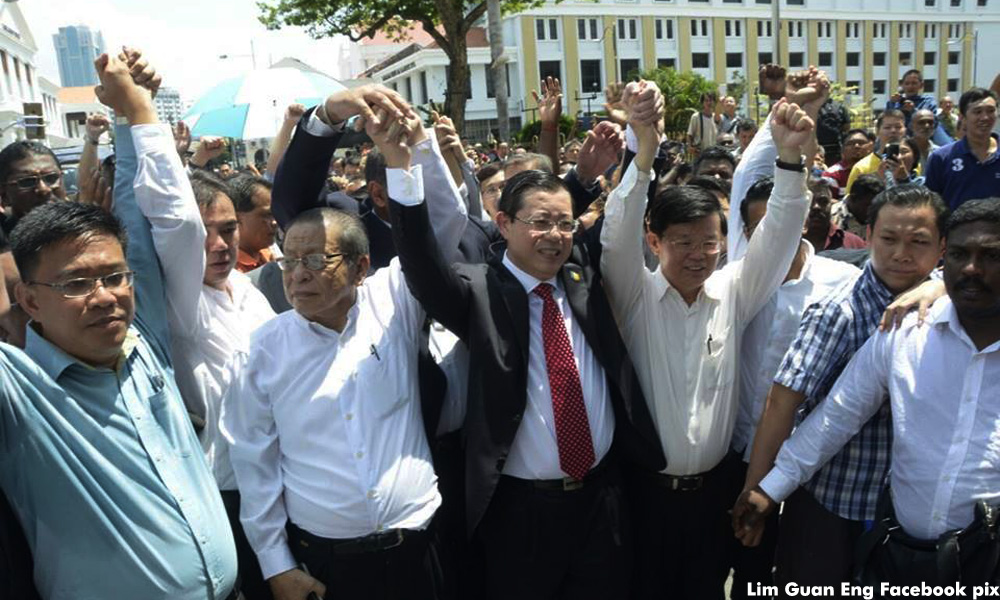

DAP’s dilemma vis-a-vis the bourgeois state
COMMENT Zaid Ibrahim’s recent proposal that the opposition boycott elections in Malaysia brings into full circle the boycott of the 1969 general election by the Labour Party, which gave the DAP the opportunity to replace the former as the main opposition party in Malaysia in the first place. Does Zaid really think that the DAP leadership has changed so much these 47 years that they now think in such principled terms?
In other words, the DAP were by no means the principled socialists who could see that the Malaysian state, which had incarcerated practically the entire leadership of the Labour Party before the general election, was the executive that managed the interests of the bourgeoisie.
The Malaysian state used the Internal Security Act (ISA) and other oppressive laws to shackle the Labour Party so that it was unable to participate fully in the electoral process. Any principled socialist would at least have an opinion about such underhand tactics by the Malaysian state ruling on behalf of the whole bourgeoisie.
The dominant regime has undertaken a ‘rebranding exercise’ in its methods of maintaining its rule – the ISA and the Emergency Ordinance have now become the Security Offences (Special Measures) Act (Sosma), Prevention of Crime Act (Poca) and Prevention of Terrorism Act (Pota), while the Sedition Act remains a colonial relic that is still a useful net to fling over all detractors.
What about the Malaysian Judiciary? Have the DAP leaders ever had high hopes of its independence? So what’s new?
The ISA and other oppressive laws are merely one aspect of the ways the bourgeois state cheats at this democracy game. The other methods of bending the rules include gerrymandering and other tricks of electioneering, control of the media by the state and its allies among the bourgeoisie, various methods of vote buying using state resources, the trusted use of communalism and not forgetting, selective prosecution.
Matter of principle
But since the DAP does not believe in any alternative to the capitalist state of Malaysia, it has to play by the rules of liberal democracy in this system even though it is very clear that the regime practises selective prosecution.
It is a matter of principle and procedure under such a system of liberal democracy that anyone in a position of power who has been charged with serious felony such as corruption, has to step down, including the prime minister and the chief minister.
This means that any elected leader who has been indicted on such a charge, is required to step down, at least temporarily, although they remain innocent until proven guilty. This rule of democracy applies to all leaders, irrespective of whether they are federal or state or municipal leaders.
This principle continues to apply even if the indicted leader’s executive committee votes unanimously to retain him, nor can a leader’s innocence be determined by any political campaign to whip up support for the indicted leader.
From the perspective of law and justice, a refusal to step down relies on the preposterous assumption that the leader in question, who is surely mortal, is incorruptible! Unlike Abba, jurists do not believe in angels...
If such is the case, then let the judicial system that the DAP has supported all these years, decide.
By not stepping down, the DAP leaders are setting a dangerous precedent for the eventuality that the prime minister or some other Umno chief minister is similarly charged with corruption. Will we allow them to cling to their posts simply because their cabinet or executive committee unanimously votes to retain them?
And can the PM go on a nation-wide tour to whip up support from his supporters? Will this testify to his innocence if he receives widespread support all over the country? Or let us take this further – the PM conducts a nation-wide referendum to gauge the peoples’ opinion of his guilt or innocence – is that going to prove his innocence?
In any democracy including a workers’ government such as was seen in the Paris Commune in 1871, accountability and recallability are expected of the legislative and executive leaders elected by workers' representatives.
DR KUA KIA SOONG is Suaram adviser.


