


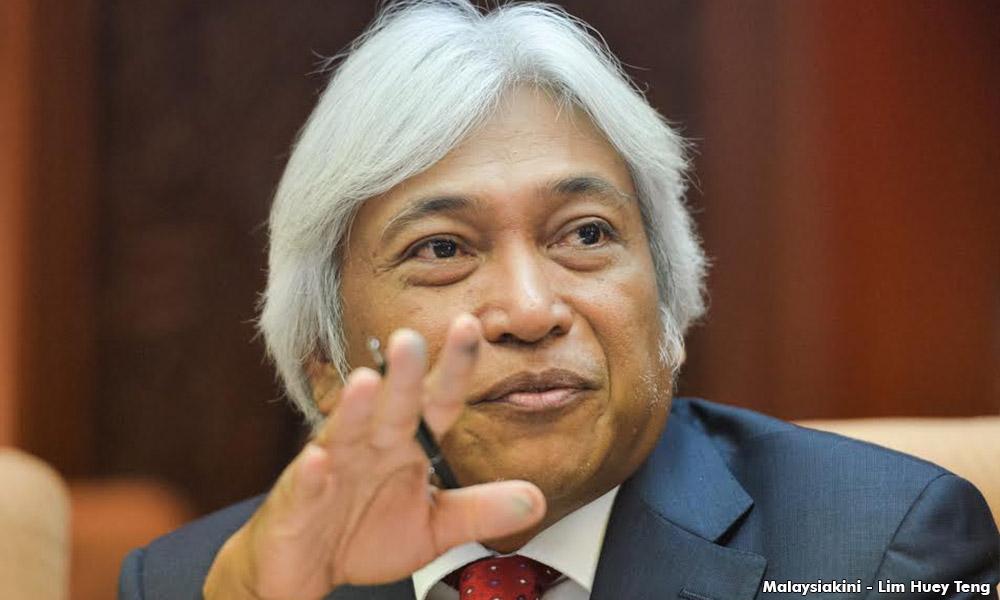

The Bank Negara governor was cool but could have been hot
COMMENT The new governor of Bank Negara, Muhammad Ibrahim, played it cool, in his smooth presentation of his second quarter Bank Negara Report 2016. He was understandably upbeat in trying to encourage confidence in Malaysia’s economic performance and outlook.
But could he also have stoutly alerted the government to be more wary of the external headwinds as well as the internal threats to our economic growth and stability? He hopefully will soon set a new tone and leadership as the new governor of Bank Negara.
Our socio-economic and political image abroad, arising from the US Department of Justice’s report on the allegations against 1MDB, has been seriously affected indeed. Yet Bank Negara has nevertheless treated this serious issue rather sensitively and over-cautiously. However, our people want to know the real truth and so they expect stronger investigations, especially from Bank Negara, into these widespread concerns over possible financial misdeeds.
COMMENT The new governor of Bank Negara, Muhammad Ibrahim, played it cool, in his smooth presentation of his second quarter Bank Negara Report 2016. He was understandably upbeat in trying to encourage confidence in Malaysia’s economic performance and outlook.
But could he also have stoutly alerted the government to be more wary of the external headwinds as well as the internal threats to our economic growth and stability? He hopefully will soon set a new tone and leadership as the new governor of Bank Negara.
Our socio-economic and political image abroad, arising from the US Department of Justice’s report on the allegations against 1MDB, has been seriously affected indeed. Yet Bank Negara has nevertheless treated this serious issue rather sensitively and over-cautiously. However, our people want to know the real truth and so they expect stronger investigations, especially from Bank Negara, into these widespread concerns over possible financial misdeeds.
The world is watching and foreign investment and capital outflows and even the brain drain could be further adversely aggravated, if we are seen to take a soft stance.
Playing it cool and dismissing the allegations lightly will not inspire confidence in our public reports that our economic fundamentals and public institutions are strong and that the Malaysian economy is continuing to be resilient.
Actually, our economic growth has been declining to 4.0 percent this second quarter from 4.2 percent in the first quarter and 5.7 percent in the first quarter of 2015. It is more likely that our economy will slide further, unless the government’s Budget spends or pump-primes much more expenditure, to push economic growth. But this may not be possible for the following reasons:
Triple deficits?
As we all know , there is a strong likelihood that we are heading towards a triple deficit economy: the current Budget deficit, the likely balance of payments current account deficit and the present debt limitations or debt deficit.
Hence, there are three likely threats to the economy, and it is hoped that Bank Negara will highlight how the government should handle these possible threats of triple deficit in its next report.
It should also advise the government, as its constitutional duty, to adopt important and urgent policy measures and to ensure more effect implementation that will further strengthen the economy to combat these likely triple deficits.
What are the threats that the government and Bank Negara must address?
1. Inflation is a major problem and has not been adequately dealt with. Food constitutes a sizeable part in calculating the rising cost of living. Have we got an anti-inflationary plan to counter rising prices, particularly in our basic needs of food, transport and housing? If so, please let the people know the specific targets and then publicise the achievements.
The people will then be consoled that these vital issues are not being played down or worse still, swept under the carpet.
2. Unemployment and low productivity and thus low incomes , especially among new school and university graduates, would now be worsening. This could undermine social stability. Yet not much is mentioned about what plans are in train to beat the unemployment and low productivity and low income problems.
If the government is slow to share its plans to counter unemployment and low productivity and low incomes, then could Bank Negara, as the adviser to the government, perform a more active or hotter role than playing it comfortably cool?
3. The triple deficits in the Budget, possibly in the balance of payments current account and the debt deficit as well, can be tackled more effectively if our economy is made more competitive.
But our policies continue to be governed by the old New Economic Policy (NEP) of preference for government agencies, like the government-linked companies (GLCs). There is still public sector predominance in the alienation of land for vital agriculture and food production, expanding business and investment, and in the award of big infrastructure contracts.
Thus the private sector, both local and foreign, feel constrained in its participation and contributions to economic growth, employment and rising incomes.
Thus the natural and national drive to improve the well-being of the rakyat can be inhibited. The rich are thus getting richer and the poor are becoming relatively poorer. What plans have we got to narrow the gaps soon enough? Will Budget 2017 introduce measures to narrow the income gaps?
4. The triple threats or deficits in the Budget, balance of payments and the national debt, can cause the economy to decline as Musa Hitam has courageously claimed - for other significant reasons as well.
We cannot therefore afford to play it cool when the socio-economic and political problems are seriously heating up.
We cannot ignore the fact that the socio-economic, religious, racial and political problems are all inter-related and can hold back our national development and progress.
We cannot wait for a so-called tipping point. We have to anticipate problems and move faster to counter rising problems.
5. Given our short-term constraints to effectively manage our likely triple deficits, we have to show greater priority in the doable policies in the short term. They should be, to drastically cut down corruption, cronyism and government expenditure wastage, as indicated by the auditor-general’s constant annual reminders.
But are we acting fast and efficiently enough to solve these long-standing and festering issues? Many seriously doubt it. In the meantime, the economy and especially the poor Malaysians continue to suffer most.
Conclusion
Given the domestic and external headwinds and threats to our national growth, our further development and our progress, we have to recognise the need for a sense of urgency, to adopt new policies and techniques to promote greater national resilience. We cannot take it easy, or coolly take the future progress for granted.
With the general election looming large on the horizon, and the likelihood of it being sooner rather than later, even as early as next year, since the international and domestic uncertainties are steadily growing larger, we cannot afford to be cool, lest we become too complacent.
Tougher policy decisions by the government and Bank Negara have to be taken soon, to counter the national threats to the economy, some of which are mentioned above.
If we play it too cool we can face a rising pool of deeper problems and experience more decline. Then it may be too late to arrest the possible slide into hot water.
Hence, we have to be in hot pursuit to solve our problems or fail in our collective mission to protect and sustain the success of our country’s future.
Let’s all be much more alert and rise to better serve our beloved country with greater integrity, truth, righteousness and justice for all.
RAMON NAVARATNAM is chairperson of Asli/Centre of Public Policy Studies.


Are you sure you want to delete this comment?
This action cannot be undone.