


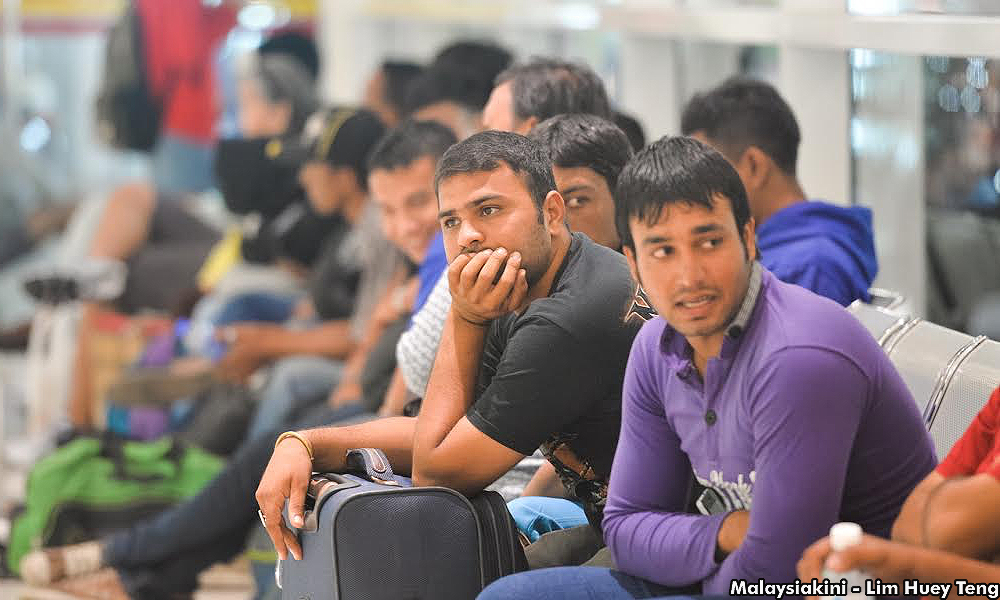

Language proficiency for foreign workers vital
Miscommunication with foreign workers in the service sectors who are hired despite having low proficiency in Malay or English is a real concern that must be addressed.
This was the general sentiment among those met by Malaysiakini when asked for response to a proposal by Kuala Nerus MP Khairuddin Aman Razali, urging the government to make it mandatory for all foreign workers to pass a basic Malay language course.
The move, Khairuddin said, was particularly necessary for foreign workers in the service sectors and as domestic helpers.
He also cited security guards currently hired from Nepal and soon-to-be announced two other source countries as an important group that must be required to have a basic proficiency in Malay...
Miscommunication with foreign workers in the service sectors who are hired despite having low proficiency in Malay or English is a real concern that must be addressed.
This was the general sentiment among those met by Malaysiakini when asked for response to a proposal by Kuala Nerus MP Khairuddin Aman Razali, urging the government to make it mandatory for all foreign workers to pass a basic Malay language course.
The move, Khairuddin said, was particularly necessary for foreign workers in the service sectors and as domestic helpers.
He also cited security guards currently hired from Nepal and soon-to-be announced two other source countries as an important group that must be required to have a basic proficiency in Malay.
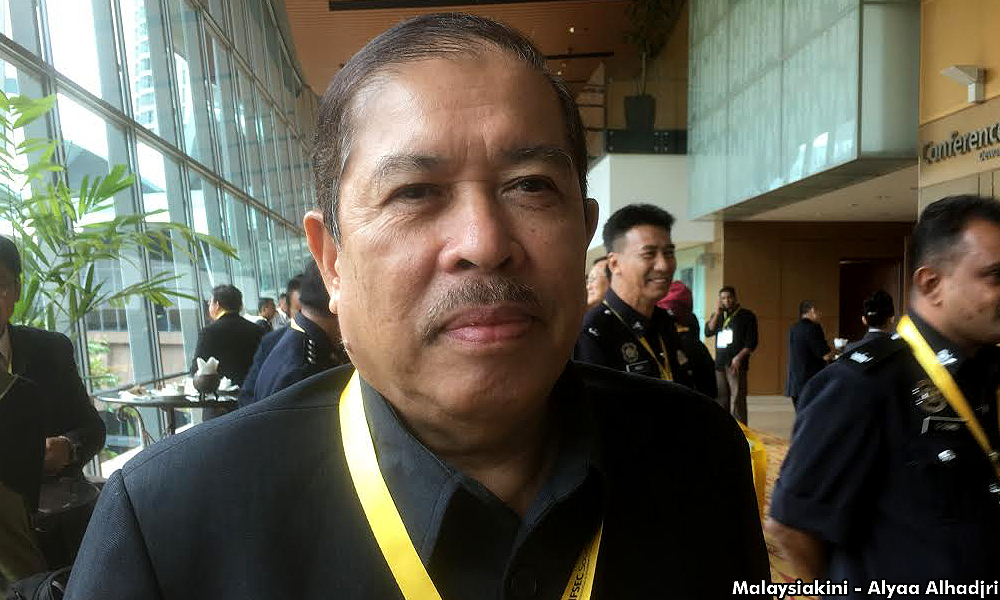 Asian Professional Security Association vice-president Abdul Malek Abdul Hamid said it could be a good idea so long as it could be done in a reasonable amount of time.
“Sometimes it would take time for them (security guards) to acquire the language. Even if you are a foreign student, it would still take time to learn a new language.
“For us (security sector), time is a constraint. But it is a worthwhile idea to consider if done correctly,” said Abdul Malek when met at a security forum in Kuala Lumpur.
He added that the communication problems for security guards were quite unique to Malaysia as most other countries did not have a policy of hiring foreigners as guards.
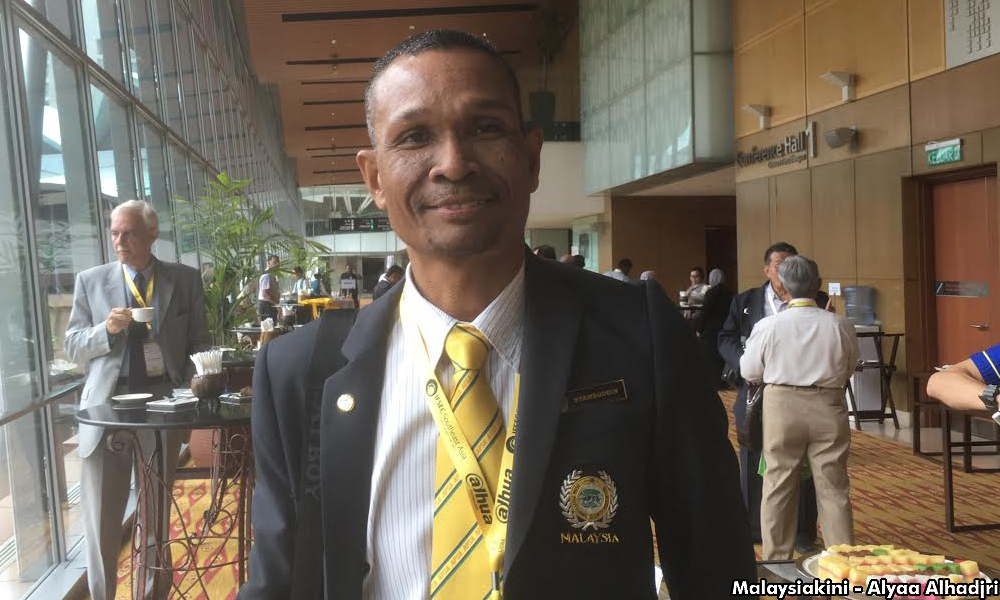 At an operational level, Syamsuddin Abdullah, the operations director for a security consultancy company, said the biggest challenge would be to make sure that all instructions given are understood by the foreign guards.
He said basic comprehension and ability to converse in Malay is the key to avoid any miscommunication while on duty.
“The workers should be trained while still in their home country or maybe the embassies could find a way to ensure that the workers' language skills are up to the mark.
“Otherwise, it could cast a negative image on us (Malaysia),” he said, citing, as an example, security guards stationed at prominent public spaces or government buildings.
“These people might not carry out their duties properly due to not understanding or misunderstanding the instructions given,” he added.
“So, the government should be concerned to look into tightening the existing requirements…,” he added.
Basic command
In welcoming the suggestion, Normala Ibrahim, who used to work as a former human resources director at a local hotel, said that an ability to converse in English and Malay is important for both the front liners dealing with guests, as well as the ones carrying out back-room duties.
“My former employer would hire Filipinos and Indonesians. The Filipinos generally have no problems communicating in English.
“For Indonesians, it would depend on where they came from. But when we have training programmes for them, generally they can pick up the language,” she said.
For Nepali guards, she added, sometimes they would have problems responding when guests asked for directions.
“The language skills needed would depend on the industry but overall it can still be improved,” she said.
While off-duty, foreign workers seeking services in Malaysia might also face problems communicating their needs without a basic command of the national language.
 Bank teller Nor Kamalia Mohamad Kamal said there were times when she had difficulties trying to understand what they wanted to do.
“Sometimes they would bring a friend along to translate, but we would prefer to speak with the account holder.
“Situations like this could cause delays. Things that could be done in five minutes might take 10 minutes or more,” she said.
Local talents
Civil servant Jayabalan Harirajan, however, said that any move to improve language proficiency for foreign workers should not be done at an additional cost to employers.
“If there was to be any formal exam, then a third party may benefit. There are already enough burdens for employers… health screening, insurance and other costs.
“Even the workers, before they come here already have to pay a lot. So in the current economic situation, just make sure there will be no added trouble for employers or workers,” he said.
Hamidah Mustafa, meanwhile, conceded there were times when she felt like she was the “foreigner” in Malaysia.
“I fully support any such move. At the very least, train them (to speak) in basic Malay.
Zulfadli Nurahim, however, said it would be better to cease hiring foreign workers and seek more local talents.
“It would be better off without them. Hire our own people but of course with a bigger salary.
“If the government really want to hire foreigners, find those who we can communicate with easily,” he said.


Are you sure you want to delete this comment?
This action cannot be undone.