



Explore nonviolent policy responses to extremism in Asia
COMMENT On Sept 9, Prime Minister Najib Abdul Razak of Malaysia met General Prayuth Chanocha, the Thai prime minister, in an official visit in Bangkok.
Prayuth, who came to power in a military coup two years ago, maintained that security is the foundation of economic development and national prosperity.
The two prime ministers reiterated that both countries needed to closely collaborate in terms of defence and intelligence, to guard against “terrorism, human trafficking, transnational crimes, and ‘the spread of extremism ideas”.
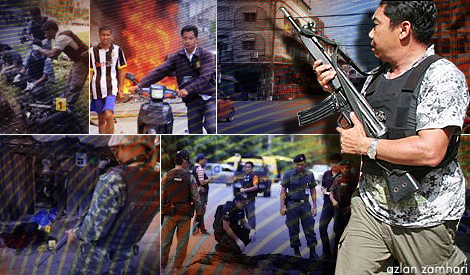
Three days earlier, on Sept 6, a four-year-old Thai girl named Mitra Wa-ba was killed in an explosion near a local school in Takbai Narathiwat, Southern Thailand.
A little more than a year ago, on Aug 17, 2015 another four-year-old, Malaysian girl Lee Jing Xuan, died in an explosion right in the heart of Bangkok, that killed 19 others and wounded more than a hundred.
I would say that these innocent girls had been victims of violent extremism that has wreaked atrocities in Southeast Asia and elsewhere in the world. It is indeed a threat that needs to be fought against. But how?
In a 2015 report to the US Department of Defence and Department of Homeland Security reviewing policy responses to terrorism, insurgency and violent extremism, among other things, researcher Amy Pate pointed out that the use of violence in policies - military assaults, targeted assassinations, revenge killings and repression (especially when used exclusively) produce “backlash effects”.
Research findings include; repression across target types in one month increases the risk of terrorism the following month; indiscriminate repression increases popular support for violent extremists; heavy-handed repression strengthen collective action in Gaza and West Bank; military intervention in Somalia resulted in the unification of a formerly fragmented violent Muslim movement and hardened the jihadi organisation - Al-Shabaab; the May 2013 declaration of emergency in Nigeria, though produced a geographic constriction of Boko Haram, had no effects on frequency of attacks and in fact lethality increased.
As a result, should the fight against violent extremism be located outside the confines of terrorism discourse characterised by violent policy responses?
Perhaps, it is time for all concerned to creatively explore nonviolent policy alternatives that seek to delegitimise the uses of violence, critically engage its legitimation basis - religious or otherwise - humanise parties in conflict by taking into account their emotional landscape, understand the structural conditions of conflict, and the complex process of embitterment that transforms ordinary people into indiscriminate killers.
Importantly, nonviolent policy responses will not forget the faces of those victimised by the curse of violent extremism.
CHAIWAT SATHA-ANAND is senior research fellow, TODA Institute for Global Peace and Policy Research.


