



Malay PM a priority? Less than half Malays polled agree
A total 44 percent of Malay respondents polled feel having a Malay prime minister a top priority when voting.
The rest feel that cost of living is more important, according to a survey conducted in Selangor and Perak by the NGO Kuasa.
A total 44 percent of Malay respondents polled feel having a Malay prime minister a top priority when voting.
The rest feel 'bread and butter issues' are more important, according to a survey conducted in Selangor and Perak by the NGO Kuasa.
Respondents were first asked to rank the importance of five "symbolic" issues:
- A Malay Muslim as prime minister;
- Flying the Malaysian flag during Independence Day;
- Everyone standing during the national anthem;
- Defending the country's sovereignty from external threats; and
- Memorising the Rukun Negara.
After that, the respondents were asked to rank 'bread and butter' issues:-
- Sustainable salary for you and your family;
- Free education up to tertiary level for a brighter future;
- Free healthcare, from outpatient to high risk surgery;
- Affordable housing with a family-friendly environment; and
- Annual domestic vacation with the family.
The respondents were finally asked to rank all those issues in terms of importance in a composite list of 10 issues.
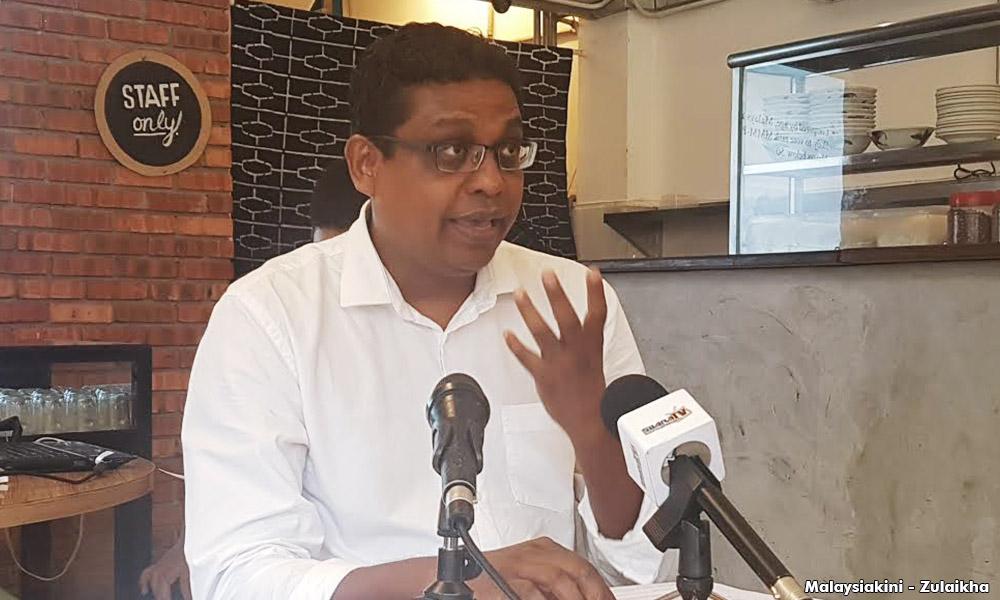 Kuasa chief executive Praba Ganesan (photo) said in the first set, 57 percent of Malay respondents ranked a Malay prime minister as most important, while the majority of non-Malay respondents ranked sovereignty in the top position.
In the 'bread and butter' list, the majority prioritised having a sustainable salary.
However, about one fifth of Malay respondents who prioritised a Malay PM changed their decision when faced with a composite list.
In the composite list, they rank bread and butter issues higher. Thus, only 44 percent of Malays ranked having a Malay PM as most important.
"When comparing the two sets, 'symbolic' and 'bread and butter', non-Malays (all three segments of Chinese, Indians and others) had 'bread and butter' issues ahead collectively. Malays had symbolic issues ahead cumulatively," Praba said.
Opposition yet to address on Malay leadership
The survey was based on 1,286 respondents over 14 days in August, in 56 towns and villages in Selangor and Perak.
Respondents also differed according to age, with Malays aged more than 50 placing more importance on having a Malay prime minister, compared with the younger respondents.
Praba said the survey showed that 'bread and butter' issues surpass symbolic issues for voters.
However, the fact that Malaysians of all races still rank a Malay prime minister as a key voting factor highlights its significance, he said.
Praba added that the importance of a Malay leadership has not been addressed by opposition parties, including in Perak, where it has not produced a viable Malay candidate to lead the state.
"The opposition does not have credibility when it comes to Malay leadership, an issue seen as important to voters," he said.
This will be an obstacle in the next general election, he said, including in Selangor, despite an incumbent Malay leadership from Pakatan Harapan.


Are you sure you want to delete this comment?
This action cannot be undone.