



Water cuts stressed need for FOI, says DAP MP
In 2014, Serdang was hit by a serious water cut, with some areas suffering no supply for 12 weeks due to river pollution.
The Department of Environment was asked to disclose its monthly reports about pollution caused by surrounding factories, but their officials said the information was classified under the Official Secrets Act.
In 2014, Serdang was hit by a serious water cut, with some areas suffering no supply for 12 weeks due to river pollution.
The Department of Environment was asked to disclose its monthly reports about pollution caused by surrounding factories, but its officials said the information was classified under the Official Secrets Act.
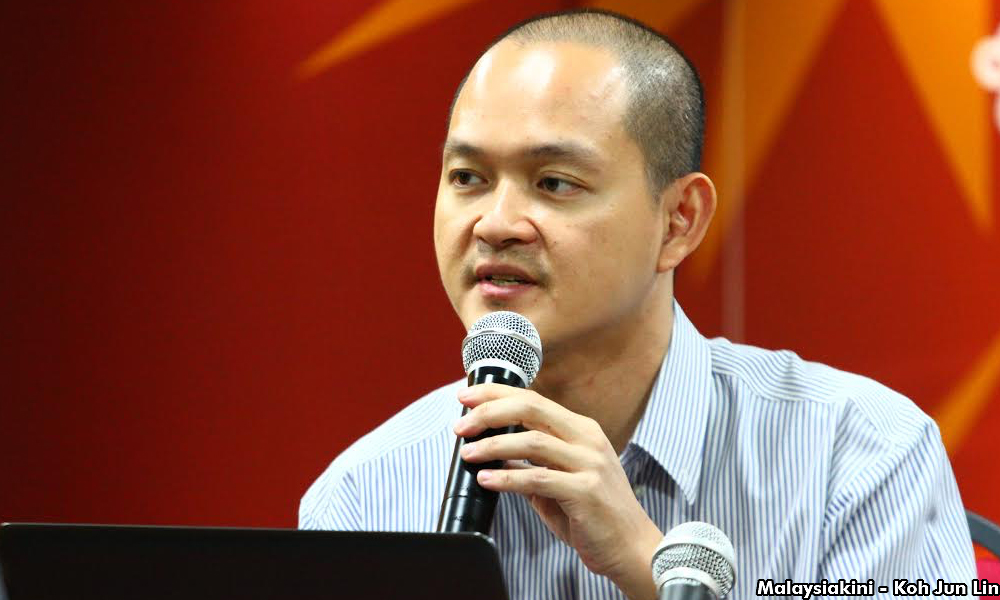
“Even if the Selangor state government wanted these data, it would have had trouble accessing it, that is why we could not detect regular sources of pollution, which sometimes results in water cuts,” said DAP’s Serdang MP Ong Kian Ming, at the Freedom of Information forum in Penang’s Institute office on Jalan Brown today.
The two-day event was jointly organised by Penang Institute, Center to Combat Corruption and Cronyism, and the office of the Deputy Chief Minister II, P Ramasamy.
“So I took matters into my own hands, I hired some kayaks, took a licensed chemist on a boat with me to take some water samples,” noted the general manager of the Penang Institute in Kuala Lumpur.
“I took photos and sent a GPS location to the Kajang Municipal Council and the state government, and they stopped the factory responsible for the pollution.”
However, Ong said such methods were not sustainable as water cuts need immediate action; planning for the kayaking expedition took him almost a month.
“This is why the Freedom of Information Act is also important for politicians to carry out their constituency work more effectively,” Ong said.
Ong also cited two other example where consumers were shortchanged because they did not have access to information.
“How many of you are aware of having to pay for the use of the airport where your flights depart? How many of you are aware that you have to pay the ERL company at KLIA, RM5 (for international bound flights) and RM1 (for inbound flights) although you do not use the service?” he asked.
'Revolutionary and evolutionary'
During his opening speech, Penang Institute CEO Zairil Khir Johari said the FOI was both “revolutionary and evolutionary”.
“In Malaysia, we used to be a closed society and information was inaccessible, so the FOI that we have is revolutionary, it allows people to access and gives access to information that is difficult to get,” he said.
“At the same time it is evolutionary because it is a work in progress, they are many improvements that can be made, forums like these are exactly the opportunities needed to fine-tune the laws,” he added.
In conjunction with International Right to Know Week, which starts on Sept 28, Penang Institute is organising several programmes relating to freedom of information.
Other speakers during today’s event were Ramasamy, Center to Combat Corruption and Cronyism director Cynthia Gabriel, and Malaysiakini senior journalist Low Chia Ming.
Low, who writes for Malaysiakini’s Chinese version, urged the Penang government to review its policy of releasing information to the public.
He proposed that the Penang government use a “three-prong test” to determine whether information should be exempted, or released to FOI applicants.
According to Low, the test for exceptions must include (1) a legitimate aim in law, (2) disclosures must threaten substantial harm to that aim, (3) the harm to the aim must be greater than public interest.
“There is a provision in the Penang FOI enactment to bar information from being released if such information is detrimental to the economy of the state. Isn’t such a definition too broad?” he asked.


Are you sure you want to delete this comment?
This action cannot be undone.