



'Expectations for financial support from politicians lead to graft'
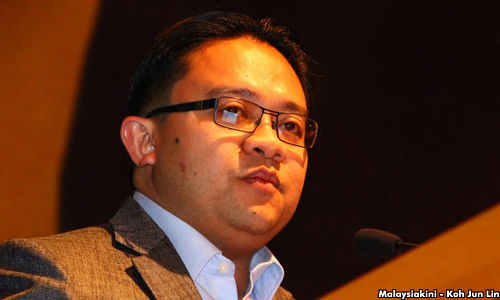
Public expectations of politicians in Malaysia need to be fixed, as they are inadvertently leading to more corruption, said Institute of Democracy and Economic Affairs (Ideas) CEO Wan Saiful Wan Jan.
He said it is wrong for the public to expect politicians to dispense direct financial support to the voters, as a politician’s job is to legislate once they are elected.
“This expectation for them to spend money on their constituents might be a motivation for them to be corrupt,” Wan Saiful said at an anti-corruption forum hosted by Ideas in Kuala Lumpur today.
Public expectations of politicians in Malaysia need to be fixed, as they are inadvertently leading to more corruption, said Institute of Democracy and Economic Affairs (Ideas) CEO Wan Saiful Wan Jan.
He said it is wrong for the public to expect politicians to dispense direct financial support to the voters, as a politician’s job is to legislate once they are elected.
“This expectation for them to spend money on their constituents might be a motivation for them to be corrupt.
“Maybe they are not corrupt as a person but at (their current) salary, that’s not enough to pay for the support of a constituency of 70,000 people.
“This in itself creates the need for them to find other avenues to raise money.
“We need to make sure that the public acknowledges that legislators are elected to legislate, not to become welfare officers,” Wan Saiful said at an anti-corruption forum hosted by Ideas in Kuala Lumpur today.
He pointed to the example of the recent floods, and said that in addition to the natural flood, those places affected have also been receiving "floods of politicians" visiting them.
Wan Saiful questioned if this was truly the proper role for politicians.
"I would love to see a day when we have an event happening, and if we see a politician coming to that event, we would say we are not voting for that politician again because he or she was not doing the job.
"If a flood happens, this is a policy matter. Why does the flood keep happening?
"Surely something needs to be done with the infrastructure? That is the job that we pay them to do, but our society expects them to do something else," he said.
'We get what we vote for'
This patronage system - where politicians give cash handouts to voters - is the easiest way for politicians to win power, Wan Saiful explained.
They do not have to do the difficult work of researching policies and instead can gain support simply by dishing out money, he said.
"This will create a vicious cycle, where politicians realise they don't have to do the difficult work (and can) simply dish out cash and welfare support.
"Then the population says, 'Oh, we can get this from politicians', and the system just perpetuates itself," he said.
Wan Saiful stressed that the onus to change this culture lies with the people.
At the end of the day, he said, politicians would gauge what the people wanted and would strive to provide it.
"The change will come only when the people change.
"As long as we as voters demand handouts, the politicians will give us handouts," he added.
Politicians cannot be expected to change without any motivation, Wan Saiful said.
Even if they were to offer good governance to a community that wants cash handouts, they still would not win in the election, he said.
"It may sound unfair to blame the voters, but seriously, in this environment, we get what we vote for."


Are you sure you want to delete this comment?
This action cannot be undone.