



Suhakam wants gov’t to step up efforts for refugees
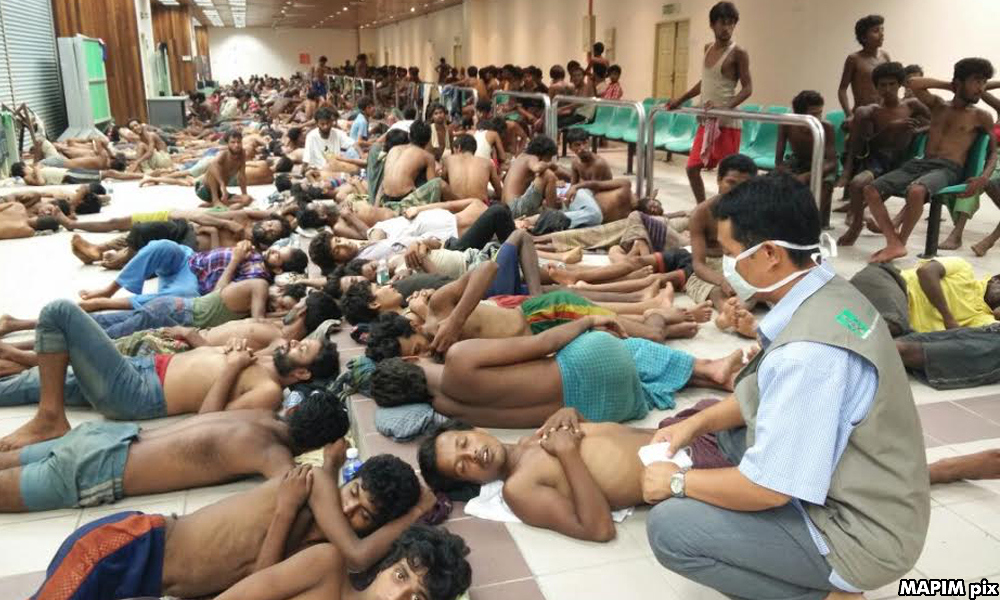
The Human Rights Commission of Malaysia (Suhakam) believes that more needs to be done for the refugee population in the country, in light of the country hosting some 56,000 displaced Rohingya.
Although it welcomes the government’s decision to provide refuge to the Rohingya population within the country’s borders, Suhakam chairperson Razali Ismail said the situation of the persecuted minority remains perilous.
“They have suffered persecution, internal displacement and are subjected to discrimination and hatred on the basis of their ethnic and religious background,” he said in a statement today.
The Human Rights Commission of Malaysia (Suhakam) believes that more needs to be done for the refugee population in the country, in light of the country hosting some 56,000 displaced Rohingya.
Although it welcomes the government’s decision to provide refuge to the Rohingya population within the country’s borders, Suhakam chairperson Razali Ismail said the situation of the persecuted minority remains perilous.
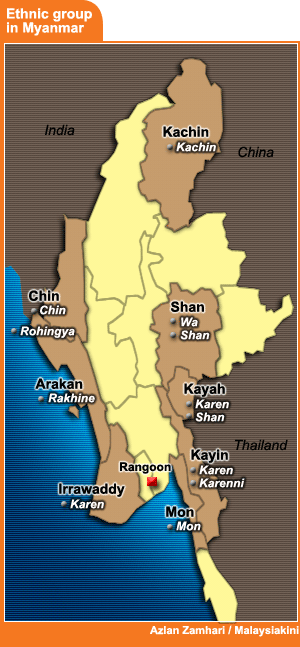 “They have suffered persecution, internal displacement and are subjected to discrimination and hatred on the basis of their ethnic and religious background,” he said in a statement today.
Lauding the government’s efforts, as well as that of NGOs to address the humanitarian crisis faced by the Rohingya in Myanmar, Razali however pointed out how refugees in Malaysia were still vulnerable as they do not have a right to work and their children not necessarily having a right to education.
“Suhakam reiterates its urgings on the government to support, through a legal framework, the refugees’ right to work while they seek temporary refuge.
“This in turn will lead to better self-reliance, and the scaling down of programmes that place them in a position of prolonged dependency on humanitarian or government aid,” said Razali, who also advised the government to reconsider its education policy for refugee children.
Meanwhile, Razali added that it was apparent that the government was resorting to applying certain provisions of the 1951 Refugee Convention, as far as the Rohingya are concerned.
“Suhakam is of the view that it is then timely for the government to proceed to accede to the convention as there is a need for clarity, legal certainty and protection for refugees.
“Suhakam stands with the government in advancing the Asean Charter that urges all member states to adhere to human rights protections for all its citizens, and to uphold the principles enshrined in the Asean Human Rights Declaration.”
Malaysia, last week, organised a meeting of Muslim governments to put pressure on Myanmar over the plight of the Rohingya Muslims.
Prime Minister Najib Abdul Razak, who hosted a meeting of representatives from the Organisation of Islamic Cooperation (OIC), urged Myanmar to stop attacking and discriminating against the Rohingya minority.
Myanmar authorities had claimed that the military launched a security sweep in response to what they say was an attack in October by Rohingya insurgents on border posts near Myanmar’s border with Bangladesh in which nine police officers were killed.
Since then, at least 86 people have been killed and the United Nations says at least 66,000 Rohingya have fled to Bangladesh.
Residents and refugees accuse the military of killing, raping and detaining civilians while burning villages in northwestern Rakhine State.
The Myanmar government, however, continues to deny the accusations and insisted a lawful counter-insurgency operation was under way.


Are you sure you want to delete this comment?
This action cannot be undone.