



Affected by US ban, Iranians tell of families ripped apart, jobs left behind
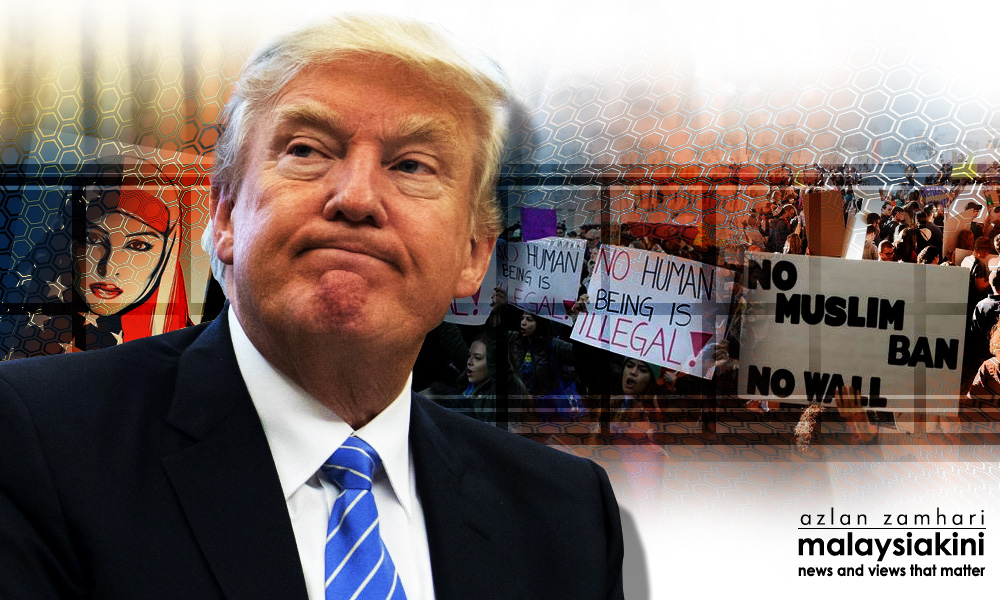
Following US President Donald Trump’s signing of an executive order banning the entry of citizens from seven Muslim-majority countries, Iranians tell their stories of jobs at risk and families left in disarray.
Iran is among countries including Libya, Somalia, Yemen, Iraq, Syria and Sudan whose citizens have been banned from entering the US.
Iranians form the largest bulk of immigrants in the US from the seven countries. Among many who are currently stranded in the US or unable to enter the country, some have claimed that US border guards had even asked for their laptop and social network passwords.
Following US President Donald Trump’s signing of an executive order banning the entry of citizens from seven Muslim-majority countries, Iranians tell their stories of jobs at risk and families left in disarray.
Iran is among countries including Libya, Somalia, Yemen, Iraq, Syria and Sudan whose citizens have been banned from entering the US.
Iranians form the largest bulk of immigrants in the US from the seven countries. Among many who are currently stranded in the US or unable to enter the country, some have claimed that US border guards had even asked for their laptop and social network passwords.
Niaz, who was living in Rochester, New York, returned to the US from Canada after visiting friends in Toronto, a day after Trump signed the executive order.
“I was asked to fill a form (at the airport) giving all the information about myself, my family, occupation and surprisingly, giving away the password to my personal phone as well as the make and model of my phone,” Niaz was quoted as saying by British daily the Guardian.
“They got my phone and went back inside and it took them another hour to check everything possible in my phone. The whole process took more than three hours and it finished with fingerprints and photo capturing.”
Meanwhile, an American passport holder, Kiana Karimi, travelled to Egypt two weeks ago and arrived at the John F Kennedy airport on Saturday.
The 34-year-old PhD student based in New York said she ended up in a room with other people with visa ban issues after a secondary evaluation on her American passport was required.
“At least for the 15 minutes that I was waiting in that line, I didn’t see a single white person among us. Yes, a line of only brown and black people who predominantly seemed Muslim were in a separate line from other citizen passengers,” she told the Guardian.
Nazanin Zinouri was visiting family in Iran when she heard about Trump’s plan to impose visa bans.
Taking to Facebook, Nazanin said that she booked tickets quickly but was taken off the plane in Dubai.
“After almost seven years of living in the United States, I got deported,” she said.
“No one warned me when I was leaving, no one cared what will happen to my dog or my job or my life there.
“No one told me what I should do with my car that is still parked at the airport parking. Or what to do with my house and all my belongings.”
Amin Karbasi said his wife and their newborn daughter had gone to Iran three weeks ago and were no longer able to return.
“It is not clear they can come back to the US. And this feeling eats me alive.”
Vida Tayebati, who is based in Massachusetts, was waiting for her parents to visit her after two years. “I sat in the kitchen for four hours, feeling paralysed, broken and hopeless. My heart is heavy,” she said.
“My mother and father went through all the stress of the crazy process of getting their visas, it cost them a lot of time and energy, they travelled to Turkey from Iran for the visa interview and they finally got the visas.
“Now, I’m ashamed of calling them and saying all their efforts have been destroyed at the hands of a mad man, that they can’t visit their daughter even with a visa.”
Responding to the entry ban, Iranian Foreign Minister Mohammad Javan Zarif had said that the ban would only be a “great gift to extremists and their supporters”.
Trump, last Friday, signed an executive order temporarily halting the US refugee programme and banning citizens from the seven Muslim-majority countries from entering the US.
His decision had sparked outrage around the world, with many denouncing what they have termed a “Muslim ban”, despite the citizens from the seven countries being turned away regardless of their religion.
A court in New York has since granted an emergency stay against the policy amid protests and dramatic scenes at airports.


Are you sure you want to delete this comment?
This action cannot be undone.